Why Recognizing Hamstring Pull Symptoms Early Can Save You Weeks of Pain
Hamstring pull symptoms typically include sudden, sharp pain in the back of your thigh, often accompanied by a popping or tearing sensation. You may also notice:
- Immediate pain during or right after activity (especially sprinting, jumping, or sudden stops)
- Swelling and tenderness that develops within hours
- Bruising or discoloration along the back of the leg
- Muscle weakness or difficulty bearing weight
- Limited range of motion when bending or straightening your leg
A hamstring pull—also called a hamstring strain—happens when one or more of the three muscles running along the back of your thigh gets overstretched or torn. This injury is incredibly common among athletes, runners, dancers, and anyone who engages in activities involving sudden acceleration or deceleration.
The challenge? Hamstring pull symptoms vary widely depending on the severity of the injury. A mild strain might feel like tightness or a dull ache, while a complete tear can leave you unable to walk without crutches.
Understanding what you're dealing with is the first step toward proper treatment and recovery. The faster you identify the grade of your injury, the sooner you can take action—whether that's self-care at home or seeking professional medical attention.
Athletes, weekend warriors, and active adults are all at risk. Common risk factors include muscle imbalance (when your quadriceps are significantly stronger than your hamstrings), previous hamstring injuries, muscle fatigue, inadequate warm-up, and age-related muscle weakness.
I'm Tony Enrico, founder of Neuropasil, and I've dedicated my work to helping people find relief from muscle and nerve pain—including the debilitating discomfort of hamstring pull symptoms. Through years of working with athletes and active individuals, I've learned that proper identification is the foundation of effective treatment.
Handy hamstring pull symptoms terms:
Step 1 & 2: Pinpoint the Immediate Pain and Sensation
When a hamstring injury strikes, it often announces itself with unmistakable pain and sensations. These initial signals are crucial for understanding the extent of the damage.

The hamstring is a group of three muscles that run along the back of your thigh, from your hip to just below your knee: the semitendinosus, semimembranosus, and biceps femoris. These muscles are vital for bending your knee and extending your hip, actions central to activities like running, jumping, and even walking. When these muscles are suddenly overloaded or stretched beyond their capacity, a strain occurs. You can learn more about these powerful muscles in our Hamstring Anatomy 101: Everything You Need to Know About Your Thigh Muscles guide.
What does a hamstring injury feel like?
The immediate sensation of a hamstring injury can be quite dramatic, especially in more severe cases. Many people report a sudden, sharp pain in the back of the thigh, often accompanied by a distinct "popping" or "tearing" sensation at the moment of injury. This isn't just a figure of speech; it can literally feel like something has snapped or ripped inside your leg. Sometimes, you might even hear a snapping sound.
The pain is usually localized to the back of the thigh, but depending on which part of the hamstring is affected, it can also extend up into the lower buttock or down towards the knee. This pain is typically exacerbated by movement, making simple actions like walking, bending your knee, or straightening your leg incredibly uncomfortable.
Even if the initial jolt subsides, you'll likely experience a dull ache that can persist for hours or even days. The injured area will almost certainly be tender to the touch, making it painful to apply any pressure. For some, muscle spasms can also occur, where the injured muscle involuntarily contracts, causing further discomfort. These spasms can be quite painful and are often a sign that the muscle is reacting to the trauma. Pain while sitting can also be a tell-tale sign, especially if the injury is higher up in the hamstring close to the glutes.
It's important to differentiate this from general muscle soreness. While post-exercise soreness typically builds gradually and is a dull, widespread ache, a hamstring pull is characterized by its sudden onset and sharp, localized pain.
Step 3 & 4: Look for Visual Cues and Functional Limits
Beyond the immediate pain, your body will often display visible cues and functional limitations that signal a hamstring injury. These signs help us further assess the severity of the pull.
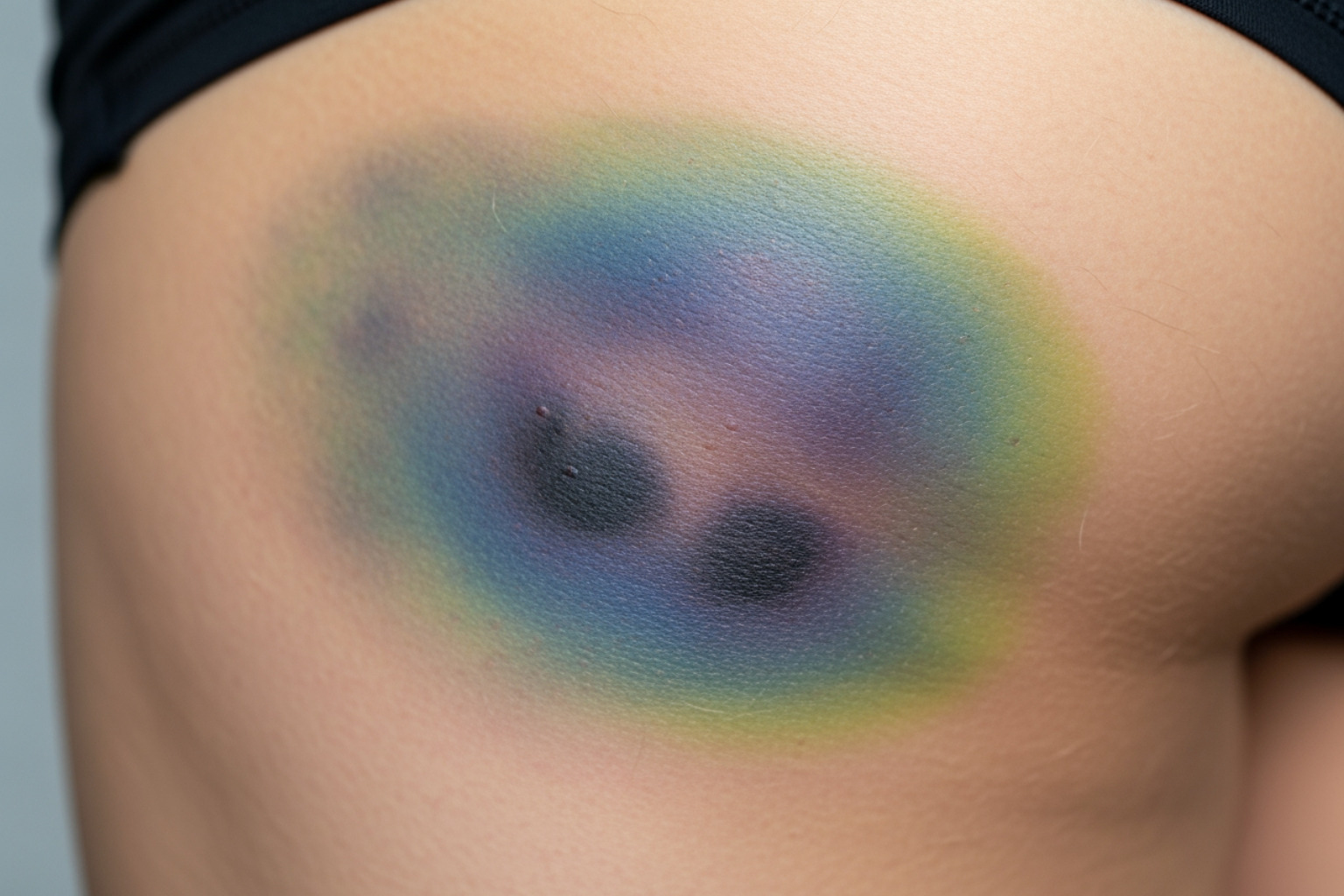
Within a few hours of the injury, you might start to notice swelling and inflammation around the affected area. This is your body's natural response to trauma, as it sends fluids and immune cells to begin the healing process. The swelling can make the back of your thigh feel tight and puffy.
Perhaps one of the most striking visual cues is bruising or discoloration. As tiny blood vessels are damaged during the muscle tear, blood can leak into the surrounding tissues, causing a bruise. This can appear as a blue, black, or purple mark that may spread down the back of your leg, sometimes even reaching below the knee or into the calf. The change in skin color can be quite noticeable and is a strong indicator of internal bleeding from the injury.
Beyond what you can see, a hamstring pull significantly impacts your ability to move and function normally. You'll likely experience muscle weakness, making it difficult to perform actions that engage the hamstring, such as bending your knee against resistance or extending your hip.
Perhaps the most common functional limitation is the inability to bear weight on the injured leg without significant pain. This often leads to a noticeable limping gait as you try to protect the damaged muscle. You might find yourself shifting your weight to the uninjured leg or walking with a stiff-legged stride.
Stiffness and a decreased range of motion are also common. Trying to fully straighten your leg or bend your knee might be painful or impossible, depending on the severity of the tear. This can make everyday activities feel like monumental tasks.
Here's a quick comparison of how symptoms might differ depending on the grade of your hamstring strain:
| Symptom Feature | Grade 1 (Mild Strain) | Grade 2 (Partial Tear) | Grade 3 (Complete Tear/Avulsion) |
|---|---|---|---|
| Pain | Mild discomfort, tightness, dull ache | Moderate to severe pain, sharp, often during activity | Intense, sharp pain, even at rest, sudden onset |
| Swelling/Bruising | Minimal to none initially, mild later | Noticeable swelling within hours, bruising possible | Significant swelling, extensive bruising, discoloration |
| Strength Loss | Minimal, slight weakness | Moderate, noticeable weakness | Severe, complete loss of strength, inability to contract muscle |
| Walking Ability | Able to walk, slight limp, discomfort | Difficulty walking, limping, pain during weight-bearing | Unable to walk without crutches, severe pain with any movement |
| Movement/Flexibility | Mild stiffness, full range of motion possible with discomfort | Limited range of motion, pain with stretching/bending | Extremely limited or no range of motion, severe stiffness |
| Popping Sensation | Unlikely | Possible, but less common than Grade 3 | Often reported at time of injury |
| Visible Defect | None | Possible slight dent or bulge | Clearly visible gap or bulge in the muscle |
How do hamstring pull symptoms impact daily activities?
The impact of hamstring pull symptoms on daily life can range from a minor annoyance to a complete disruption.
- Difficulty walking: Even a mild strain can make walking uncomfortable, forcing you to alter your gait. With more severe injuries, you might find it impossible to put weight on your leg, necessitating the use of crutches or other aids.
- Inability to straighten leg: This can affect everything from sitting comfortably (as your leg might not extend fully) to standing upright or performing simple stretches.
- Pain climbing stairs: The act of lifting your leg and engaging the hamstring can be excruciating, making stairs a significant challenge.
- Loss of strength for activities: Whether it's picking up something from the floor, running for the bus, or participating in your favorite sport, the weakened hamstring muscle will limit your ability to perform these actions effectively or safely.
As we discussed in our guide Pulled Hamstring Injury 101, these functional limitations underscore the importance of proper rest and rehabilitation to regain full mobility and strength.
Step 5: Grade the Injury and Know When to See a Doctor
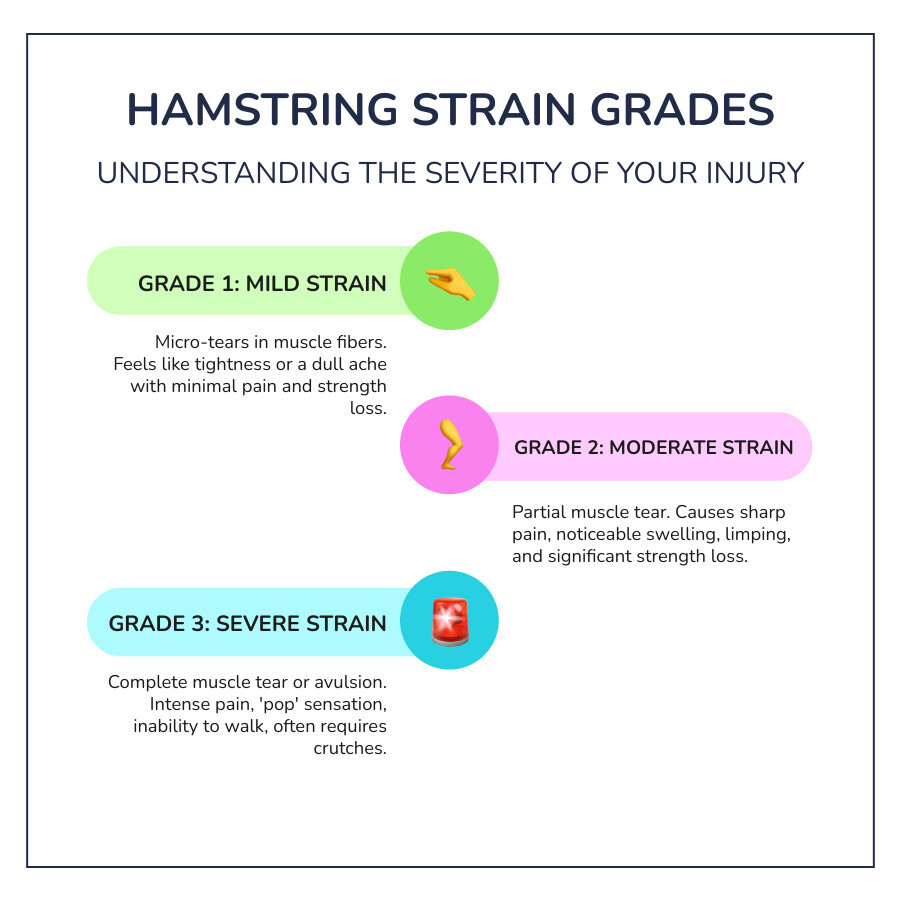
Understanding the different grades of hamstring injuries is crucial for determining the appropriate course of action and setting realistic recovery expectations. Hamstring strains are typically classified into three grades based on the extent of muscle fiber damage:
Grade 1 Strain (Mild): This is a mild muscle pull, involving microscopic tears in the muscle fibers. You might experience tightness or a dull ache in the back of your thigh, often after activity. There's usually minimal loss of strength or flexibility, and you can likely walk without much difficulty, though you might feel some discomfort. Recovery for a Grade 1 strain is often relatively quick, sometimes just a few days to a couple of weeks.
Grade 2 Strain (Moderate): This involves a partial tear of the muscle fibers. The pain is more significant, often sharp and immediate, occurring during or immediately after the activity. You'll likely experience noticeable swelling, bruising, and a moderate loss of strength and flexibility. Limping is common, and you might find it difficult to fully straighten your leg or bend your knee. A Grade 2 injury can take several weeks to a few months to heal properly.
Grade 3 Strain (Severe): This is the most severe type of hamstring injury, involving a complete tear of the muscle or an avulsion injury, where the tendon pulls completely away from the bone (sometimes taking a piece of bone with it). The pain is intense and immediate, often accompanied by a distinct popping or tearing sensation. You'll experience severe swelling, extensive bruising, and a complete inability to use the muscle. Walking is usually impossible without crutches. These injuries can take several months to heal and may require surgery. Our Hamstring Injury: Recovery Time, Treatment & Symptoms article provides more detail on these classifications.
When to Seek Medical Attention
While mild hamstring strains can often be managed with self-care at home, know when to seek professional medical attention. Ignoring severe symptoms or delaying proper diagnosis can lead to prolonged recovery, complications, or even re-injury.
You should consult a healthcare provider if you experience any of the following:
- Severe pain: If the pain is excruciating, unbearable, or getting progressively worse.
- Inability to bear weight: If you cannot put any weight on your injured leg or walk more than a few steps without significant pain.
- Large amount of swelling or bruising: If there's extensive swelling or bruising that appears rapidly or spreads significantly.
- A 'pop' or 'snap' at the time of injury: This sensation often indicates a more severe tear or even an avulsion injury.
- Your leg feels unstable or gives way: This could signal significant muscle damage or instability.
- No improvement with home treatment: If your hamstring pull symptoms don't start to improve after a few days of rest and self-care.
- Difficulty moving your leg: If your leg feels very stiff or is difficult to move.
In New York City, New York, we have access to excellent medical professionals. Don't hesitate to contact your doctor or visit an urgent care clinic if you're unsure about the severity of your injury. For general symptom checking and advice, you can also refer to online resources like this symptom checker.
Your Guide to Hamstring Strain Treatment and Recovery
Once you've identified the potential hamstring pull symptoms and, if necessary, consulted a healthcare professional, the next step is effective treatment and a structured recovery plan.
For most mild to moderate hamstring strains (Grade 1 and some Grade 2), the initial treatment often revolves around the R.I.C.E. method:
- R - Rest: This is paramount. Stop any activity that causes pain. Continuing to use an injured hamstring can worsen the tear and significantly prolong recovery. Depending on the severity, you might need to avoid weight-bearing activities for a few days, potentially using crutches.
- I - Ice: Apply ice packs to the injured area for 20-30 minutes every 2-3 hours for the first 2-3 days. This helps reduce pain, swelling, and inflammation. Always wrap the ice in a cloth to prevent direct contact with the skin.
- C - Compression: Use an elastic bandage to wrap the injured thigh. This helps minimize swelling and provides support to the injured muscle. Ensure the bandage is snug but not so tight that it cuts off circulation.
- E - Elevation: Keep your injured leg liftd above your heart whenever possible, especially when resting or sleeping. This uses gravity to help drain excess fluid from the injury site, further reducing swelling.
After the initial acute phase (typically 2-3 days), and once the pain and swelling have subsided, a gradual return to movement and strengthening exercises is crucial. This is where physical therapy guidance becomes invaluable. A physical therapist can design a customized rehabilitation program that progresses from gentle stretches and isometric exercises to more dynamic movements, ensuring the muscle heals correctly and regains its full strength and flexibility.
Pain management during recovery is also important. Over-the-counter non-steroidal anti-inflammatory drugs (NSAIDs) like ibuprofen can help manage pain and inflammation. However, always consult your doctor or pharmacist before taking any medication, especially if you have pre-existing conditions.
Recovery time for a hamstring strain varies significantly based on the grade of the injury. Grade 1 strains might feel better in a few days to two weeks, while Grade 2 injuries can take anywhere from two weeks to several months. Grade 3 tears, especially those requiring surgery, can take six months or more for full recovery.
One of the biggest complications of returning too soon to strenuous activities is re-injury. The hamstring is particularly prone to re-straining if not fully healed and strengthened. This can lead to a cycle of injury and re-injury, potentially causing chronic pain and long-term functional limitations. It's vital to follow your healthcare provider's advice and not rush the recovery process. Our guide, How to Master Hamstring Strain Recovery Time, offers more insights into optimizing your healing journey.
At-Home Treatment and Prevention
For ongoing muscle and nerve pain relief, many of our customers in New York City turn to Neuropasil. Our fast-acting topical creams, powered by natural ingredients like Aloe, Urea, and Menthol, are designed to provide targeted, soothing relief for various types of pain, including sore muscles from strains and sprains. While Neuropasil is not a cure for a hamstring tear, it can be a valuable tool for managing the discomfort and supporting recovery. You can explore our full range of solutions and find the best pain relief cream for your muscle pain.
Beyond topical solutions, over-the-counter pain relief options like oral pain relievers (as mentioned above) can be helpful. However, remember to always use these as directed.
The best defense against hamstring injuries is prevention. Here are some key strategies:
- Proper warm-up: Before any physical activity, engage in a light cardio warm-up (like jogging in place) followed by dynamic stretches (leg swings, walking lunges). This prepares your muscles for exertion.
- Stretching: Regular stretching, especially after exercise, helps maintain muscle flexibility. Tight muscles are more prone to injury.
- Strengthening exercises: Focus on strengthening both your hamstrings and your quadriceps, as muscle imbalance (where quads are much stronger) is a major risk factor. Incorporate exercises like hamstring curls, glute bridges, and deadlifts. Don't forget your glutes; weak gluteal muscles can put extra strain on your hamstrings.
- Gradual increase in activity: Avoid sudden increases in the intensity, duration, or frequency of your workouts. Follow the "10% rule" – don't increase your weekly mileage or training load by more than 10%.
- Listen to your body: If you feel pain or unusual tightness in your hamstrings during an activity, stop immediately. Pushing through pain is a recipe for injury.
- Stay in shape: As the saying goes, "Don't play your sport to get in shape; be in shape to play your sport." Maintaining a good level of fitness year-round can significantly reduce your risk.
Our An Essential Guide to Treating Hamstring Strains provides more comprehensive advice on treatment and prevention strategies.
Frequently Asked Questions about Hamstring Pull Symptoms
We often hear many questions about hamstring pull symptoms and what to do when they occur. Here are some of the most common ones:
How long does a pulled hamstring take to heal?
The healing time for a pulled hamstring depends entirely on its severity:
- Grade 1 (Mild Strain): These typically heal within a few days to two weeks. You might feel better quickly, but it's important not to rush back into strenuous activity.
- Grade 2 (Partial Tear): Recovery for a moderate tear can take anywhere from two weeks to eight weeks, or even up to a few months. Physical therapy is often recommended to ensure proper healing and prevent re-injury.
- Grade 3 (Complete Tear/Avulsion): These severe injuries can take several months to heal, often requiring extensive rehabilitation. In some cases, surgery may be necessary, which can extend the recovery period even further.
Factors like age, overall health, adherence to treatment, and previous injury can also influence recovery time.
Is it OK to walk or stretch with a pulled hamstring?
This is a tricky question with a nuanced answer.
- Walking: For a mild (Grade 1) hamstring strain, gentle walking that doesn't cause pain may be acceptable, and can even help with blood flow. However, if walking causes any significant pain or discomfort, you should rest and avoid it. For Grade 2 or 3 injuries, walking will likely be painful or impossible, and you may need crutches. Always consult your doctor or physical therapist before attempting to walk on an injured hamstring.
- Stretching: In the initial acute phase (first few days) of a hamstring pull, it's generally best to avoid stretching. Stretching a freshly injured muscle can exacerbate the tear and increase inflammation. Once the initial pain and swelling have subsided, gentle, pain-free stretching will become an important part of your rehabilitation, but only under the guidance of a healthcare professional. They will know when and how to introduce stretches safely to regain flexibility without causing further damage.
What's the difference between a pulled hamstring and a torn hamstring?
Often, the terms "pulled hamstring" and "hamstring strain" are used interchangeably to describe a mild injury, typically a Grade 1 tear. These are injuries where the muscle fibers are overstretched or have very small, microscopic tears.
The term "torn hamstring" usually refers to more severe injuries, specifically Grade 2 (partial tear) or Grade 3 (complete tear) injuries. These involve more significant damage to the muscle fibers, ranging from a substantial portion of the muscle being torn to a complete separation of the muscle or tendon from its attachment.
So, while all "torn" hamstrings are "pulled" hamstrings (in the sense that they've been stretched beyond their limit), not all "pulled" hamstrings are "torn" in the more severe sense. It's a spectrum of injury, with "pull" often indicating the milder end and "tear" indicating the more severe end.
Conclusion
Identifying hamstring pull symptoms early is your first and most crucial step toward effective recovery and preventing long-term complications. We've walked through the five key steps: pinpointing immediate pain and sensation, looking for visual cues, recognizing functional limits, and understanding how to grade the injury and when to seek medical help.
Listening to your body is paramount. That sharp pain, popping sensation, swelling, bruising, or inability to move normally are not signs to ignore. Whether you're an athlete pushing your limits or simply enjoying an active lifestyle in New York City, understanding these symptoms empowers you to take control of your health. Don't hesitate to seek professional medical advice for anything more than a very mild strain.
For everyday muscle aches and pains, and to support your recovery journey, we invite you to explore our full range of muscle and nerve pain relief solutions at Neuropasil. Our targeted topical creams are designed to provide the soothing relief you need to get back to doing what you love.
References
- American Academy of Orthopaedic Surgeons. Hamstring Muscle Injuries. Available at: https://www.aaos.org/conditions/hamstring-muscle-injuries/
- Cleveland Clinic. Hamstring Injury: Recovery Time, Treatment & Symptoms. Available at: https://my.clevelandclinic.org/health/diseases/17039-hamstring-injury
- Mayo Clinic. Hamstring injury - Symptoms and causes. Available at: https://www.mayoclinic.org/diseases-conditions/hamstring-injury/symptoms-causes/syc-20372985
- National Center for Biotechnology Information. Hamstring Strain Injuries: Recommendations for Diagnosis, Rehabilitation and Injury Prevention. Available at: https://www.ncbi.nlm.nih.gov/pmc/articles/PMC2867336/table/T3/?report=objectonly
- NHS. Hamstring injury. Available at: https://111.nhs.uk/triage/check-your-symptoms
- NewYork-Presbyterian. Pulled Hamstring: Symptoms & Causes. Available at: https://www.nyp.org/orthopedics/pulled-hamstring
- eMedicineHealth. Symptoms and Signs of Pulled Hamstring (Hamstring Injury): Treatment. Available at: https://www.emedicinehealth.com/pulled_hamstring/symptom.htm
- MedlinePlus. Hamstring strain - aftercare. Available at: https://medlineplus.gov/ency/patientinstructions/000551.htm
- AidYourHamstring. Symptoms of Hamstring Pulls. Available at: https://m.aidyourhamstring.com/pulled-hamstring/pulled-hamstring-symptoms.php
- Biofreeze. Pulled Muscle Symptoms. Available at: https://www.biofreeze.com/blog/pulled-muscle-symptoms
- Biofreeze. Calf Muscle Pain: Causes, Symptoms and Treatment. Available at: https://www.biofreeze.com/blog/calf-muscle-pain-causes-symptoms-treatment
- Biofreeze. A Guide to Relieving Muscle Pain and Discomfort. Available at: https://www.biofreeze.com/blog/muscle-pain-relief-guide
- Harvard Health Publishing. Muscle Strain. Available at: https://www.health.harvard.edu/atoz/muscle-strain-a-to-z