What is Forearm Muscle Pain and Why Does it Matter?
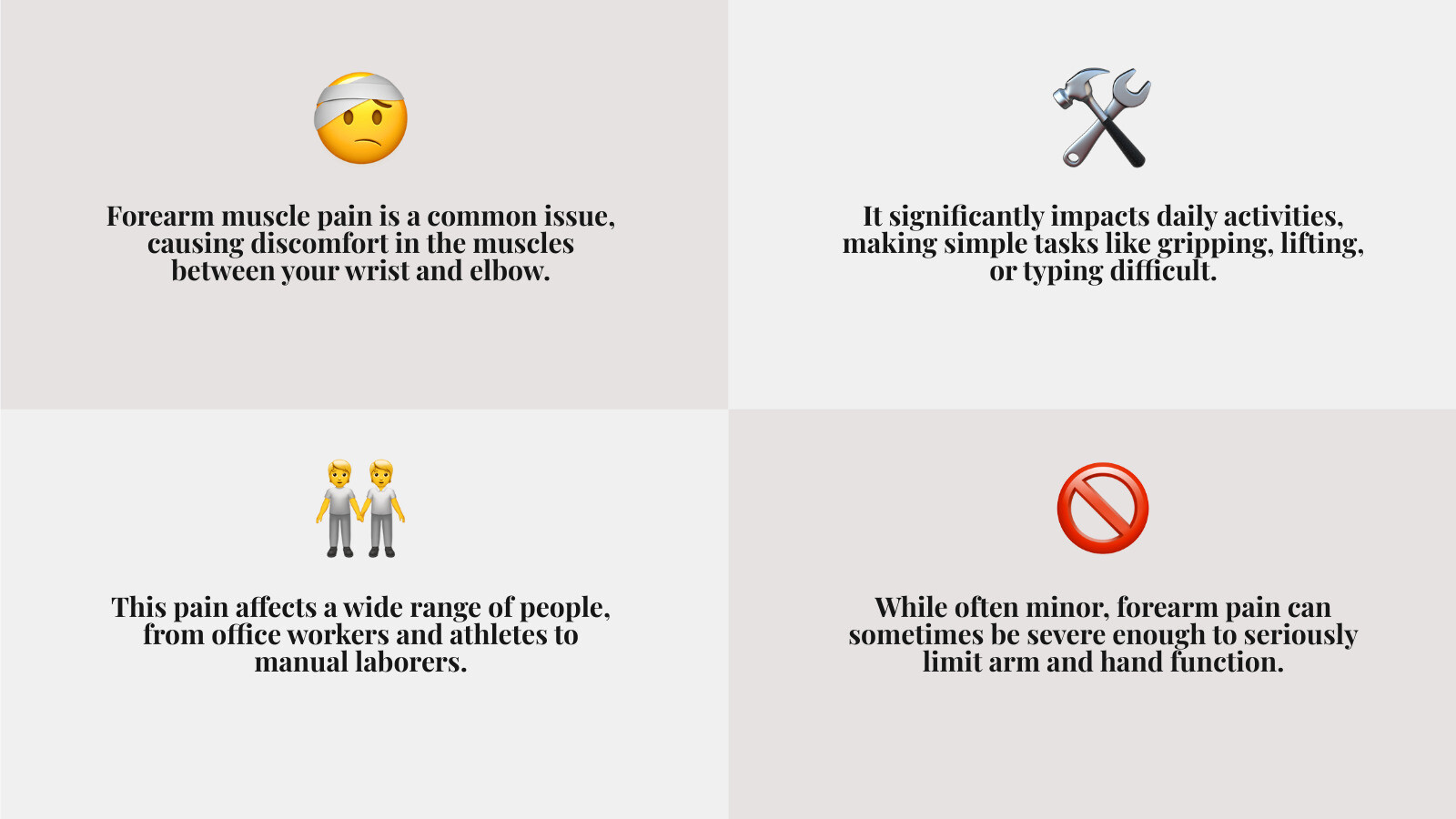
It's easy to take your forearms for granted. Until they hurt, that is. Forearm muscle pain is discomfort or soreness in the muscles between your wrist and elbow. This common issue can make everyday tasks surprisingly difficult, affecting your ability to grip, lift, or even type. In fact, forearm pain can significantly impact daily activities and your overall quality of life.
Here's why forearm muscle pain is such a common concern:
- Impact on Daily Activities: Simple actions like typing, gripping items, or even washing dishes can become painful and difficult.
- Widespread Occurrence: It affects a wide range of people, from office workers to athletes and those in manual labor.
- Potential for Debilitation: While often minor, it can sometimes be severe enough to seriously limit your arm and hand function.
- Causes: Can stem from overuse, injury, nerve issues, or even underlying health conditions.
This guide will help you understand why your forearms might be hurting, what you can do about it, and how to prevent future pain.
I'm Tony Enrico. At Neuropasil, we believe relief from pain, including forearm muscle pain, shouldn't be complicated. My work with Neuropasil is dedicated to providing fast, natural, and effective solutions, like our specialized muscle pain relief cream and nerve pain relief cream, to help people regain the freedom to live without discomfort. This expertise guides our understanding of how to tackle forearm pain effectively.
Simple guide to forearm muscle pain terms:
Understanding Your Forearm: Anatomy and Function
To truly understand forearm muscle pain, it helps to know what's actually going on beneath the skin. Your forearms are remarkably complex structures, packed with bones, muscles, and nerves that work together to perform countless everyday movements. When something goes wrong in this intricate system, pain can quickly follow.
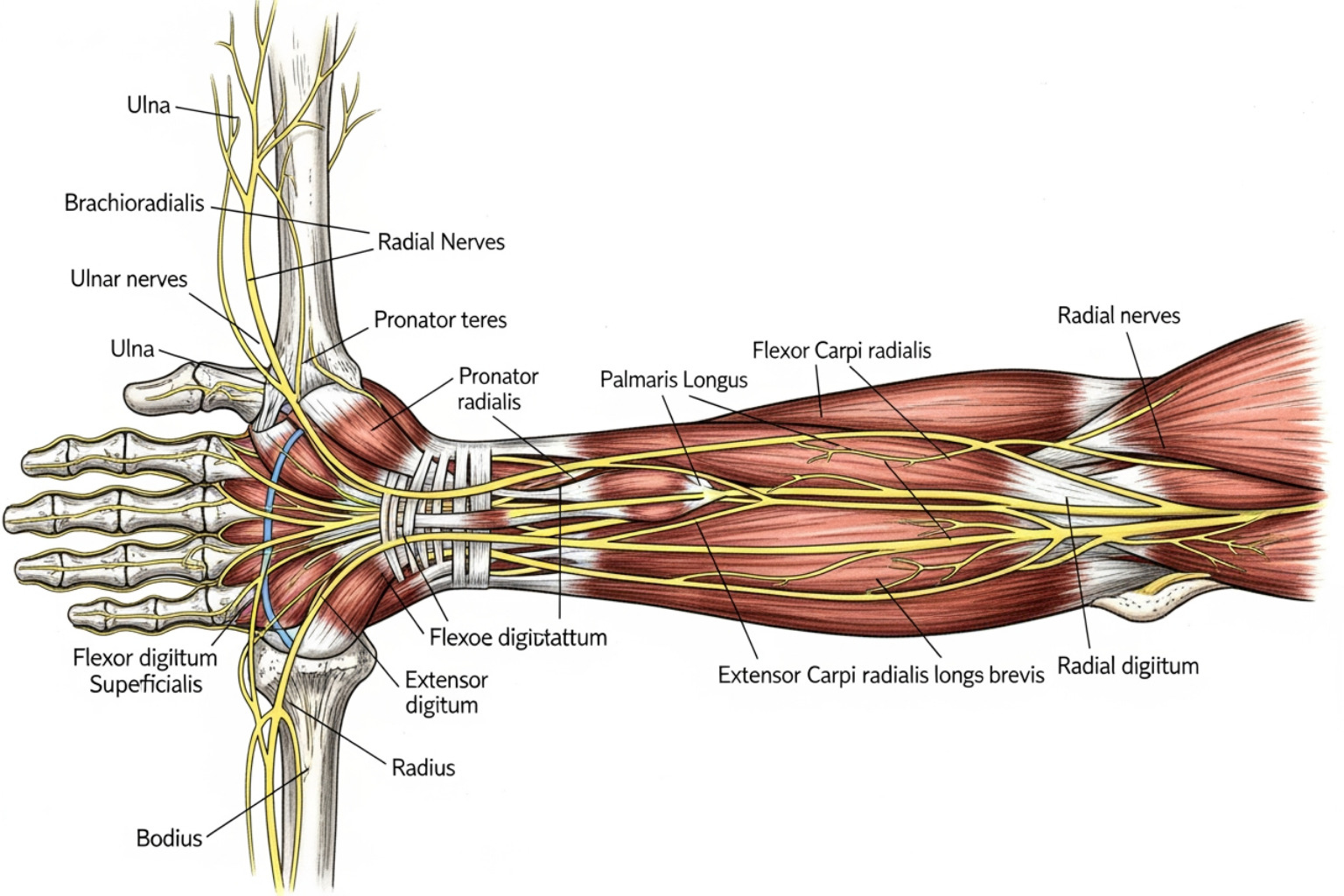
Think of your forearm as the vital bridge between your upper arm and hand. It's the area between your elbow and wrist, and it's built around two long bones that work together in fascinating ways.
The radius sits on your thumb side. It's the bone that does most of the rotating when you twist your hand. The ulna, on your pinky side, connects directly to your elbow and provides stability. Together, these bones allow you to turn a doorknob, type on a keyboard, or wave hello.
Now, wrapped around these bones are dozens of muscles that give your forearm its shape and power. The muscles on the palm side of your forearm are called flexors, and they do exactly what their name suggests—they flex or bend your wrist and fingers. Every time you grip a coffee mug, make a fist, or pick up your phone, you're using your flexor muscles.
On the flip side (literally), the muscles on the back of your forearm are extensors. These muscles straighten your wrist and fingers, letting you open your hand, push buttons, or wave goodbye. When these muscle groups become strained or overworked, that's often when forearm muscle pain develops.
Here's where it gets even more interesting. Three major nerves run through your forearm, carrying signals between your brain and hand. When these nerves get compressed or irritated, the pain can be sharp, burning, or accompanied by numbness and tingling.
The median nerve travels down the center of your forearm and passes through a narrow tunnel in your wrist. When it gets squeezed there, you develop carpal tunnel syndrome. The radial nerve runs along your thumb side and controls your ability to extend your wrist and fingers. And the ulnar nerve, which travels along your pinky side, is responsible for fine motor control and sensation in your pinky and ring finger.
Your forearm's two signature moves are supination (turning your palm up, like you're holding a bowl of soup) and pronation (turning your palm down, like you're pouring that soup out). These rotational movements are possible because of how the radius and ulna interact.
Understanding this anatomy isn't just academic—it helps you recognize where your pain is coming from and why certain movements hurt more than others. Whether it's a strained muscle, an irritated nerve, or overworked tendons, knowing what's beneath the surface makes treatment and prevention much more effective.
What's Causing Your Forearm Muscle Pain?
When discomfort strikes your forearm, pinpointing the "why" is our first priority. Forearm muscle pain isn't one-size-fits-all – it can show up as a dull, persistent ache or sharp, shooting sensations that make you wince. Understanding what you're feeling is the first step toward relief.
One of the most important distinctions is recognizing whether you're dealing with muscle ache or nerve tingling. Muscle pain typically feels deep and localized within the muscle itself. It often gets worse when you move or apply pressure to the affected area. Nerve pain, on the other hand, has a different personality – it's usually sharper, may radiate down your arm, and often brings along unwelcome companions like tingling, numbness, or a burning sensation. If you're experiencing that "pins and needles" feeling or areas of numbness, you're likely dealing with a nerve issue rather than purely muscular pain.
The Overuse Epidemic
One of the biggest culprits behind forearm muscle pain is simply doing too much of the same thing. When we repeat the same motions day after day without adequate rest or proper technique, our muscles and tendons essentially stage a protest. This is what healthcare professionals call Repetitive Strain Injury (RSI).
RSI isn't just one condition – it's an umbrella term covering various problems that arise from prolonged, repetitive movements that stress the muscles, tendons, and nerves of the forearm. If you spend hours typing at a keyboard, use hand-held power tools regularly, work as a hairdresser, or play sports like tennis or golf, you're in the high-risk category. The numbers tell the story: upper limb pain is a significant issue. For instance, a 2019-2020 U.S. survey found that over a 3-month period, pain in the neck, shoulder, and hand/wrist regions each affected between 15% and 17% of adults, highlighting just how widespread these issues have become (4). You can learn more about What is Repetitive Strain Injury (RSI)? from the NHS (3).
When Your Lifestyle Fights Against You
Beyond repetitive motions, your daily habits can set the stage for forearm discomfort. Poor posture is a silent saboteur, especially for those of us who spend hours hunched over computers. When your neck and shoulders are constantly tense and misaligned, that strain doesn't stay put – it can radiate down into your forearms, creating pain that seems to come from nowhere.
Similarly, inadequate ergonomics in your workspace can be a recipe for chronic pain. If your keyboard is too high, your chair too low, or your mouse positioned awkwardly, you're forcing your forearms to work in unnatural positions all day long. Over time, this creates persistent stress that can lead to significant discomfort.
Specific Conditions Causing Forearm Muscle Pain
Let's get specific about what might be happening in your forearm. Several distinct conditions commonly cause forearm muscle pain, each with its own character and causes.
Muscle strain happens when the muscle tissue itself gets overstretched or even torn. This often occurs from overuse, sudden awkward movements, or lifting something heavy with poor form. You'll typically feel sudden pain, tenderness when you touch the area, some swelling, and difficulty moving your forearm or gripping objects. If you're dealing with a strain, our guide on Muscle Strain Treatment offers detailed recovery strategies.
Tendon sprains are similar but involve injury to the tendons – those tough, fibrous bands connecting your muscles to bones. Like muscle strains, these can result from overuse or sudden forceful movements. The pain tends to be localized along the tendon itself, often accompanied by tenderness, swelling, warmth in the area, and limited range of motion.
Tendinitis is inflammation or irritation of a tendon, typically from repetitive movements. Two types frequently affect the forearm: Tennis Elbow (Lateral Epicondylitis) affects the tendons on the outside of your elbow that control wrist and finger extension. Despite its name, you don't need to play tennis to get it – any repetitive wrist extension and gripping can cause it. Golfer's Elbow (Medial Epicondylitis) is its counterpart, affecting the tendons on the inside of the elbow that control wrist flexion and gripping. Again, you don't need to be a golfer – repetitive wrist flexion from any activity can trigger it.
To help you distinguish between some of the most common conditions, here's a quick comparison:
| Condition | Location of Pain | Key Symptoms | Common Causes |
|---|---|---|---|
| Tennis Elbow | Outside of the elbow, radiating down forearm | Pain when gripping, lifting, or extending wrist; tenderness on lateral epicondyle | Repetitive wrist extension, gripping activities, racquet sports |
| Golfer's Elbow | Inside of the elbow, radiating down forearm | Pain when flexing wrist or gripping; tenderness on medial epicondyle; possible tingling in fingers | Repetitive wrist flexion, gripping, throwing, golfing |
| Carpal Tunnel Syndrome | Wrist and palm, radiating up forearm | Numbness and tingling in thumb, index, middle fingers; weakness in grip; worse at night | Repetitive hand movements, prolonged wrist flexion, fluid retention, anatomical factors |
Nerve-Related and Referred Pain
Sometimes, forearm muscle pain isn't actually coming from your forearm muscles at all. Nerve entrapment occurs when a nerve gets compressed or pinched, causing pain, numbness, and tingling that can radiate throughout the forearm.
Carpal Tunnel Syndrome is perhaps the most well-known nerve entrapment condition. It happens when the median nerve gets compressed as it passes through the carpal tunnel in your wrist. While the compression occurs at the wrist, many people experience symptoms that extend up into the forearm. You can find An overview of Carpal Tunnel Syndrome from the American Society for Surgery of the Hand (2).
Radial Tunnel Syndrome is less common but equally frustrating. It occurs when the radial nerve becomes compressed in the forearm itself, often causing aching pain on the top of the forearm and difficulty extending your wrist or fingers.
Cervical Radiculopathy – commonly called a pinched nerve in the neck – can send pain radiating all the way down into your forearm. When a nerve root in your neck becomes compressed, it can create numbness, tingling, and radiating pain that travels down your shoulder and into your forearm, even though the actual problem is in your neck. For a broader understanding of muscle discomfort, check out our article on Muscle Pain.
Other Potential Causes
Beyond overuse and nerve issues, other conditions can trigger forearm muscle pain. Acute injuries like fractures from falls or direct impacts can cause severe, immediate pain along with visible deformity and swelling. If you suspect a fracture, seek medical attention immediately. You can read more about Adult Forearm Fractures from the American Academy of Orthopaedic Surgeons (1).
Bruises (contusions) from direct blows create localized pain, discoloration, and tenderness that typically improves within days to weeks.
Arthritis can also affect the forearm, though it's more commonly associated with joint pain. Rheumatoid arthritis, an autoimmune condition, can cause inflammation in the wrist and elbow joints that radiates into the forearm. Osteoarthritis, the wear-and-tear type, can affect these joints as well, particularly after years of heavy use or previous injuries.
Finally, some underlying medical conditions can manifest as forearm pain. Angina (heart-related chest pain) sometimes radiates down the left arm, including the forearm. Diabetes can lead to peripheral neuropathy, causing nerve-related pain and tingling in the extremities, including the forearms. While these are less common causes of forearm pain, they're important to keep in mind, especially if your pain comes with other unexplained symptoms.
What's Causing Your Forearm Muscle Pain?
When your forearms start hurting, the first question that naturally comes to mind is: "What did I do to deserve this?" Understanding the "why" behind your forearm muscle pain is crucial for finding the right relief. The type of pain you're feeling can actually tell you a lot about what's going on beneath the surface.
Pain isn't just pain – it comes in different flavors, and identifying the type you have is key to finding the right solution. A deep, dull ache that settles into the muscle itself usually points to strain or overwork, where a targeted muscle pain relief cream can be beneficial. On the other hand, if you're experiencing sharp, shooting sensations, tingling, or a burning feeling, that's often nerve-related. For this kind of discomfort, a specialized nerve pain relief cream may be more appropriate. Think of it as your body sending different messages that call for different responses.
The Overuse Epidemic
Here's the thing: our forearms are workhorses. They're involved in almost everything we do with our hands, from typing that important report to carrying groceries, from playing sports to scrolling through our phones. When we perform these repetitive motions day after day without giving our muscles proper rest or using correct technique, something's got to give. The muscles and tendons become inflamed, irritated, and eventually damaged.
This cumulative wear and tear has a name: Repetitive Strain Injury (RSI). It's essentially an umbrella term covering various conditions that develop when you repeat the same movements over and over, placing continuous stress on your forearm's muscles, tendons, and nerves. The issue is incredibly common. In fact, according to the World Health Organization, musculoskeletal conditions are the leading contributor to disability worldwide, affecting a significant portion of the adult population from office workers to manual laborers (5). You're definitely not alone in this struggle. The NHS provides comprehensive information on What is Repetitive Strain Injury (RSI)? if you'd like to learn more about this common condition (3).
When Lifestyle Becomes a Pain Point
Sometimes the cause of forearm muscle pain isn't just about what you're doing with your hands – it's about how you're doing it. Poor posture is a sneaky culprit. When you slouch at your desk or crane your neck forward to see your screen, you're creating a chain reaction of tension that travels down from your neck and shoulders right into your forearms. Your body is all connected, after all.
Ergonomics matters more than most people realize. If your workstation isn't set up properly – maybe your desk is too high, your chair too low, or your keyboard positioned awkwardly – you're forcing your forearms into unnatural positions for hours at a time. Imagine trying to type with your wrists bent at odd angles all day long. It's no wonder pain develops!
Specific Conditions Causing Forearm Muscle Pain
Let's get specific about what might actually be happening in your forearm. Understanding these common conditions can help you identify your own situation.
Muscle strain is probably the most frequent offender. This happens when the muscle fibers in your forearm get overstretched or torn. Maybe you lifted something heavier than you should have, made a sudden forceful movement, or simply pushed through one too many repetitions without rest. The result? Sudden pain, tenderness, swelling, and difficulty gripping or moving your arm. We've put together helpful information on Muscle Strain Treatment that dives deeper into managing these injuries.
Tendon sprains are similar but involve the tough, fibrous cords that connect your muscles to bones. When these get injured through overuse or sudden force, you'll feel pain and tenderness along the tendon itself, along with swelling and a limited ability to move your forearm through its full range of motion.
Tendinitis takes things a step further – this is when those tendons become inflamed and irritated, usually from repetitive movements that just won't quit.
Two specific types of tendinitis deserve special mention because they're so common. Tennis Elbow (Lateral Epicondylitis) affects the tendons on the outside of your elbow – the ones controlling wrist and finger extension. Despite its sporty name, you don't need to play tennis to develop it. Repetitive gripping, wrist extension, and even extensive computer mouse use can trigger it.
Golfer's Elbow (Medial Epicondylitis) is tennis elbow's cousin, affecting the tendons on the inside of the elbow that control wrist flexion and gripping. Again, you don't need to golf to get it – any activity involving repeated wrist flexion and gripping can be the culprit.
To help you distinguish between some of these common conditions, here's a quick comparison:
| Condition | Location of Pain | Key Symptoms | Common Causes |
|---|---|---|---|
| Tennis Elbow | Outside of the elbow, may radiate down forearm | Pain when gripping, lifting, or extending wrist; tenderness on lateral epicondyle; weakness in grip | Repetitive wrist extension and gripping activities; computer mouse use; racquet sports; manual labor |
| Golfer's Elbow | Inside of the elbow, may radiate down forearm | Pain when flexing wrist or gripping; tenderness on medial epicondyle; weakness in wrist flexion | Repetitive wrist flexion and gripping; golf swing; throwing sports; lifting; hammering |
| Carpal Tunnel Syndrome | Wrist, palm, thumb, index, middle fingers | Numbness, tingling, burning in thumb and first 3 fingers; weakness in thumb; symptoms often worse at night | Repetitive hand movements; prolonged wrist flexion; pregnancy; diabetes; thyroid disorders |
Nerve-Related and Referred Pain
Sometimes the pain in your forearm isn't actually coming from your forearm at all – or at least, it's not just a muscle problem. Nerves can be compressed, pinched, or irritated, sending pain signals that can be confusing and frustrating.
Nerve entrapment happens when a nerve gets compressed or squeezed, often where it passes through a narrow space. The result is a distinctive set of symptoms: sharp or shooting pain, numbness, tingling, or a burning sensation. These nerve symptoms feel different from the dull ache of a muscle strain.
Carpal Tunnel Syndrome is perhaps the most famous nerve entrapment condition. It occurs when the median nerve gets compressed as it passes through the carpal tunnel in your wrist. While the compression happens at the wrist, you'll often feel symptoms radiating up into your forearm, along with numbness and tingling in your thumb, index, middle, and part of your ring finger. The American Society for Surgery of the Hand offers An overview of Carpal Tunnel Syndrome with detailed information about this condition (2).
Radial Tunnel Syndrome is less well-known but equally troublesome. This involves compression of the radial nerve as it travels through the forearm. It can mimic tennis elbow but doesn't respond to typical tennis elbow treatments.
Cervical Radiculopathy – or a pinched nerve in your neck – can send pain radiating all the way down into your forearm. It's a reminder that pain location doesn't always equal pain source. You might also experience numbness, tingling, and weakness traveling down your arm. For more comprehensive information about muscle-related pain, check out our article on Muscle Pain.
Other Potential Causes
Forearm muscle pain can also stem from acute injuries. Fractures – broken bones in the radius or ulna – obviously cause significant pain, swelling, deformity, and inability to use your arm. If you suspect a fracture, seek immediate medical attention. The American Academy of Orthopaedic Surgeons provides detailed Information on adult forearm fractures (1).
Bruises (contusions) from direct impact can cause pain and discoloration, though they typically heal on their own with time and proper care.
Arthritis can also be a source of forearm pain. Both Rheumatoid Arthritis (an autoimmune condition) and Osteoarthritis (wear-and-tear arthritis) can affect the joints and cause pain that radiates into the surrounding muscles. The pain is often accompanied by stiffness, especially in the morning, and may worsen with activity.
Sometimes forearm muscle pain is actually a symptom of an underlying medical condition that has nothing to do with your arm itself. Angina (reduced blood flow to the heart) can cause arm pain, though it's typically accompanied by chest discomfort. Diabetes can lead to nerve damage (neuropathy) that causes pain, tingling, and numbness in the extremities, including the forearms.
The takeaway? Forearm muscle pain can have many different causes, from simple overuse to complex nerve issues or even systemic conditions. Understanding the type of pain you're experiencing and what activities might have triggered it is your first step toward finding relief.
References
- American Academy of Orthopaedic Surgeons. (2020). Adult Forearm Fractures. OrthoInfo. Retrieved from https://orthoinfo.aaos.org/en/diseases--conditions/adult-forearm-fractures/
- American Society for Surgery of the Hand. (n.d.). Carpal Tunnel Syndrome. ASSH. Retrieved from https://www.assh.org/handcare/condition/carpal-tunnel-syndrome
- National Health Service. (2021). Repetitive strain injury (RSI). NHS. Retrieved from https://www.nhs.uk/conditions/repetitive-strain-injury-rsi/
- Lucas, J. W., Connor, E. M., & Bose, J. (2023). Prevalence of musculoskeletal pain, United States, 2019–2020. NCHS Data Brief, no 479. National Center for Health Statistics. Retrieved from https://www.cdc.gov/nchs/products/databriefs/db479.htm
- World Health Organization. (2023, February 8). Musculoskeletal conditions. WHO. Retrieved from https://www.who.int/news-room/fact-sheets/detail/musculoskeletal-conditions