Understanding Sciatica and Its Impact on Sleep
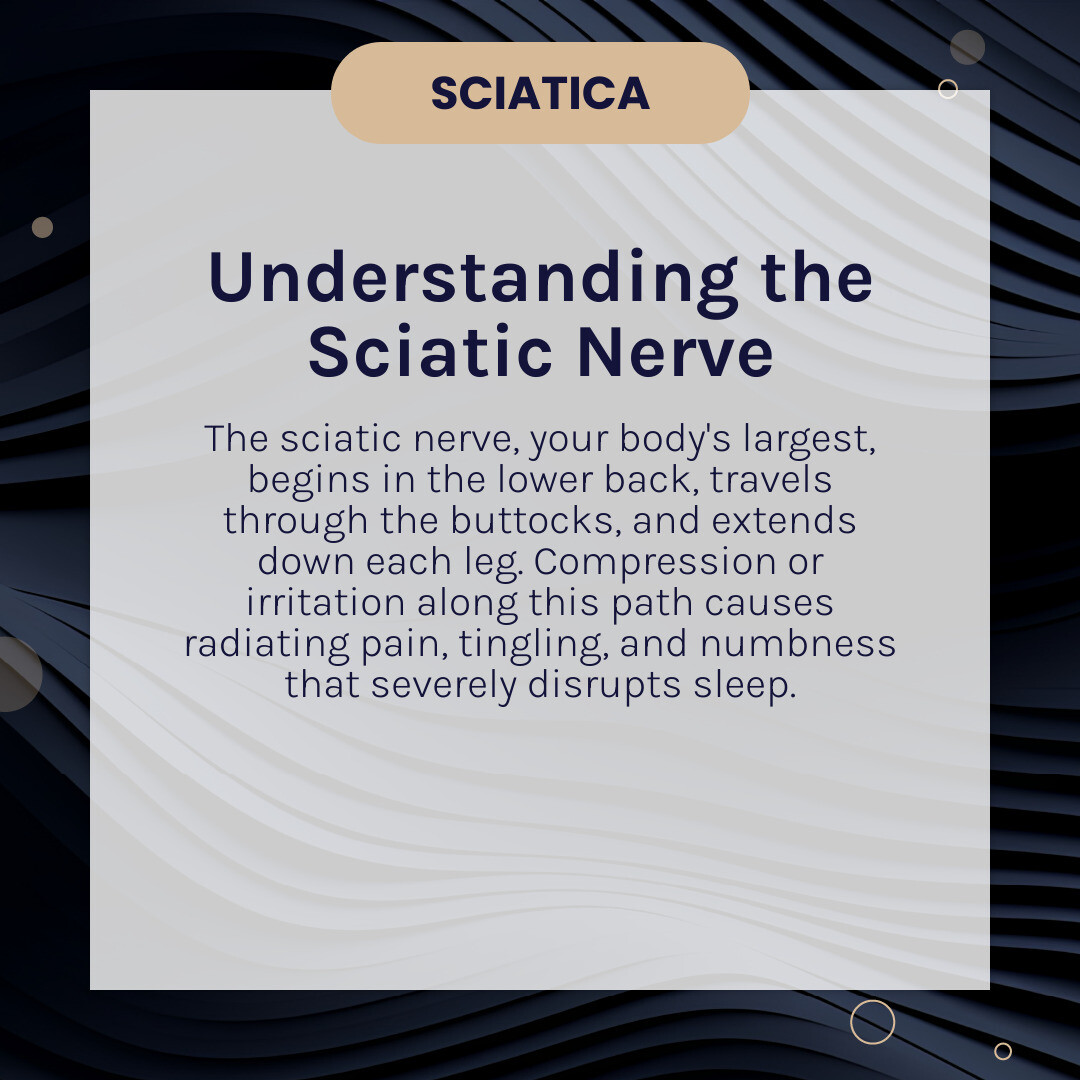
Learning how to sleep with sciatica begins with understanding the condition. Sciatica occurs when your sciatic nerve—the body's largest—becomes compressed or irritated in the lower back. Since this nerve runs from your lower spine down through your buttocks and into each leg, the pain can radiate widely.
Quick Answer: Best Sleeping Positions for Sciatica
- Side sleeping with a pillow between your knees to keep your spine aligned
- Back sleeping with a pillow under your knees to maintain your spine's natural curve
- Fetal position with knees slightly bent, if side sleeping feels comfortable
- Avoid stomach sleeping as it flattens your spine and strains your neck
Sciatica pain can be a sharp, shooting sensation, a dull ache, or a burning feeling, often accompanied by tingling, numbness, or muscle weakness. These symptoms can be impossible to ignore at night, and studies show that up to 55 percent of people with chronic lower back pain suffer from sleep disturbances.
This creates a cruel catch-22: pain disrupts sleep, but your body needs deep, restorative sleep to heal inflammation and nerve tissue. This vicious cycle can leave you exhausted and in more pain.
I'm Tony Enrico of Neuropasil. I've dedicated my work to helping people find relief from nerve pain. Our mission is to help you learn how to sleep with sciatica using practical strategies, restoring comfort to your life.
The Best Way to Sleep with Sciatica: Positions and Pillow Placement
Finding a comfortable sleeping position with sciatica is key. The goal is to maintain spinal alignment and reduce pressure on the sciatic nerve. Experiment patiently, as what works for one person may not work for another.
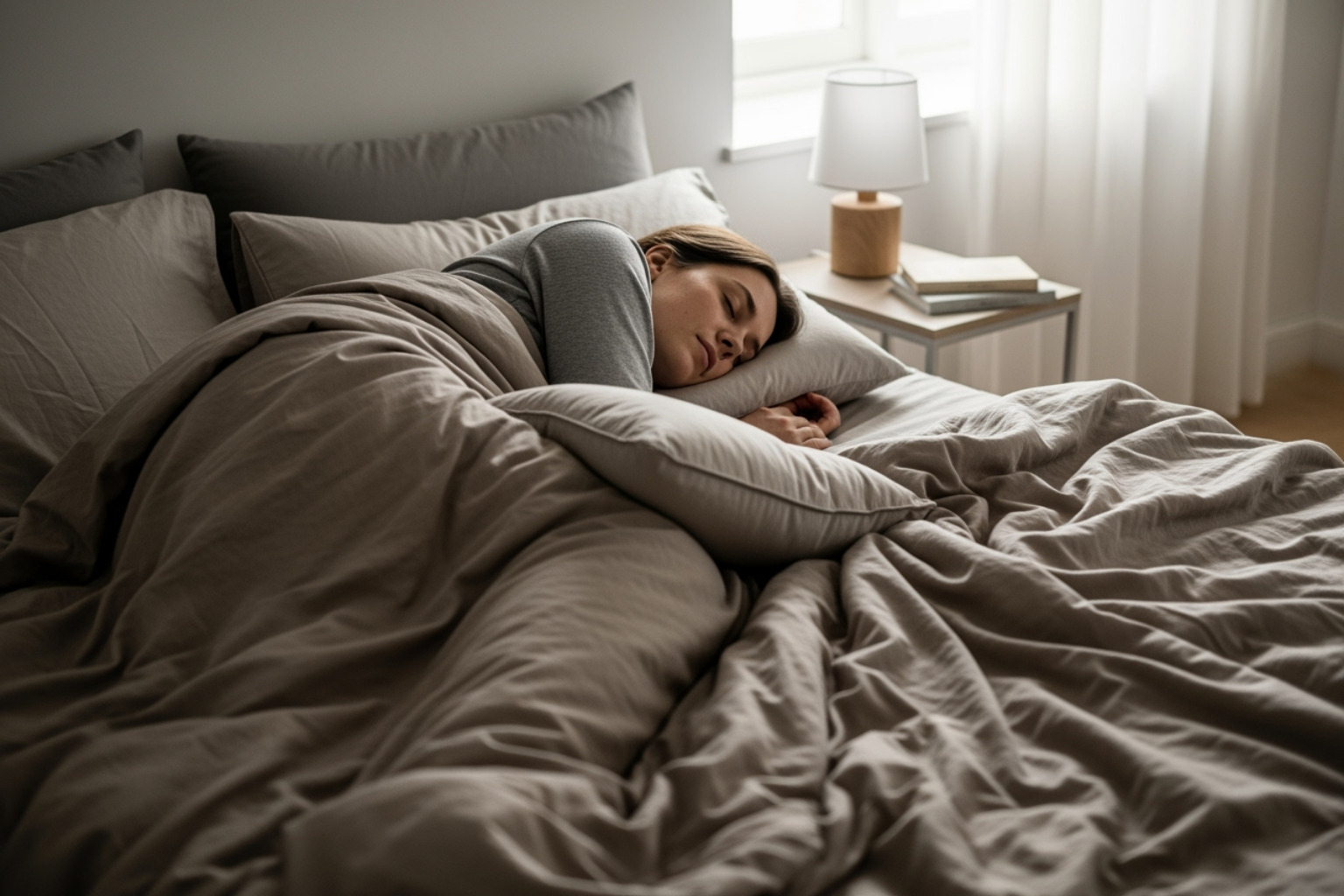
Best Sleeping Positions for Sciatica
Keeping your spine in a neutral position—maintaining its natural curves without twisting—is the secret to sleeping better with sciatica.
Side sleeping is often a great choice. Lie on your pain-free side and place a pillow between your knees. This keeps your hips, pelvis, and spine aligned, preventing your top leg from pulling your spine out of position and compressing the nerve. For more tips on managing discomfort, see our guide on Lower Back Pain.
The fetal position, a variation of side sleeping, involves curling your torso and bringing your knees toward your chest. This may open up space between vertebrae for some, but it can worsen pain for others. Listen to your body.
Back sleeping is also effective with a key adjustment: place one or two pillows under your knees. This elevation supports the natural curve of your lower spine, taking pressure off the sciatic nerve.
How to Sleep with Sciatica Using Pillows for Support
Pillows are essential tools for achieving proper spinal alignment and reducing nerve compression.
- Side sleepers: A pillow between the knees is non-negotiable to keep your hips stacked and spine neutral. A body pillow or a dedicated knee pillow works well.
- Back sleepers: A pillow under the knees maintains your lumbar curve. For even more relief, a wedge pillow setup—propping up your back and legs—can mimic a recliner and significantly reduce pressure on nerve roots.
- Body pillows are versatile. Side sleepers can hug them to support the upper body and keep a pillow between the knees, which also helps prevent rolling onto your stomach.
- If there's a gap between your waist and the mattress when side sleeping, fill it with a small rolled towel to prevent your spine from sagging.
Worst Sleeping Positions to Avoid
We strongly advise against stomach sleeping. It's widely considered the worst position for sciatica because it flattens your spine's natural curve, increasing strain on your lower back. It also forces you to turn your head, which twists your spine and strains your neck. Experts confirm that this position is detrimental.
If you must sleep on your stomach, place a thin pillow under your pelvis and use a very flat pillow (or none) for your head to minimize strain. However, working to avoid this position is your best bet.
How to Sleep with Sciatica During Pregnancy
Sciatica is common during pregnancy as the growing uterus can press on the sciatic nerve. The best sleep positions for pregnancy align with general sciatica advice.
Side-sleeping is essential. A 2019 review of studies found that sleeping on either your left or right side is safe and optimizes blood flow.
For maximum comfort, support your belly and place a pillow between your knees. A body pillow is excellent for this, as it can support your belly while maintaining spinal alignment and reducing pressure on the sciatic nerve.
Optimizing Your Sleep Environment for Sciatica Relief
Your sleep environment, from your mattress to your bedtime routine, is crucial for sciatica relief. Creating a healing sanctuary can ease pain and promote rest. This approach is central to Finding Freedom: How to Naturally Relieve Sciatica Pain.
The Role of Your Mattress
A supportive mattress is your spine's best friend. For sciatica, it's critical for keeping your spine aligned and reducing pressure on the sciatic nerve.
Medium-firm mattresses are often the ideal choice. A 2015 review of studies concluded that medium-firm mattresses are best for sleep quality and spinal alignment. A soft mattress can cause your spine to sag, while an overly firm one can create pressure points. If your mattress is too soft, placing plywood between it and the box spring can add firmness.
| Mattress Type | Characteristics | Impact on Sciatica |
|---|---|---|
| Soft | Sinks easily, conforms closely, less support | Can cause spine to sag out of alignment, increasing nerve compression and pain. Generally not recommended for sciatica. |
| Medium-Firm | Balances support and cushioning, good spinal alignment | Often considered ideal for sciatica, providing enough support to keep the spine neutral while cushioning pressure points. |
| Firm | Very little give, very supportive | Can provide good spinal alignment but may not contour enough to the body, potentially creating pressure points for some individuals. |
Gentle Stretches and Exercises Before Bed
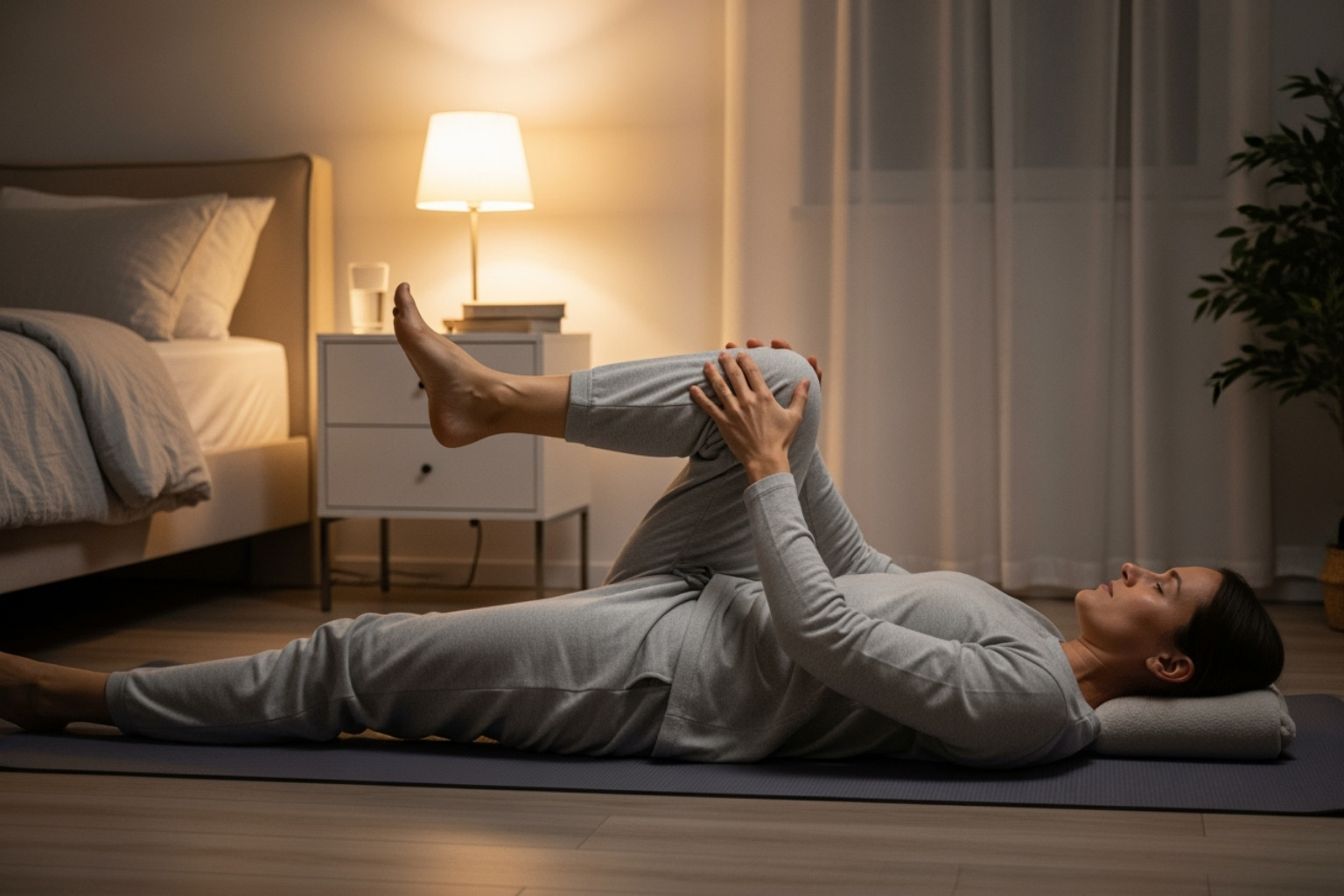
Gentle stretching before bed can release muscle tension and improve flexibility. Avoid vigorous exercise at least 90 minutes before sleep. Try these soothing stretches:
- Pelvic Tilt: Lie on your back with knees bent. Gently flatten your lower back against the floor by tilting your pelvis up. Hold, release, and repeat.
- Knee-to-Chest Stretch: Lie on your back and gently pull one knee to your chest, holding for 20-30 seconds to stretch your lower back and glutes. Repeat on the other side.
- Figure 4 Stretch: Lie on your back with knees bent. Cross one ankle over the opposite knee and gently pull the bottom knee toward your chest to stretch your glute and hip.
- Child's Pose: From hands and knees, sit your hips back toward your heels and extend your arms forward. This decompresses the spine.
- Supine Hamstring Stretch: Lie on your back and use a towel or strap to gently pull one straightened leg toward the ceiling, stretching your hamstring. Hold for 20-30 seconds and switch legs.
Bedtime Rituals for Pain Management
Your pre-sleep routine can signal to your nervous system that it's time to rest and heal.
- Warm Bath or Shower: The warmth relaxes tense muscles and can ease pain.
- Heat or Cold Therapy: Apply a heating pad to your lower back for 15-20 minutes to ease muscle spasms. Alternatively, an ice pack for 10-15 minutes can reduce acute inflammation.
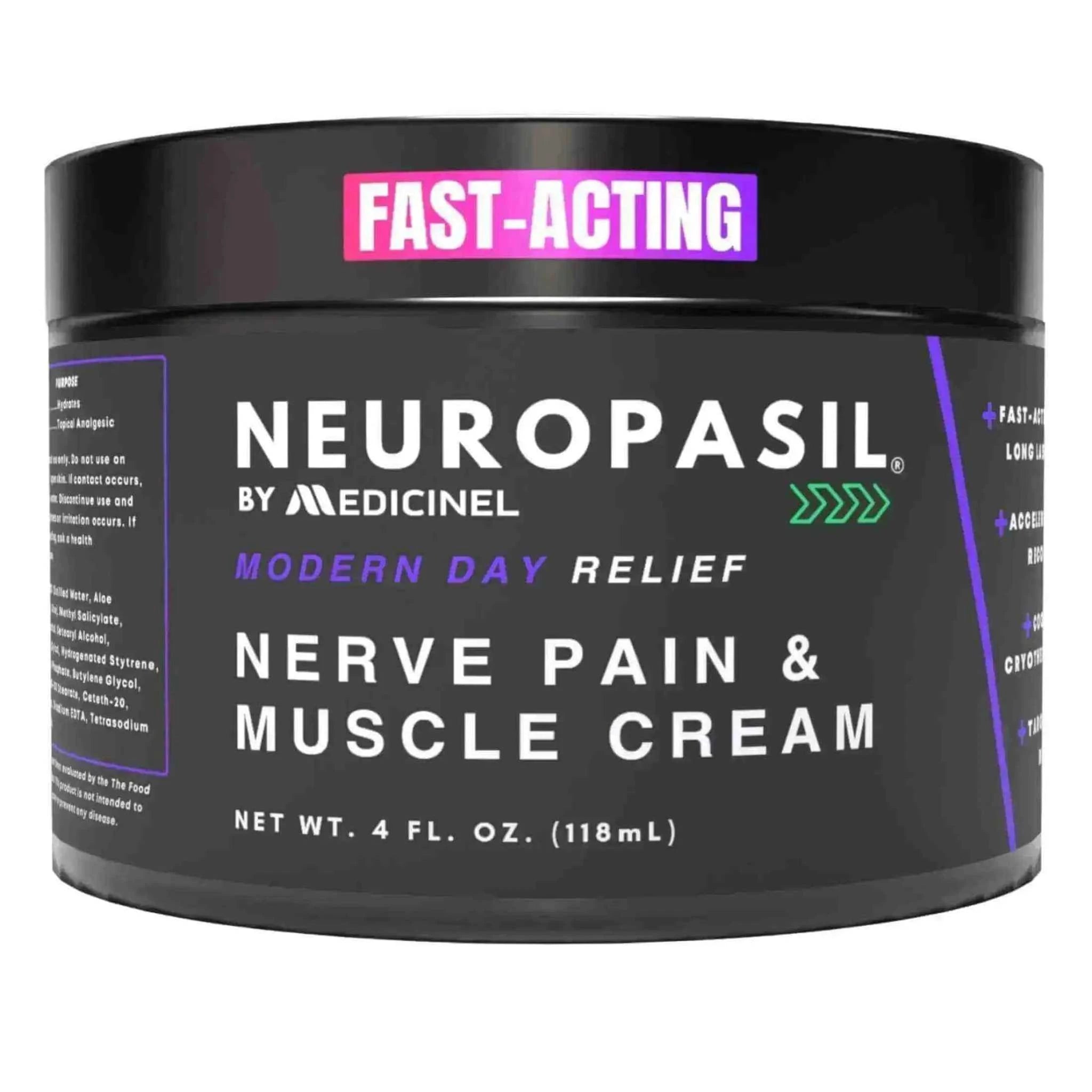
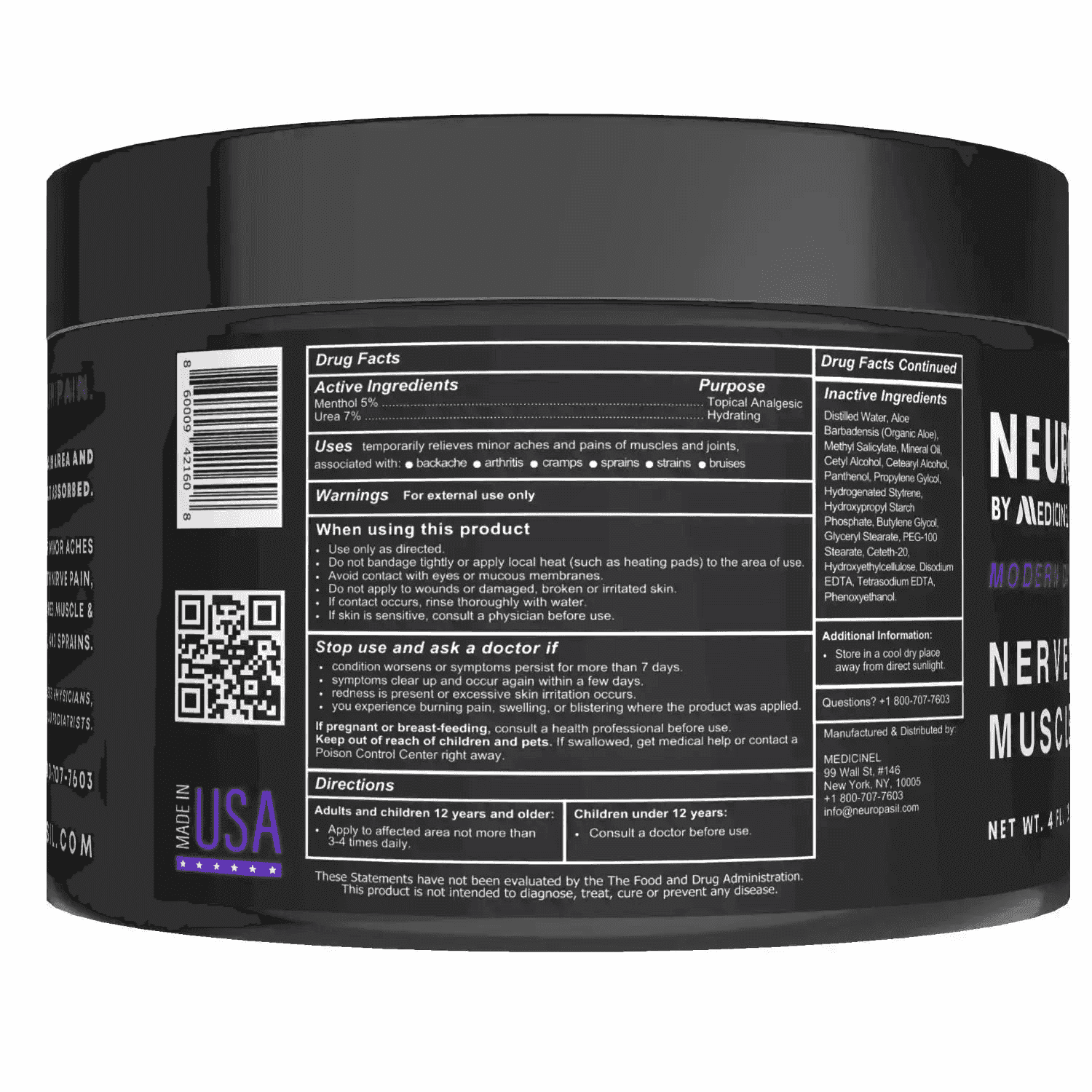
- Topical Relief Creams: This is where Neuropasil shines. Our cream uses a powerful blend of Aloe, Urea, and Menthol for targeted relief. The Menthol provides a cooling sensation that distracts from pain, while Aloe and Urea offer deep, sustained comfort. It's an effective Drug-Free Sciatica Solution and also works well for general Muscle Pain.
- Sleep Hygiene: A consistent sleep schedule, a dark, cool room, and avoiding screens before bed dramatically improve sleep quality, which helps your body manage pain more effectively.
When to See a Doctor for Sciatica and Sleep Problems
When sciatica consistently robs you of sleep and self-care strategies aren't helping, it's time to consult a healthcare professional. Persistent pain that interferes with your daily life requires a proper diagnosis to prevent the condition from worsening and to explore more effective treatments.
If your pain lasts more than a week without improvement or is getting progressively worse, make an appointment. In the meantime, you can find more strategies here: Sciatica SOS: Proven Strategies for Immediate Pain Relief.
Diagnosing the Underlying Cause
Sciatica is a symptom, not a diagnosis. It signals that something is pressing on the sciatic nerve. A doctor's job is to find the source of that pressure.
A healthcare provider will perform a physical exam, checking reflexes, muscle strength, and sensation. If pain persists for over six weeks, imaging tests like an MRI or CT scan may be ordered to view your spine.
Common causes include:
- Herniated Disc: The most frequent cause (about 90% of cases), where a spinal disc's soft center pushes through its outer layer, pressing on a nerve root.
- Spinal Stenosis: A narrowing of the spinal canal, common in adults over 60.
- Bone Spurs: Bony overgrowths on the vertebrae.
- Spondylolisthesis: A condition where one vertebra slips over another.
Understanding the root cause is essential for effective treatment. For a deeper dive, see The Definitive Guide to What Causes Sciatic Nerve Pain. Medical providers use resources like the National Center for Biotechnology Information for detailed diagnostic information.
Red Flag Symptoms Requiring Urgent Care
While most sciatica is not an emergency, certain "red flag" symptoms indicate a serious condition like cauda equina syndrome, which requires immediate medical attention to prevent permanent nerve damage.
Seek emergency medical help immediately if you experience any of the following:
- Loss of bladder or bowel control.
- Numbness in your genital area or around your anus ("saddle anesthesia").
- Progressive or severe weakness or numbness in one or both legs.
- Sudden, severe pain following a traumatic injury, such as a fall or accident.
These symptoms can signal significant nerve compression that could lead to permanent disability if not treated promptly. The American Academy of Orthopaedic Surgeons offers clear guidance on when to seek emergency help. Knowing these signs allows you to act quickly if necessary.
Frequently Asked Questions about Sleeping with Sciatica
Here are answers to some of the most common questions we receive about sleeping with sciatica.
Why does my sciatica hurt more when I lay down at night?
Many people find their sciatica pain intensifies at night for a few reasons. First, with fewer distractions, your brain focuses more on the pain signals. Second, research suggests our pain sensitivity naturally peaks at night, and the body's production of cortisol, a natural anti-inflammatory, also drops to its lowest point around midnight. This combination can increase inflammation and discomfort. Finally, an unsupportive mattress or staying in one position for too long can increase pressure on the sciatic nerve and lead to stiffness.
Can sleeping on the floor help sciatica?
Some people find relief sleeping on a firm, flat surface like the floor, as it can promote a neutral spinal alignment. If you try this, use a yoga mat or thin cushion for padding. However, this isn't a universal solution. For some, the lack of cushioning can increase pain by not supporting the spine's natural curves. Listen to your body; if it feels worse, this approach isn't for you.
How long does it take for sciatica to go away?
The recovery time for sciatica varies depending on the cause and severity. For most people with acute sciatica, the pain typically resolves within four to eight weeks with consistent self-care, including proper sleep positions, gentle stretching, and conservative treatments. The good news is that about 80-90% of people improve with nonsurgical treatment, according to the American Academy of Orthopaedic Surgeons. If pain persists beyond eight weeks, it's considered chronic and requires a more comprehensive management plan with a healthcare provider.
Conclusion
Learning how to sleep with sciatica is achievable with patience and the right strategies. By finding a supportive sleep position—like side sleeping with a pillow between your knees or back sleeping with your knees liftd—you can significantly reduce pressure on the sciatic nerve.
Optimizing your bedroom is just as important. A medium-firm mattress, a calming bedtime routine with gentle stretches, and targeted pain management can transform your nights. This is where Neuropasil can make a real difference.
Our nerve pain relief cream uses a blend of Aloe, Urea, and Menthol to deliver fast-acting, deep-penetrating comfort. The cooling menthol distracts from pain signals, allowing the other ingredients to provide sustained relief right where you need it. Neuropasil is a powerful tool to add to your bedtime routine.
Sleep is not a luxury when you have sciatica; it's essential medicine. During sleep, your body works to reduce inflammation and repair damaged tissue. By taking control of your sleep habits, you are not just managing pain—you are actively promoting healing.
Don't let another night of pain steal your rest. You deserve relief. Find fast-acting relief with Neuropasil Nerve Pain Relief Cream and start reclaiming your nights.
References
We believe in backing up our advice with solid science. Throughout this article, we've drawn from peer-reviewed studies, medical institutions, and expert opinions to ensure you're getting accurate, trustworthy information about how to sleep with sciatica. Here are the sources that informed our recommendations:
The research showing that up to 55 percent of people with chronic lower back pain experience sleep disturbances comes from Kim SH, et al. (2015), published in The Korean Journal of Pain. Their retrospective analysis examined risk factors associated with clinical insomnia in chronic low back pain patients at a Korean university hospital. You can read the full study at https://www.ncbi.nlm.nih.gov/pmc/articles/PMC4387459/
The explanation for why pain can feel worse at night is supported by information from the Sleep Foundation (Pacheco, D., 2023). Their review explains how circadian rhythms can heighten pain sensitivity at night and how cortisol levels drop, increasing inflammation. You can find their detailed article at https://www.sleepfoundation.org/physical-health/why-does-pain-feel-worse-at-night
When we discussed sleeping positions during pregnancy, we referenced Cronin RS, et al. (2019), whose individual participant data meta-analysis examined maternal going-to-sleep position and stillbirth risk. This comprehensive review, published in EClinicalMedicine, found that left or right side sleeping is equally safe. The full article is available at https://www.thelancet.com/journals/eclinm/article/PIIS2589-5370(19)30054-9/fulltext
Our mattress recommendations are supported by Radwan A, et al. (2015), whose systematic review in Sleep Health examined how different mattress designs affect sleep quality, pain reduction, and spinal alignment in adults with or without back pain. Their findings about medium-firm mattresses can be found at https://pubmed.ncbi.nlm.nih.gov/29073401/
The guidance about stomach sleeping being the worst position for back pain comes from King, H. T. (2019) at Keck Medicine of USC. Their practical advice on sleep positions is available at https://www.keckmedicine.org/blog/the-best-and-worst-sleep-positions-for-back-pain/
For comprehensive medical information about sciatica, its causes, and diagnostic approaches, we relied on Davis D, et al. (2020) from StatPearls Publishing, a trusted medical reference. Their detailed overview is accessible at https://www.ncbi.nlm.nih.gov/books/NBK507908/
Finally, our statistics about recovery rates and information about red flag symptoms come from Park, D. K. (2021) at the American Academy of Orthopaedic Surgeons. Their patient education resource on sciatica notes that about 80-90% of people improve with nonsurgical treatment, and you can find their guidance at https://orthoinfo.aaos.org/en/diseases--conditions/sciatica/
We're committed to providing you with evidence-based information to help you make informed decisions about managing your sciatica and improving your sleep. If you have questions about any of these sources or want to dive deeper into the research, we encourage you to explore these links.