Why Upper Middle Back Pain Demands Your Attention
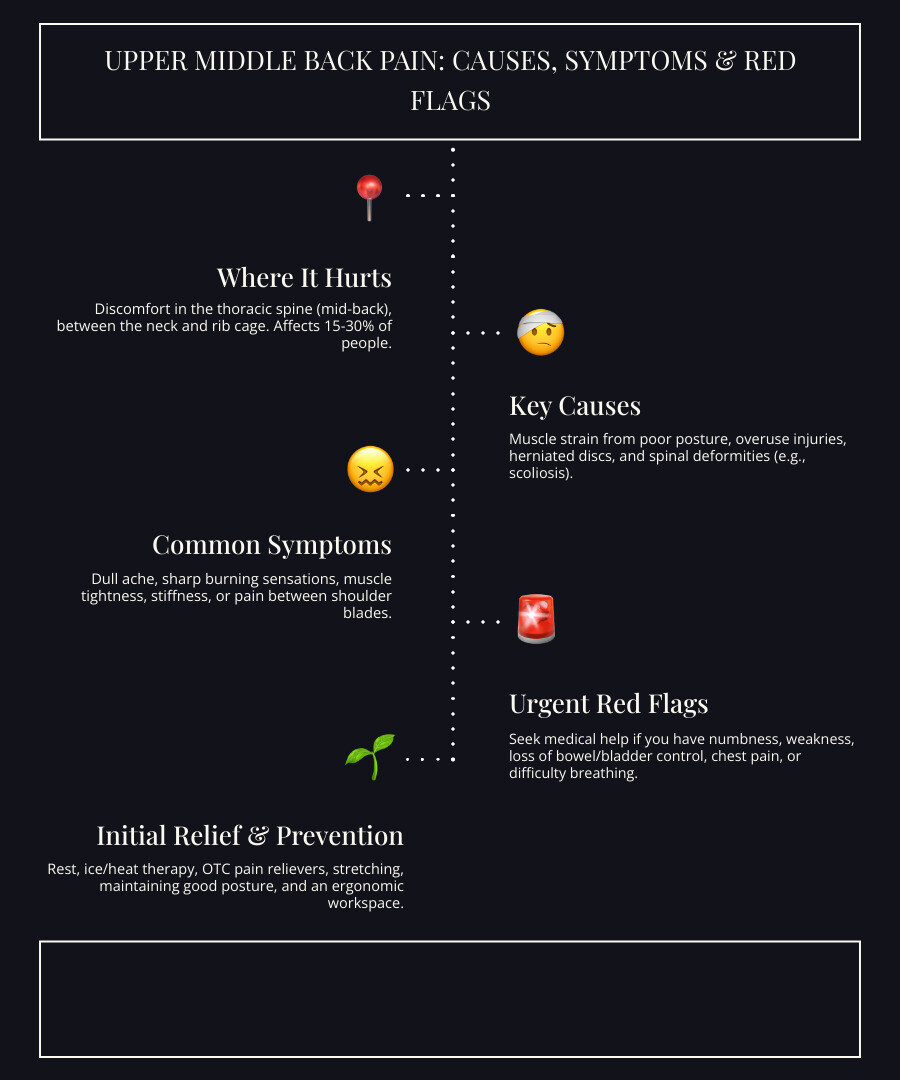
Pain in the upper middle back affects anywhere from 15-30% of people during their lifetime, yet it often catches sufferers off guard. This discomfort occurs in the thoracic spine—the area between the base of your neck and the bottom of your rib cage—where twelve vertebrae connect to your ribs, forming a protective cage around vital organs like your heart and lungs.
Quick Answer: Understanding Upper Middle Back Pain
- Most Common Causes: Muscle strain from poor posture, overuse injuries, herniated discs, and spinal deformities like scoliosis
- Typical Symptoms: Dull aching, sharp burning sensations, muscle tightness, stiffness, or pain between shoulder blades
- When to Worry: Seek immediate medical help if you experience numbness, weakness, loss of bowel/bladder control, chest pain, or difficulty breathing
- Relief Options: Rest, ice/heat therapy, over-the-counter pain relievers, topical creams, stretching, physical therapy, and lifestyle changes
- Prevention: Maintain good posture, strengthen core muscles, use proper lifting techniques, and create an ergonomic workspace
The pain can range from a mild, nagging ache that makes desk work uncomfortable to sharp, debilitating sensations that interfere with breathing, sleeping, and daily activities. Unlike lower back pain, upper middle back pain is less common because the thoracic spine moves less—but when it strikes, it can significantly impact your quality of life.
Research shows that up to 72% of women may experience upper back pain at some point, with each one-size increase in bra size raising the risk by 13%. Back pain typically begins for most people in their 30s or 40s and becomes more common with age.
I'm Tony Enrico, and through my work with Neuropasil, I've dedicated myself to helping people find relief from debilitating conditions like pain in the upper middle back and nerve-related discomfort that steal the joy from daily life. My mission is to provide not just products, but real solutions backed by science and compassion.
Pain in the upper middle back glossary:
Understanding the Common Causes and Risk Factors
When you're dealing with pain in the upper middle back, you're usually facing musculoskeletal issues—problems with your muscles, ligaments, and tendons. The good news? Structural problems within the spine itself are actually less common here than in other areas. Your thoracic spine (that's the upper and middle back region) is remarkably stable thanks to its connection to your rib cage. This built-in stability means disc degeneration and similar issues happen less frequently here than in your neck or lower back, which move much more. But when pain does show up, it can seriously disrupt your daily life.

Think about how much you use your upper body every single day. Lifting groceries, reaching for things on high shelves, twisting to grab your bag from the backseat, or just sitting at your desk for hours. All this activity takes a toll, and muscle strain and overuse injuries are often the main culprits behind your discomfort. You might overstretch or even tear muscle fibers by lifting something too heavy, making a sudden awkward movement, or doing repetitive motions like painting a ceiling. Believe it or not, even forceful coughing or sneezing can strain these muscles! If you're curious about how muscle pain develops and what you can do about it, we have more info on muscle pain that dives deeper.
Ligament sprains are another common issue. These tough bands of tissue connect your bones, and just like muscles, they can stretch or tear during accidents, falls, or sudden jolts—think whiplash from a car accident. The result is often immediate pain and stiffness that can last for days or weeks.
But perhaps the biggest villain in our modern lives is poor posture. Hours spent hunched over a computer, slouched on the couch scrolling through your phone, or reading with your head tilted forward all put tremendous strain on your upper back muscles and ligaments. This constant forward head posture—often called "tech neck"—forces your upper back muscles to work overtime just to keep you upright. The result? Chronic tightness and that nagging ache between your shoulder blades. As the Cleveland Clinic points out in their research on poor posture, this habit hurts your health in ways you might not even realize, making it progressively harder to maintain proper alignment.
While less common, structural spine issues can also contribute to pain in the upper middle back. A herniated or bulging disc can occur when the cushioning discs between your vertebrae slip out of position and press on nearby nerves. Degenerative disc disease happens when these shock-absorbing discs wear down over time, losing their ability to protect your spine. Osteoarthritis can affect the facet joints in your spine, causing the protective cartilage to wear away as vertebrae rub together—this becomes more common as we age.
Spinal stenosis, where the spinal canal narrows and compresses the spinal cord or nerves, is rare in the upper back but can cause significant pain when it does occur. Vertebral fractures from accidents or trauma are another concern, and for older adults—especially women—osteoporosis is a primary cause of compression fractures, where weakened vertebrae literally collapse under normal pressure.
Spinal deformities like scoliosis (a sideways curve of the spine) or kyphosis (an excessive forward curve, sometimes appearing as a hunchback) can put abnormal stress on your muscles, ligaments, and discs, leading to chronic discomfort.
Several risk factors increase your chances of developing pain in the upper middle back. Age plays a role—while anyone can experience back pain, it typically starts in our 30s or 40s and becomes more common with each passing decade. A sedentary lifestyle weakens the back and core muscles that support your spine, making you more vulnerable to injury. Obesity adds extra strain to your entire spine, including the thoracic region. And smoking decreases blood flow to your spinal discs, slowing healing and increasing the risk of degenerative diseases. It also worsens coughs, which can strain your back muscles even more.
Common Causes of Pain in the Upper Middle Back
Let's talk about the everyday situations that often trigger upper back pain. Muscle overuse from activities like spending hours painting a ceiling or gardening can lead to muscle fatigue and microscopic tears. Incorrect lifting is a huge culprit—grabbing that heavy box without bending your knees properly can spell trouble. Repetitive motions from your job or hobbies, like assembly line work or playing certain musical instruments, can gradually wear down your muscles and ligaments. Athletes who do a lot of throwing, bending, or twisting are especially vulnerable.
Accidents or trauma—whether from a fall, sports injury, or car accident—can cause immediate damage to muscles, ligaments, or vertebrae in your thoracic spine. The sudden jolt often results in pain, stiffness, and limited mobility that can last for weeks.
We really can't emphasize poor posture enough. Whether you're slouched over your laptop, hunching while reading in bed, or constantly looking down at your phone, poor posture creates a muscular imbalance. Some muscles get overstretched while others become shortened and tight, leading to chronic tension and that persistent ache between your shoulder blades. The research on poor posture consistently shows it contributes to far more health issues than just back pain.
Scoliosis creates an S-shaped or C-shaped curve that puts uneven stress on your back muscles and ligaments. Kyphosis, particularly Scheuermann's kyphosis, causes an exaggerated forward rounding of the upper back, leading to muscle strain from the abnormal spinal alignment.
Myofascial pain syndrome is a chronic condition that affects the fascia—the connective tissue covering your muscles. It often develops from muscle overuse or deconditioning, creating tender trigger points that cause deep, aching pain in the upper middle back and can even refer pain to other areas of your body.
How to Prevent Upper and Middle Back Pain
Here's the encouraging part: most cases of pain in the upper middle back are actually preventable. By making some simple but effective changes to your daily habits, you can significantly reduce your risk of developing this uncomfortable condition.
Maintaining good posture is your foundation. Whether you're standing or sitting, keep your head aligned over your shoulders (not jutting forward), roll your shoulders back and down, and engage your core muscles. Imagine a string gently pulling you up from the crown of your head. Good posture doesn't just prevent pain—it makes you look more confident and actually helps you breathe better.
Regular exercise is crucial for a healthy back. Mix cardiovascular activities like walking, swimming, or cycling with strength training to build the muscles that support your spine. Yoga and Pilates are particularly excellent for developing both core strength and flexibility. Core strengthening deserves special mention because your core muscles act like a natural support belt for your spine, providing stability and taking strain off your back muscles. Exercises like planks, bridges, and bird dogs are fantastic for this.
Don't skip stretching—it improves flexibility and reduces muscle stiffness, especially if you sit for long periods. Make it a daily habit, just like brushing your teeth.
Ergonomics might sound technical, but it simply means setting up your environment to support your body properly. Setting up a spine-friendly workspace involves positioning your computer monitor at eye level so you're not constantly looking down, ensuring your feet rest flat on the floor with your knees slightly lower than your hips, and using a supportive chair that maintains the natural curve of your lower back. Set a timer to remind yourself to stand and stretch every 30 to 60 minutes—your back will thank you.
When it comes to proper lifting techniques, always remember to lift with your legs, not your back. Bend your knees, keep your back straight, avoid twisting while holding something heavy, and hold objects close to your body. If something's too heavy, there's no shame in asking for help—it's much better than dealing with weeks of back pain.
Maintaining a healthy weight matters because excess pounds, especially around your midsection, pull on your spine and create additional strain. A balanced diet combined with regular physical activity helps you manage your weight and supports overall back health.
Finally, if you smoke, quitting is one of the best gifts you can give your spine. Smoking restricts blood flow to your spinal discs, which slows healing and accelerates degeneration. It also tends to worsen coughs, which can repeatedly strain your back muscles. Your entire body—not just your back—will benefit from kicking this habit.
Symptoms: From Mild Aches to Serious Red Flags
The way pain in the upper middle back shows up can vary dramatically from person to person. For some, it's a gentle reminder—a dull ache that whispers at the end of a long workday. For others, it's a sharp, burning sensation that demands immediate attention and disrupts even the simplest activities like reaching for a coffee mug or taking a deep breath.
Understanding these different pain patterns is more than just academic—it can literally be the difference between treating yourself at home with rest and ice, or recognizing when you need to get to a doctor right away.
General symptoms of upper middle back pain often include that familiar dull ache between the shoulder blades—the kind that makes you want to roll your shoulders or ask someone for a quick massage. You might also experience sharp, burning pain that seems to intensify with certain movements, like twisting to look behind you while driving. Muscle tightness is another common companion, where the area feels knotted and tense to the touch. Stiffness can make it difficult to move freely, and you might notice reduced mobility when trying to reach overhead or bend forward.
But here's where it gets important: not all back pain is created equal. The type of pain you're experiencing can give us valuable clues about what's causing it.
| Symptom Type | Characteristics |
|---|---|
| Muscular Pain | Typically presents as a dull, achy soreness that's localized to specific areas. The pain often worsens with movement or activity and tends to improve with rest. You might feel tender spots when pressing on the muscles, and the discomfort usually stays in one area rather than traveling elsewhere. |
| Nerve Pain | This type can feel sharp, shooting, or burning—like an electric shock running through your back. It may radiate or travel to other areas, such as down your arms or around your ribs. You might experience numbness, tingling, or a "pins and needles" sensation. Unlike muscular pain, nerve pain can occur even when you're resting and might worsen at night. |
| Referred Pain | This is when the problem isn't actually in your back at all—the pain is being "referred" from an internal organ. It often feels deep and hard to pinpoint. The pain might not change much with movement or position changes, and it can be accompanied by other symptoms like nausea, fever, or digestive issues. This is the type that requires immediate medical attention. |
When to Seek Medical Attention
Most pain in the upper middle back resolves on its own with some rest, ice, and gentle stretching. But there are times when your body is sending you urgent signals that shouldn't be ignored. These "red flag" symptoms warrant immediate medical evaluation:
- Numbness, weakness, or tingling in your arms, legs, chest, or belly—this could indicate nerve compression or spinal cord involvement
- Loss of bowel or bladder control—this is a medical emergency that requires immediate attention
- Severe pain that doesn't improve with rest—especially if it's getting progressively worse over days or weeks
- Pain after a severe injury or accident—such as a fall, car crash, or sports injury, which could indicate a fracture or serious tissue damage
- Pain accompanied by fever, chills, or unexplained weight loss—these symptoms might suggest an infection or other serious underlying condition
- Difficulty breathing or chest pain—this could be a sign of a heart or lung problem rather than a musculoskeletal issue
If you're experiencing any of these symptoms, don't wait. Trust your instincts and seek medical care right away.
Special Considerations: Pain Related to Demographics, Breathing, or Eating
Some groups of people experience upper middle back pain differently or more frequently than others, and sometimes the pain is linked to activities we might not immediately connect to our backs.
Pain in women deserves special attention. Research shows that up to 72% of women may experience upper back pain at some point in their lives. Interestingly, studies have found that each one-size increase in bra size can raise the risk of upper back pain by 13%—the weight and lack of proper support can strain the muscles and ligaments of the thoracic spine. Pregnancy brings its own challenges, as the changing center of gravity and increased weight can stress the upper back. During menopause, hormonal changes can affect bone density and muscle mass, potentially contributing to discomfort.
Pain with breathing is particularly concerning because it might not be a musculoskeletal issue at all. If you experience sharp pain when taking deep breaths, it could be related to conditions like pneumonia (a lung infection), pleurisy (inflammation of the tissue around the lungs), or even pulmonary embolism (a blood clot in the lung)—a serious, life-threatening condition. Any breathing-related pain warrants prompt medical evaluation.
Pain after eating can also be a clue that something beyond your muscles is at play. GERD (gastroesophageal reflux disease) can cause a burning sensation that radiates to the upper back. Gallbladder issues, like gallstones, often cause pain in the upper right abdomen that can radiate to the shoulder blade area. Pancreatitis (inflammation of the pancreas) typically causes severe upper abdominal pain that radiates straight through to the back. If your back pain consistently appears after meals, it's worth discussing with your healthcare provider.
The key takeaway? Listen to your body. While most upper middle back pain is nothing to worry about and responds well to conservative treatment, knowing the warning signs can help you get the right care at the right time.
Symptoms: From Mild Aches to Serious Red Flags
When it comes to pain in the upper middle back, the experience can feel remarkably different from person to person. For some of us, it's a persistent, dull ache that lingers in the background—annoying, but manageable. For others, it arrives as a sharp, burning sensation that literally takes our breath away or a stabbing pain between the shoulder blades that makes every movement feel impossible.
Understanding the nature of your pain is like having a roadmap. It offers valuable clues about what's happening in your body and, importantly, helps you decide when it's time to pick up the phone and call your doctor.
General symptoms of pain in the upper middle back typically include a dull ache that settles between your shoulder blades, often after a long day at your desk. You might notice a sharp, burning pain that flares up when you twist or reach for something. Muscle tightness is incredibly common—that feeling like your upper back is wound up like a coiled spring. Many people also experience stiffness, especially first thing in the morning, along with reduced mobility that makes simple tasks like looking over your shoulder while driving surprisingly difficult.
The type of pain you're experiencing can tell us a lot about its source. Muscular pain often presents as a dull ache or soreness that worsens when you move certain ways and typically improves with rest. It's the kind of discomfort that responds well to stretching, heat, and gentle movement. Nerve pain, on the other hand, tends to be sharper—sometimes shooting or radiating down your arms or around your ribs. It might come with numbness, tingling, or that unsettling "pins and needles" sensation. Then there's referred pain, which is particularly tricky because the source isn't actually in your back at all. Your gallbladder, pancreas, or even your heart can send pain signals that your brain interprets as coming from your upper middle back.
When to Seek Medical Attention
While many cases of pain in the upper middle back improve with rest, ice, heat, and over-the-counter pain relievers, certain symptoms demand immediate medical attention. These are what we call "red flag" symptoms, and ignoring them could mean missing a serious underlying condition.
If you experience numbness, weakness, or tingling in your arms, legs, chest, or belly, this could signal nerve compression or damage that needs urgent evaluation. Loss of bowel or bladder control is particularly serious—it can indicate a spinal cord issue that requires immediate medical intervention. When you have severe pain that doesn't improve with rest or actually gets worse over time, your body is telling you something important.
Pain after a severe injury or accident—like a fall, car crash, or sports injury—should never be taken lightly, especially if you're having trouble walking or maintaining your balance. If your back pain comes with fever, chills, or unexplained weight loss, these additional symptoms could point to an infection, inflammation, or in rare cases, something more serious like cancer.
Perhaps most urgently, difficulty breathing or chest pain that occurs alongside your back pain requires immediate emergency care. This combination can indicate serious heart or lung conditions. Similarly, if you're dealing with chronic thoracic pain that's lasted for weeks and is significantly limiting your daily activities, it's time to consult with a healthcare professional.
For those of us in New York City, don't hesitate to contact your primary care physician or head to your nearest emergency department if you're experiencing any of these red flag symptoms. Better safe than sorry is truly the rule here.
Special Considerations: Pain Related to Demographics, Breathing, or Eating
Sometimes pain in the upper middle back has surprising connections to who we are or what our body is doing at any given moment. Let's talk about some of these special situations.
Pain in women deserves particular attention because the statistics are striking. Research shows that up to 72% of women may experience upper back pain during their lifetime—that's nearly three out of four women. Interestingly, a 2020 study published in Women's Health found that each one-size increase in bra size raises the risk of upper back pain by 13%. Poorly fitted bras can create significant strain on the upper back muscles, especially for women with larger cup sizes.
During pregnancy, multiple factors converge to create the perfect storm for pain in the upper middle back. Hormonal changes loosen ligaments to prepare for childbirth, but this also reduces spinal stability. Your center of gravity shifts forward as your baby grows, putting extra strain on your back muscles. Add increased body weight, postural changes, and the stress of preparing for a new arrival, and it's no wonder so many expectant mothers struggle with upper back discomfort.
For women going through menopause, a 2019 study in PLOS One identified weak upper back muscles as a common culprit behind pain in postmenopausal women. The hormonal shifts during this life stage can affect muscle mass and bone density, making upper back pain more likely.
Pain with breathing can be particularly frightening because it affects something we do automatically, thousands of times a day. Sometimes the cause is relatively benign—stress and anxiety can create muscle tension in your chest and back that intensifies when you take deep breaths. But other times, it signals something more serious.
Respiratory conditions like asthma, COPD, chest infections, pleurisy, and pneumonia can all cause inflammation in the chest cavity that leads to pain in the upper middle back that worsens with breathing. Pneumothorax, or a collapsed lung, causes sudden, sharp chest pain that radiates to the back and becomes more intense with each breath. A pulmonary embolism—a blood clot in the lung—is a medical emergency that can present with sudden, sharp chest pain, severe shortness of breath, and back pain. While rare, persistent back pain combined with breathing difficulties can sometimes be a symptom of lung cancer.
If you're experiencing pain in the upper middle back along with shortness of breath, persistent cough, or any difficulty breathing, please seek medical attention promptly. These symptoms need professional evaluation.
Pain after eating might seem unrelated to your back, but your digestive system can be a surprising source of referred pain. GERD, or gastroesophageal reflux disease, doesn't just cause heartburn—acid reflux can create a burning sensation in your upper back that often appears after meals.
Gallbladder issues, particularly gallstones, have a classic presentation: sharp, stabbing pain between your shoulder blades that strikes especially after eating fatty meals. This happens because your gallbladder, tucked beneath your liver, shares nerve pathways with your back. When it contracts to release bile and encounters a blockage, the pain signals travel to your upper back.
Pancreatitis, or inflammation of the pancreas, can cause severe pain in your upper abdomen that radiates around to your back like a band. This pain typically worsens after eating, particularly after high-fat meals, and can be accompanied by nausea and vomiting.
Diagnosis and Comprehensive Treatment for Pain in the Upper Middle Back
When pain in the upper middle back doesn't ease up on its own or starts interfering with your daily life, it's time to dig deeper and find out what's really going on. A proper diagnosis is like having a roadmap—it guides us toward the most effective treatment and helps us avoid wasting time on approaches that won't work for your specific situation.

Your doctor will start with a physical examination, checking how you move, stand, and where exactly it hurts. They'll ask you to bend, twist, and stretch—not to torture you, but to see which movements trigger your pain. They're also looking for signs that nerves might be involved, like weakness in your muscles or changes in your reflexes.
The medical history review is where we become detectives together. When did the pain start? Does it feel like a dull ache or a sharp stab? What makes it better—rest, movement, heat? What makes it worse—sitting, lifting, breathing deeply? We'll talk about your job, your hobbies, any recent accidents, and your overall health picture. All these details help paint a complete picture of what's happening in your upper back.
Sometimes, we need to look beneath the surface. X-rays can reveal bone problems like fractures, arthritis, or spinal curves that might be causing trouble. If we suspect soft tissue issues—think herniated discs, pinched nerves, or spinal stenosis—an MRI gives us incredibly detailed images of everything in there. A CT scan offers another angle, particularly useful for complex bone structures. And if we're concerned about nerve damage, an EMG (electromyogram) measures the electrical signals in your muscles and nerves to confirm what's going on.
Home Remedies for Pain in the Upper Middle Back
Here's some good news: many cases of pain in the upper middle back respond beautifully to simple home care. These aren't just old wives' tales—they're tried-and-true methods that can bring real relief while your body heals.
Rest is important, but don't overdo it. We used to tell people to stay in bed for weeks, but we've learned that's actually counterproductive. Your muscles need gentle movement to stay healthy. So take it easy for a day or two, avoid whatever triggered your pain, and then gradually get back to your normal activities as you're able.
Ice and heat are your friends, but they serve different purposes. If your pain is fresh—say, from lifting something heavy yesterday—ice packs are your go-to for the first 48 hours. Apply them for 15-20 minutes several times a day to reduce inflammation and numb the area. Once the initial inflammation settles, switch to heat. A heating pad, warm bath, or even a long, hot shower can work wonders by increasing blood flow and relaxing tight muscles.
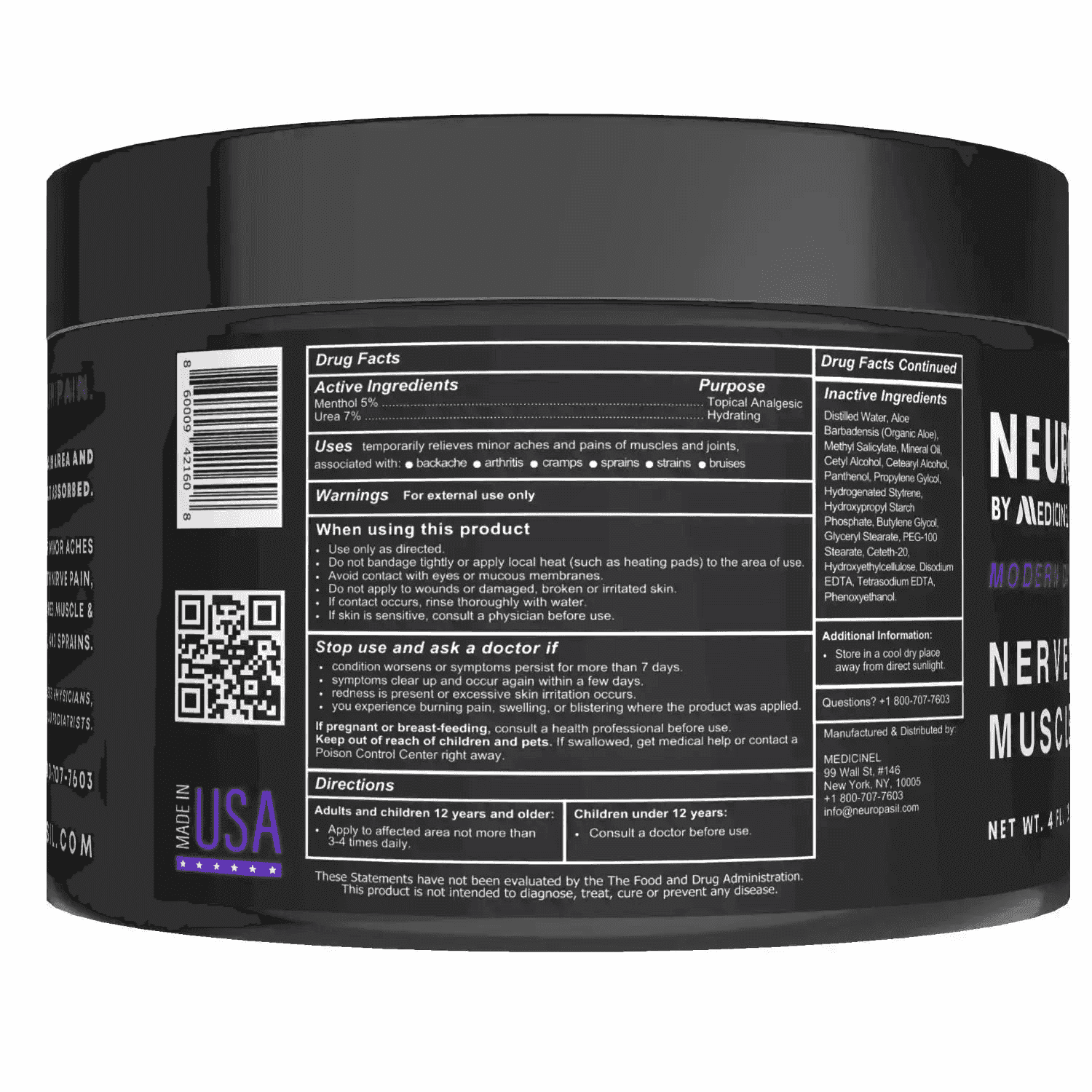
Over-the-counter medications can be surprisingly effective. NSAIDs like ibuprofen or naproxen tackle both pain and inflammation—just follow the label directions and don't take them on an empty stomach. Acetaminophen helps with pain but doesn't address inflammation. For targeted relief right where you need it, topical pain relievers can be game-changers. Our fast-acting nerve pain relief cream delivers soothing comfort directly to the affected area, using natural ingredients like Menthol and Aloe to provide that cooling, calming sensation that eases discomfort from both muscle and nerve-related pain in the upper middle back.
Gentle stretching shouldn't be underestimated. Simple movements like shoulder rolls—rotating your shoulders forward and backward—can release tension. The cat-cow pose from yoga, where you arch and round your back while on hands and knees, gently mobilizes your entire spine. Clasping your hands in front of you and pushing them forward while rounding your upper back gives those muscles between your shoulder blades a much-needed stretch. Just remember: gentle is the key word here. This isn't a competition.
Medical Treatments and Therapies
When home remedies aren't cutting it, or if your pain in the upper middle back is severe or has been hanging around for weeks, it's time to bring in the professionals. We have several effective treatments that can help you get back to feeling like yourself.
Physical therapy is often where we see the most dramatic improvements. A skilled physical therapist doesn't just give you a sheet of exercises and send you home—they design a program specifically for you. They'll work on improving your flexibility, strengthening the muscles that support your spine, and correcting any postural habits that might be contributing to your pain. Perhaps most importantly, they teach you how to move in ways that protect your back for the long term. It's like having a personal coach for your spine.
Sometimes, prescription medications become necessary. If you're dealing with severe muscle spasms, your doctor might prescribe muscle relaxants for short-term use. Interestingly, certain antidepressants can be effective for chronic pain, even at lower doses than what's used for depression. They work by affecting the neurotransmitters in your brain that process pain signals—it's fascinating how interconnected our systems are.
Steroid injections can help when inflammation is the main culprit, though the evidence for their long-term effectiveness specifically in the thoracic spine is somewhat limited. They can provide temporary relief that allows you to participate more fully in physical therapy.
The benefits of medical massage therapy go beyond just feeling good (though that's certainly a perk). Therapeutic massage reduces muscle tension, improves circulation, and promotes relaxation—all of which can significantly ease pain in the upper middle back. It's not the same as a spa massage; this is targeted, clinical work.
Acupuncture has been helping people with pain for thousands of years, and modern research is catching up to explain why it works. Those fine needles stimulate specific points that can reduce pain signals and promote your body's natural healing responses. Many of our patients find it remarkably effective.
Chiropractic care focuses on spinal alignment and mobility. When vertebrae in your thoracic spine aren't moving properly or are slightly misaligned, it can cause muscle tension and nerve irritation. Gentle adjustments can restore proper movement and relieve pressure.
Surgery is rarely needed for pain in the upper middle back—and that's actually good news. We only consider surgical options for severe structural problems that haven't responded to months of conservative treatment. This might include a herniated disc that's compressing the spinal cord, an unstable fracture, or a significant spinal deformity that's severely impacting your quality of life. Even then, procedures like kyphoplasty for fractures or decompression surgery for stenosis aren't always proven to be better than non-surgical approaches. The thoracic spine's stability means most people heal well without going under the knife.
Frequently Asked Questions about Upper Middle Back Pain
We know you have questions, and we're here to provide clear, straightforward answers about pain in the upper middle back.
What organs can cause pain in the upper middle back?
Sometimes, the pain we feel in our back isn't actually coming from our spine or muscles, but from another part of our body. This is called referred pain, and it's a fascinating way our nervous system works. Several organs can refer pain to the upper and middle back:
- Pancreas: Inflammation of the pancreas (pancreatitis) can cause severe pain in the upper abdomen that often radiates around to the back, sometimes worsening after a high-fat meal.
- Gallbladder: Gallstones or inflammation of the gallbladder can cause sharp, stabbing pain that's typically felt in the upper right abdomen but can also radiate to the right shoulder blade or between the shoulder blades.
- Kidneys: Kidney infections or kidney stones can manifest as a dull ache or sharp pain in the mid-back, usually on one side.
- Lungs: Conditions like pneumonia, pleurisy (inflammation of the lung lining), or even a pulmonary embolism (blood clot in the lung) can cause pain that intensifies with breathing and is felt in the back.
- Heart: While less common, a heart attack or angina (chest pain due to reduced blood flow to the heart) can sometimes cause pain that radiates to the upper back, shoulder, or jaw. This is why chest pain with back pain is a red flag.
How can you tell if back pain is muscular or a disc problem?
Distinguishing between muscular pain in the upper middle back and pain from a disc problem can be tricky, but there are some general differences:
-
Muscular Pain Characteristics:
- Often described as a dull ache, soreness, or tightness.
- Tends to be localized and may feel tender to the touch.
- Often worsens with movement, activity, or prolonged static positions.
- May improve with rest, heat, massage, or gentle stretching.
- Can be caused by overuse, strain, or poor posture.
-
Disc Problem Characteristics:
- Can cause sharp, shooting, or radiating pain that travels along a nerve (e.g., down an arm or around the rib cage).
- May be accompanied by tingling, numbness, or weakness in the affected area.
- Might worsen with coughing, sneezing, or specific spinal movements that put pressure on the disc.
- Pain may not always improve with rest and can sometimes be worse at night.
If you suspect a disc problem, or if your pain includes neurological symptoms like numbness or weakness, consult a healthcare professional for an accurate diagnosis.
Can stress and anxiety cause upper back pain?
Absolutely, yes! The mind-body connection is incredibly powerful, and stress and anxiety are frequent contributors to pain in the upper middle back. Here's how:
- Muscle Tension: When we're stressed or anxious, our bodies naturally tense up. This "fight or flight" response often manifests as chronic muscle tightening in the shoulders, neck, and upper back. This sustained tension can lead to muscle spasms, stiffness, and persistent aches. It's like our muscles are constantly bracing for impact, even when there's no physical threat.
- Stress Hormones: Chronic stress can also lead to an increase in cortisol and other stress hormones, which can heighten our perception of pain and contribute to inflammation.
- "Tech Neck": In our modern, device-driven world, stress often correlates with increased screen time. Hunching over phones or computers for hours on end, often referred to as "tech neck," puts immense strain on the upper back and neck. It's a vicious cycle: stress makes us slump, and slumping makes our muscles scream!
- Reduced Pain Tolerance: Long-term stress and anxiety can actually lower our pain threshold, meaning we perceive discomfort more intensely.
Managing stress through techniques like deep breathing, meditation, yoga, or even just taking regular breaks from work can significantly alleviate stress-induced pain in the upper middle back.
Conclusion
We've walked through quite a journey together exploring pain in the upper middle back—from understanding the thoracic spine's unique anatomy to identifying when that nagging ache signals something more serious. What strikes me most is how common this discomfort really is, affecting up to 30% of us at some point, yet how often we dismiss it or simply don't know where to turn for relief.
Here's what I hope you'll take away from our time together: Pain in the upper middle back isn't something you have to just "live with." Whether your discomfort stems from hunching over your laptop for hours, an old sports injury, or the accumulated stress of daily life, there are real, effective solutions available. Most cases respond beautifully to home care—a combination of ice or heat, gentle stretching, posture corrections, and targeted topical relief.
That said, knowing when to seek help is equally important. If you're experiencing numbness or weakness, loss of bowel or bladder control, severe pain after an injury, or chest pain with your back discomfort, please don't wait. These red flags demand immediate medical attention. Similarly, if your pain persists for weeks despite your best efforts, it's time to consult a healthcare professional who can dig deeper into what's causing your discomfort.
Prevention truly is your best friend here. By maintaining good posture (yes, even when scrolling through your phone), strengthening your core muscles, setting up an ergonomic workspace, and managing stress through whatever methods work for you—yoga, meditation, or simply taking regular breaks to stretch—you can significantly reduce your risk of developing chronic upper back pain.
For those moments when you need natural, soothing relief from muscle and nerve-related back pain, Neuropasil offers topical creams formulated with natural ingredients like Menthol and Aloe. Our fast-acting formulas deliver targeted comfort right where you need it most, helping you move more freely and sleep more comfortably. Whether you're an athlete recovering from intense training, someone managing chronic discomfort, or simply dealing with the occasional flare-up from poor posture, we're here to support your journey back to comfort.
Your back carries you through life—literally. Taking care of it isn't selfish; it's essential. Don't let pain in the upper middle back keep you from the activities that bring you joy, whether that's playing with your kids, pursuing your favorite hobbies, or simply getting through your workday without wincing. Relief is possible, and you deserve to feel your best.
Sources
- Prevalence of upper and middle back pain: https://patient.info/bones-joints-muscles/back-and-spine-pain/thoracic-back-pain
- Statistics on upper back pain in women and bra size impact: https://www.goodrx.com/health-topic/pain/upper-and-middle-back-pain
- Information on back pain onset by age: https://www.goodrx.com/health-topic/pain/upper-and-middle-back-pain
- Poor posture and health impacts: https://health.clevelandclinic.org/poor-posture-hurts-your-health-more-than-you-realize-3-tips-for-fixing-it/
- Setting up an ergonomic workspace: https://healthmatters.nyp.org/how-to-set-up-a-home-workspace-to-reduce-aches-and-pains/
Sources
- Around 15-30% of people experience upper and middle back pain during their lifetime. https://patient.info/bones-joints-muscles/back-and-spine-pain/thoracic-back-pain
- Research shows that up to 72% of women may have upper back pain at some time in their lives. Each one-size increase in bra size raises the risk of upper back pain by 13%. https://www.goodrx.com/health-topic/pain/upper-and-middle-back-pain
- Back pain starts for most people in their 30s or 40s, and it’s more common the older you get. https://www.goodrx.com/health-topic/pain/upper-and-middle-back-pain
- Poor posture: https://health.clevelandclinic.org/poor-posture-hurts-your-health-more-than-you-realize-3-tips-for-fixing-it/
- Set up a spine-friendly workspace: https://healthmatters.nyp.org/how-to-set-up-a-home-workspace-to-reduce-aches-and-pains/
- Medical massage benefits: https://health.clevelandclinic.org/therapeutic-massage-can-great-addition-to-treatment/
- Neuropasil Muscle Pain: https://neuropasil.com/blogs/news/muscle-pain
- Neuropasil Nerve Pain Relief Cream: https://neuropasil.com/products/neuropasil-nerve-pain-relief-cream-4-oz
- Neuropasil Ingredients: https://neuropasil.com/pages/ingredients
- Neuropasil Homepage (used for general blog/product links): https://neuropasil.com/
- Neuropasil Blogs/News: https://neuropasil.com/blogs/news
- Neuropasil Sore Joints & Muscles (used for general blog/product links): https://neuropasil.com/blogs/news
- Neuropasil Muscle Spasm Relief (used for general blog/product links): https://neuropasil.com/