Why Shoulder Pain Relief Matters More Than You Think
Shoulder pain relief is something most of us will need at some point in our lives. Here's what works:
Quick Relief Methods:
- Improve your posture – Reduce strain from slouching and forward head position
- Do gentle exercises – Strengthen muscles and increase flexibility
- Optimize your sleep – Use proper positions and pillows to avoid nighttime pressure
- Apply home remedies – Use ice for new injuries, heat for stiffness, and topical creams for targeted relief
- Know when to get help – Recognize warning signs that need medical attention
If you've ever reached for something on a high shelf and felt that sharp twinge, or woken up with a stiff, aching shoulder that makes even getting dressed difficult, you're not alone. According to the National Center for Biotechnology Information, up to 70% of people will experience shoulder pain at some point in their lives. That's roughly 7 out of every 10 people.
This isn't just about discomfort. Shoulder pain can steal your ability to do everyday things—carrying groceries, playing with your kids, typing at work, or even sleeping through the night. It affects athletes trying to train, workers powering through long shifts, and anyone who simply wants to move without wincing.
The good news? You don't have to accept shoulder pain as your new normal. Small, strategic changes can make a real difference in how your shoulder feels and functions.
In this guide, I'll walk you through five proven changes that can help you find relief. These aren't complicated medical procedures or expensive treatments—they're practical adjustments you can start today.
I'm Tony Enrico, and I've dedicated my work to helping people break free from the grip of nerve and muscle pain through Neuropasil. Over the years, I've seen how the right approach to shoulder pain relief can restore not just comfort, but confidence and freedom of movement. Let's get you back to doing what you love.
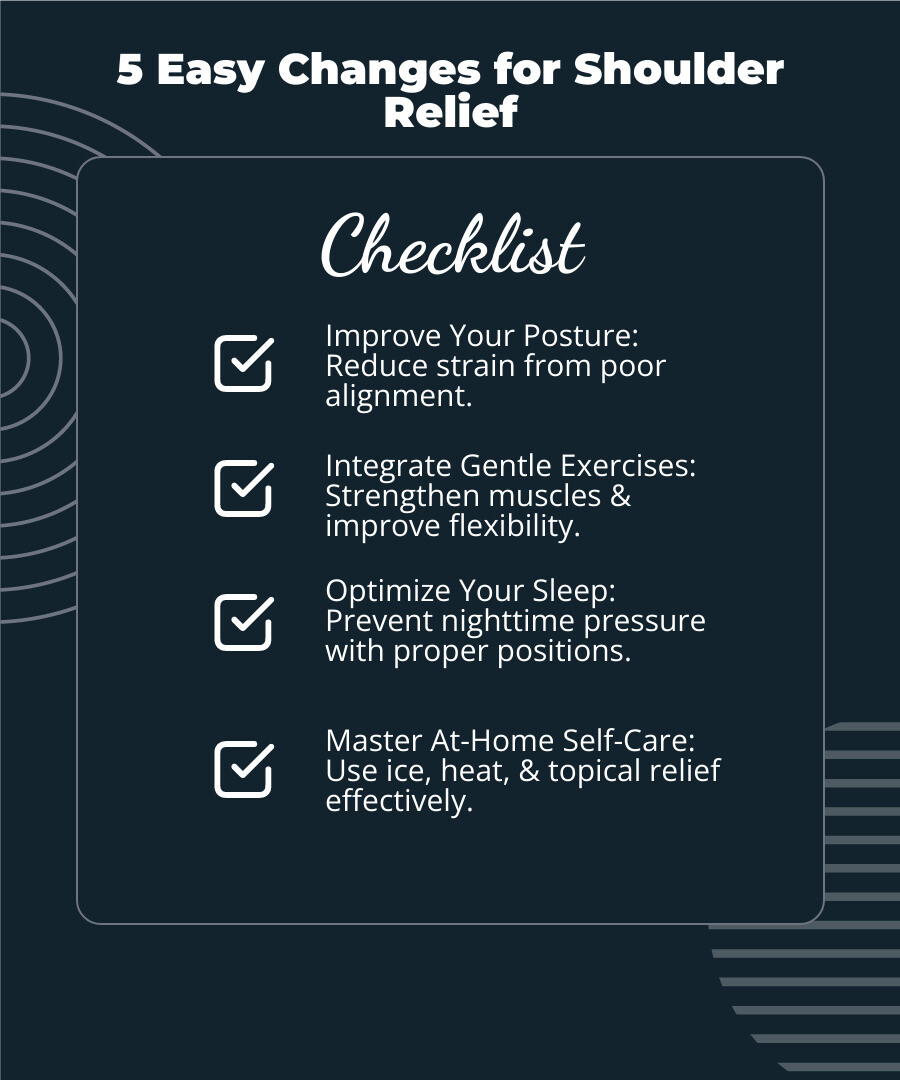
The 5 Easy Changes: (1) Improve Your Posture – reduce strain from poor alignment, (2) Integrate Gentle Exercises – strengthen and stretch shoulder muscles, (3) Optimize Your Sleep – adjust positions and pillows to prevent nighttime pain, (4) Master At-Home Self-Care – use ice, heat, and topical relief creams effectively, (5) Know When to Seek Professional Help – recognize red flags and get proper diagnosis.
Shoulder pain relief vocab to learn:
Change 1: Improve Your Posture to Alleviate Strain
Modern life, with its focus on screens, often leads to poor posture. Hunching over computers and smartphones puts immense stress on our shoulders, becoming a silent culprit behind discomfort. Poor posture, like a forward head and rounded shoulders, alters the natural alignment of your spine and shoulder blades. This can pinch nerves, tighten muscles, and restrict blood flow, all contributing to shoulder pain.
When your head juts forward, your neck and upper back muscles work overtime, creating tension that radiates into your shoulders. Rounded shoulders cause a similar imbalance, shortening chest muscles while weakening back muscles, increasing injury risk.
Your workspace is often a major contributor to poor posture. To create an ergonomic setup, ensure your monitor is at eye level, your chair supports your lower back's natural curve, and your keyboard is close enough for your elbows to bend at a 90-degree angle. This helps maintain a neutral spine and reduces hunching.
Proper lifting technique is also crucial. When lifting heavy items, always bend at your knees, keep the object close to your body, and use your legs—not your back or shoulders. This simple adjustment prevents unnecessary shoulder strain.
Simple Postural Exercises
Simple postural exercises can counteract poor posture and provide significant shoulder pain relief by strengthening support muscles and increasing body awareness.
- Shoulder Blade Squeezes: Sit or stand tall. Gently squeeze your shoulder blades together as if holding a pencil between them. Hold for 5-10 seconds, then release. Repeat 10-15 times. This strengthens the muscles that pull your shoulders back.
- Chin Tucks: Sit or stand straight. Gently pull your chin straight back, creating a "double chin" and feeling a stretch at the base of your skull. Hold for a few seconds, then release. Repeat 10 times. This helps correct forward head posture, which research confirms is linked to neck pain that can extend to the shoulders. The link between forward head posture and neck pain.
- Wall Angels: Stand with your back flat against a wall. Press your head, shoulders, and lower back against it. Bring your arms up with elbows bent at 90 degrees, forearms flat against the wall. Slowly slide your arms up the wall, keeping them in contact, then slide them back down. Repeat 8-12 times.
By consistently practicing these exercises and being mindful of your posture, you can achieve significant shoulder pain relief.

Change 2: Integrate Gentle Exercises for Shoulder Pain Relief
When your shoulder hurts, the instinct is to stop moving it. While rest is important for acute injuries, prolonged inactivity can cause stiffness and weakness. Integrating gentle exercises and stretches is a powerful strategy for shoulder pain relief. These movements lengthen and strengthen shoulder muscles, improve flexibility, and increase your range of motion, alleviating current pain and preventing future issues.
The benefits are extensive: strengthening muscles provides better support, regular stretching restores flexibility for daily tasks, increased blood flow aids healing, and gentle motion lubricates the joint to reduce stiffness.
Top Stretches for Shoulder Mobility
These stretches are fantastic for improving shoulder mobility. Remember to move slowly and stop if you feel sharp pain.
-
Pendulum Stretch:
- Lean forward, supporting yourself with your good arm on a table. Let the injured arm hang down.
- Gently swing the arm in small circles (clockwise and counter-clockwise) for 30 seconds each way.
- You can also swing it forward/backward and side-to-side.
- The goal is to use gravity for gentle traction. Repeat 2-3 times daily.
-
Cross-Body Arm Stretch:
- Stand or sit. Bring your affected arm across your chest.
- Use your other hand to gently pull the elbow closer to your body until you feel a stretch in the back of your shoulder.
- Hold for 20-30 seconds. Repeat 2-3 times.
-
Doorway Stretch:
- Stand in a doorway with elbows bent at 90 degrees, forearms on the doorframe.
- Step forward with one foot until you feel a stretch across your chest and front of your shoulders.
- Keep your back straight. Hold for 20-30 seconds. Repeat 2-3 times.

Strengthening Your Shoulder
Once pain subsides and mobility improves, gradually add strengthening exercises. They are vital for long-term shoulder pain relief and preventing recurrence.
- Rotator Cuff Exercises: Use light resistance bands for external and internal rotations to strengthen the crucial rotator cuff muscles. Focus on controlled movements.
- Wall Push-ups: Stand facing a wall, arm's length away. Place hands on the wall, slightly wider than your shoulders. Slowly bend your elbows, lowering your chest toward the wall, then push back. Start with 10-15 reps.
- Shoulder Blade Squeezes: As mentioned in the posture section, these are excellent for improving shoulder stability.
- Importance of starting slow: Always start with low resistance and repetitions, focusing on proper form. If an exercise causes pain, stop. Consult a physical therapist before starting a new regimen, especially after an injury.
For a deeper dive into managing shoulder muscle pain, including more exercises, explore More on managing shoulder muscle pain.
Change 3: Optimize Your Sleep for Nighttime Relief
Have you ever woken up feeling like you wrestled a bear in your sleep, only to realize it was just your shoulder acting up? Nighttime shoulder pain is incredibly common and can significantly disrupt your sleep quality. The way we sleep, our sleep position, and even our mattress can profoundly impact shoulder pain relief.
The primary culprit for many is sleeping on their side. This position puts direct and prolonged pressure on the shoulder joint, compressing the soft tissues and potentially aggravating conditions like bursitis, rotator cuff tendinitis, or shoulder impingement. Imagine holding a heavy weight on your shoulder for hours – that's essentially what happens when you sleep on it!
Beyond position, your mattress firmness plays a role. A mattress that's too soft can allow your body to sink too much, misaligning your spine and shoulders. Conversely, a mattress that's too firm might not provide enough cushioning, leading to pressure points. A medium-firm mattress often strikes the right balance, offering support without excessive pressure.
Best Sleeping Positions and Adjustments
Making a few adjustments to your sleep environment and habits can lead to remarkable shoulder pain relief and a much better night's rest.
- Sleeping on Your Back: This is often the most recommended position for shoulder pain as it allows your shoulders to rest in a neutral, uncompressed position. To improve comfort, you can place a small pillow or a rolled towel under your neck to maintain its natural curve. For added shoulder pain relief, try placing a thin pillow under the arm of your affected shoulder to keep it slightly liftd and supported, preventing it from falling too far back.
- Using Pillows for Support: If you're a side sleeper and can't comfortably switch to your back, strategic pillow placement can help. Place a pillow between your arms, hugging it to keep your top arm from collapsing onto your bottom shoulder. This can reduce direct pressure and keep your shoulders more aligned.
- Body Pillows: A body pillow can be a game-changer. It provides full-body support, allowing you to lie on your side with the pillow supporting your top arm and leg, preventing your body from twisting and putting strain on your shoulder.
- Choosing the Right Pillow: Your head pillow's thickness matters. For back sleepers, a thinner pillow helps maintain neck alignment. Side sleepers generally need a thicker pillow to fill the gap between their head and shoulder, keeping the neck and spine in a neutral position.
For more comprehensive advice on how to sleep comfortably with various types of pain, including shoulder pain, we found some excellent guidance from Cleveland Clinic's tips for sleeping with pain. A good night's sleep is not just about rest; it's a critical component of your body's healing process and overall well-being.
Change 4: Master At-Home Self-Care Measures
For minor aches and strains, the best shoulder pain relief can often be found at home. A proactive self-care approach can make a world of difference in managing discomfort.
Effective self-care starts with rest and activity modification. If you've tweaked your shoulder, avoid movements that cause pain and modify daily tasks to reduce stress on the joint. This doesn't mean complete immobilization, which can cause stiffness. Over-the-counter (OTC) pain relievers like ibuprofen or naproxen can help reduce inflammation and pain, while acetaminophen can also help. Always follow dosage instructions and consult a professional if you have underlying health conditions.
Applying Heat and Cold Therapy for Shoulder Pain Relief
Knowing whether to use ice or heat depends on the type of pain you're experiencing, a distinction highlighted by health resources like Harvard Health.
- When to Use Ice (Acute Injury): Use ice immediately after an acute injury (like a sprain) or during an inflammatory flare-up. Cold therapy constricts blood vessels, reducing swelling, inflammation, and pain. Apply an ice pack wrapped in a towel for 15-20 minutes every 3-4 hours for the first 24-48 hours.
- When to Use Heat (Chronic Pain, Stiffness): After 48 hours, or for chronic stiffness and muscle soreness, use heat. Heat increases blood flow, relaxing tight muscles and promoting healing. Use a heating pad (low setting) or warm towel for 15-20 minutes.
- Application Safety Guidelines: Always use a barrier between the pack and your skin. Avoid heat on swollen areas and never fall asleep with a heating pad on. Consult your doctor if you have circulation issues.
Finding the Best Topical Cream for Shoulder Pain Relief
For targeted shoulder pain relief, topical creams deliver active ingredients directly to the site of pain with fewer systemic side effects than oral medications.
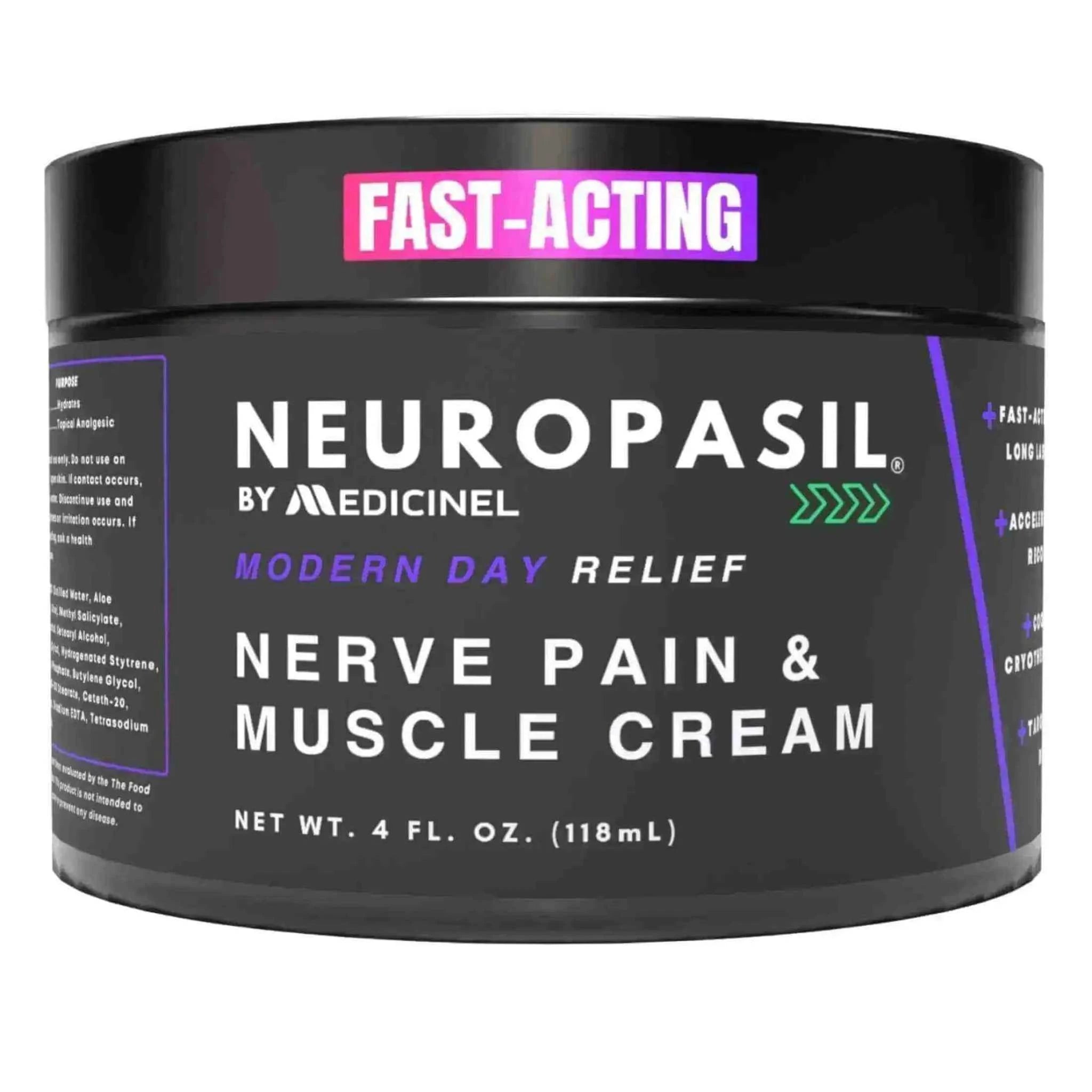
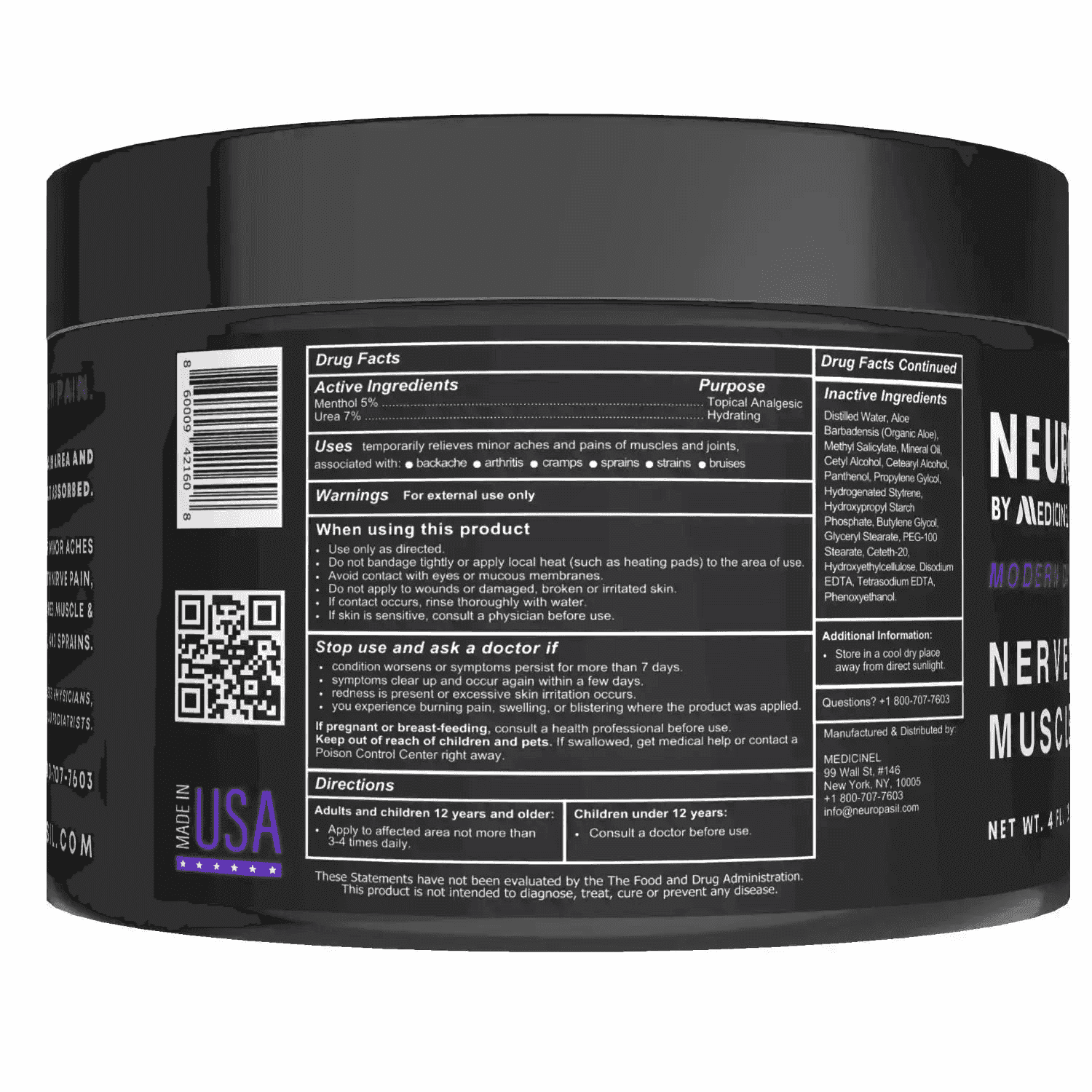
Many customers find significant relief for shoulder pain, muscle soreness, and strains using Neuropasil. Our creams are formulated with natural ingredients like Aloe, Urea, and Menthol to provide soothing comfort. Menthol creates a cooling sensation that can override pain signals, making Neuropasil an excellent choice for managing everyday shoulder stiffness or post-workout soreness. A quality topical cream is a convenient and effective addition to your self-care arsenal. To explore our range of solutions for targeted relief, check out Soothe your sore spots: A roundup of creams for neck, back, shoulder and more.
Change 5: Know When to Seek Professional Help
While self-care provides significant shoulder pain relief, it's crucial to know when to see a professional. Ignoring severe or persistent pain can worsen the condition. Understanding common causes can help you decide when to seek help.
According to health resources like Harvard Health, common causes of shoulder pain include:
- Rotator Cuff Injuries: Tears or inflammation in the tendons stabilizing your shoulder, causing a dull ache and weakness.
- Arthritis: "Wear and tear" (osteoarthritis) or inflammatory (rheumatoid) arthritis causing pain, stiffness, and a grinding sensation.
- Frozen Shoulder (Adhesive Capsulitis): A condition causing progressive stiffness and severe pain that limits all movement.
- Bursitis: Inflammation of the cushioning sacs (bursae) in the joint, causing pain with movement.
- Shoulder Impingement: Compression of tendons or bursae during arm movements, causing pain when lifting your arm.
- Dislocation: The upper arm bone pops out of the socket, causing intense pain and visible deformity.
- Muscle Strains: Tears in muscle fibers from overuse or improper lifting.
To help differentiate between common conditions, here's a quick comparison:
| Condition | Key Symptoms | Typical Onset & Progression |
|---|---|---|
| Rotator Cuff Injury | Dull ache deep in shoulder; weakness when lifting/rotating arm; pain at night. | Gradual from overuse or sudden from injury. Worsens with specific movements. |
| Frozen Shoulder | Progressive pain and severe stiffness limiting all arm movement. Pain is often worse at night. | Develops slowly in stages (freezing, frozen, thawing) over months or years. |
| Arthritis | Deep, aching joint pain; stiffness after inactivity; grinding sensation with movement. | Develops gradually over time. Pain and stiffness generally worsen over years. |
Red Flags: When to See a Doctor Immediately
Seek immediate medical attention for these red flags:
- Sudden, severe pain, especially after an injury.
- Inability to move your arm or significant weakness.
- Visible deformity, swelling, or significant bruising.
- Signs of a heart attack: Shoulder pain (especially left) with chest pain, shortness of breath, sweating, or dizziness. Call emergency services immediately.
- Numbness or tingling in your arm or hand.
- Pain that doesn't improve after a few weeks of self-care, or if it worsens.
For more detailed guidance, the Mayo Clinic guide on when to see a doctor offers comprehensive advice.
The Role of Healthcare Professionals
When you seek help, a professional can guide you to lasting shoulder pain relief.
- Diagnosis: A doctor will perform a physical exam and may order imaging like X-rays or an MRI to identify the cause.
- Physical Therapy: A physical therapist is often key, designing a custom exercise program to improve strength and range of motion.
- Medical Treatments: Your doctor might recommend prescription medications or corticosteroid injections to reduce inflammation.
- Further Evaluation: If conservative treatments don't work after several weeks, you may be referred to an orthopedic specialist to discuss other options, including surgery as a last resort.
Early intervention can often prevent minor issues from becoming major problems. Don't hesitate to reach out to a healthcare professional if your shoulder pain is persistent or severe.
Conclusion: Your Path to a Pain-Free Shoulder
Living with shoulder pain can be incredibly frustrating, limiting your ability to enjoy life and perform everyday tasks. But as we've explored, you have more power than you might think to achieve lasting shoulder pain relief. By making these five easy changes, you can proactively address discomfort, strengthen your body, and reclaim your freedom of movement.
Let's recap our journey to a healthier, happier shoulder:
- Improve Your Posture: Consciously correcting your posture, especially at your desk and during lifting, can significantly reduce strain on your shoulders. Simple exercises like shoulder blade squeezes and chin tucks reinforce good habits.
- Integrate Gentle Exercises: Regular stretching and strengthening exercises are vital. They improve mobility, build crucial muscle support, and promote healing by increasing blood flow. Motion is lotion for your joints!
- Optimize Your Sleep: Adjusting your sleep position, using supportive pillows, and choosing the right mattress can prevent nighttime pressure and ensure your shoulders get the rest they need to recover.
- Master At-Home Self-Care: Knowing when to apply ice (for acute inflammation) versus heat (for chronic stiffness) is key. Complementing these with over-the-counter pain relievers and targeted topical solutions can provide immediate comfort.
- Know When to Seek Professional Help: While self-care is powerful, recognizing red flag symptoms or persistent pain that doesn't improve is crucial. Healthcare professionals can provide accurate diagnoses and custom treatment plans.
Your journey to shoulder pain relief is an empowering one. It's about listening to your body, making informed choices, and taking consistent action. And for those moments when you need targeted, soothing relief for muscle soreness, strains, or general aches and pains, consider adding a high-quality topical cream to your self-care routine. Neuropasil's nerve and muscle pain relief creams, powered by natural ingredients like Aloe, Urea, and Menthol, are designed to provide that direct comfort, helping you stay active and comfortable as you implement these changes.
Don't let shoulder pain hold you back any longer. Take these steps, be patient with your body, and refind the joy of pain-free movement.
Discover Neuropasil's pain relief solutions and Read more on our blog for further insights into managing your pain effectively.
References
Harvard Health Publishing. (n.d.). Shoulder pain. Retrieved from https://www.health.harvard.edu/topics/shoulder-pain
Mahmoud, N. F., et al. (2019). The Relationship Between Forward Head Posture and Neck Pain: a Systematic Review and Meta-Analysis. Current Reviews in Musculoskeletal Medicine. Retrieved from https://link.springer.com/article/10.1007/s12178-019-09594-y?fbclid=IwAR2A9tavzragZabEHCclxTPeI4QUl8dZ93utCk0fz3EqHPL3C3Mxmj5X2KY
Cleveland Clinic. (2022). The Best Sleeping Positions for Your Back, Neck, Shoulders and More. Retrieved from https://health.clevelandclinic.org/best-sleeping-positions-for-pain/
Mayo Clinic. (2022). Shoulder pain: When to see a doctor. Retrieved from https://www.mayoclinic.org/symptoms/shoulder-pain/basics/when-to-see-doctor/sym-20050696
National Center for Biotechnology Information. (2022). Shoulder pain: What helps?. Retrieved from https://www.ncbi.nlm.nih.gov/books/NBK554692/
NHS. (n.d.). Frozen shoulder. Retrieved from https://www.nhs.uk/conditions/frozen-shoulder/
NHS. (n.d.). Shoulder pain. Retrieved from https://www.nhs.uk/symptoms/shoulder-pain/