Understanding What Causes Soreness in Thighs
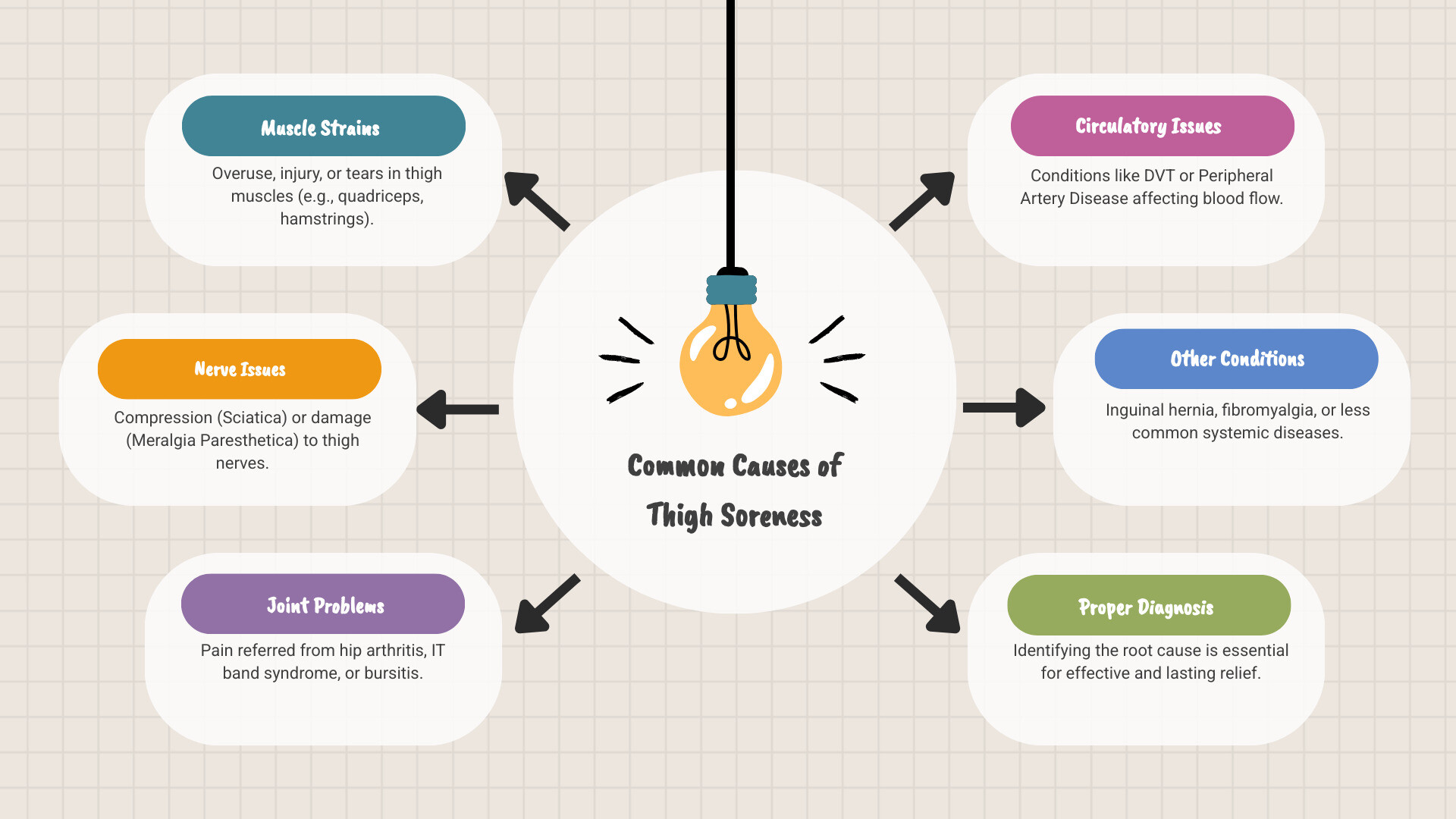
That nagging ache in your leg might be soreness in thighs, a common discomfort that can slow you down. Thigh pain can stem from several sources, including:
- Muscle Strains or Overuse: Often from exercise or physical activity.
- Nerve Issues: Such as a pinched nerve or Meralgia Paresthetica.
- Joint Problems: Including hip arthritis or IT band syndrome.
- Circulation Problems: Like Deep Vein Thrombosis (DVT).
- Other Conditions: Such as an inguinal hernia or fibromyalgia.
This guide will help you understand the causes of thigh soreness, identify key symptoms, and find effective relief. We'll cover everything from simple muscle aches to more serious medical issues.
As the founder of Neuropasil, I know how debilitating soreness in thighs can be. Our mission is to provide gentle, effective relief so you can get back to living life without pain.
Unpacking the Common Causes of Soreness in Thighs
While overdoing it at the gym is a common reason for soreness in thighs, the cause can be more complex. Your thighs contain large muscles, intricate nerves, and vital blood vessels, any of which can be a source of discomfort. Pain can signal a muscle issue, a nerve problem, referred pain from a joint, or even a circulatory issue, as detailed by medical resources like the Mayo Clinic. Understanding the source of your soreness in thighs is the first step toward finding relief.
Muscle Strains and Injuries
Your muscles are a primary source of thigh pain.
Delayed Onset Muscle Soreness (DOMS) is the familiar ache that appears 12 to 24 hours after intense exercise due to microscopic muscle tears. According to Joshua Scott, MD, at Cedars-Sinai, delayed muscle soreness after exercise is a very common cause of thigh pain. Our guide to muscle recovery after the gym can help.
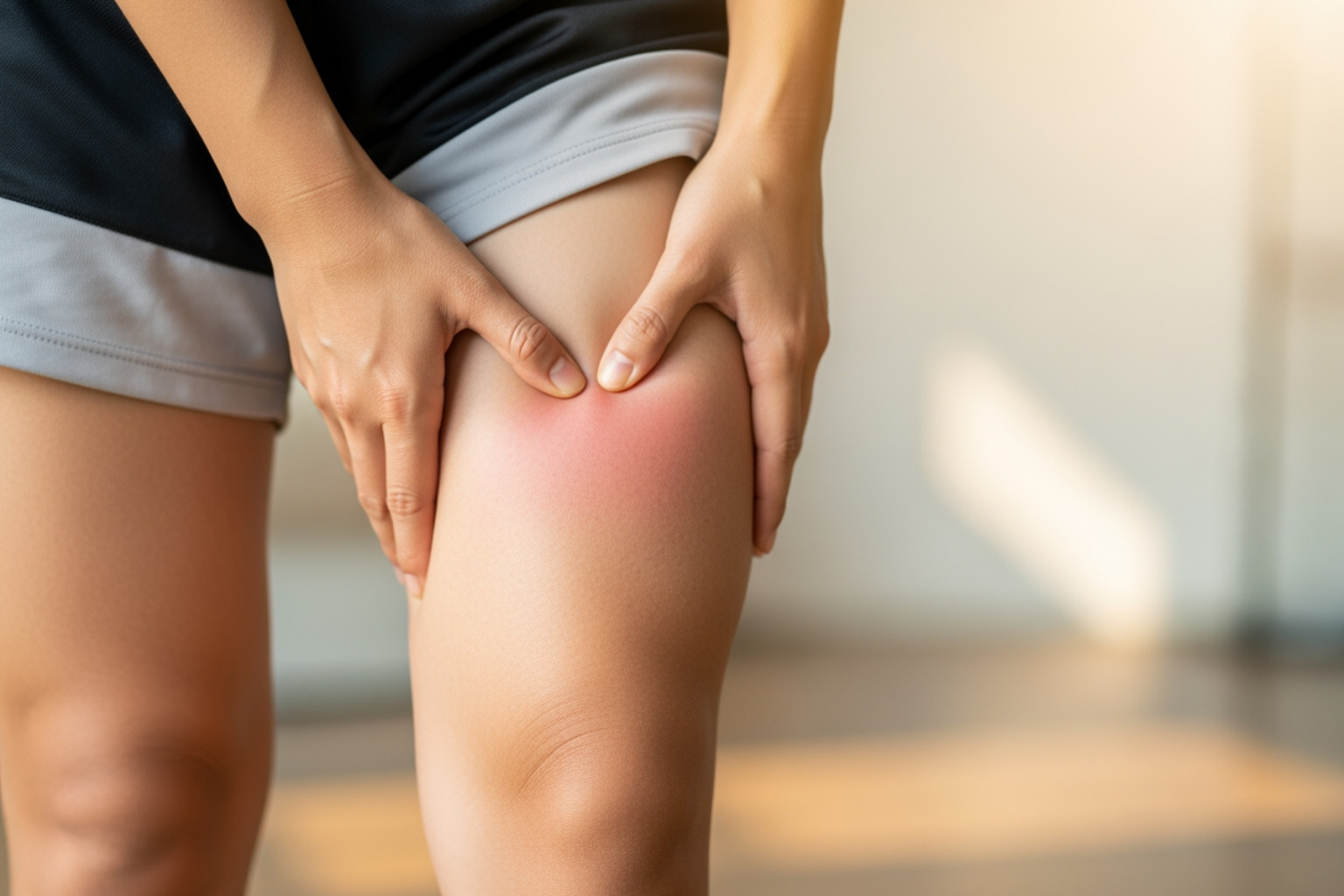
Your quadriceps (front of thigh) and hamstrings (back of thigh) are prone to strains or pulls. A strain occurs when the muscle is overstretched or torn, causing sharp pain, swelling, and bruising. These injuries can sideline you for weeks. Learn more about muscle strain treatment.
A contusion, or bruise, results from a direct impact to the thigh. This damages soft tissue and muscle, causing pain, swelling, and difficulty with movement. Healing time varies from a week to several months depending on severity.
Nerve-Related Thigh Pain
Nerve pain feels different from muscle soreness, often presenting as burning, tingling, numbness, or sharp, shooting sensations.
Meralgia Paresthetica occurs when the nerve supplying sensation to your outer thigh is compressed, causing burning pain and numbness. The American Academy of Orthopedic Surgeons notes this can be caused by tight clothing, weight gain, or pregnancy.
Sciatica involves the sciatic nerve, which runs from your lower back down your leg. Compression can cause sharp, radiating pain down the back of your thigh. Our complete guide to leg nerve pain offers more details.
Diabetic Neuropathy, a complication of diabetes, can damage nerves in the thighs, leading to burning, tingling, or sharp pains. Find relief strategies in our guide to proven diabetic neuropathy treatments.
Joint Issues and Referred Pain
Sometimes, soreness in thighs originates from a joint, a phenomenon known as referred pain.
Hip arthritis, the wearing down of hip joint cartilage, often causes pain in the groin and upper thigh. PubMed research confirms that hip issues can cause pain throughout the thigh. Learn more about related hip flexor pain.
IT band syndrome is inflammation of the connective tissue band on the outside of your thigh, common in runners. This causes pain on the outer thigh and knee. Find treatments for IT band tendonitis in our guide.
Bursitis and greater trochanteric pain syndrome involve inflammation of the fluid-filled sacs (bursae) or tendons around the hip, causing pain on the outer hip and thigh.
Vascular Problems and Other Conditions
Less common but serious conditions can also cause soreness in thighs.
Deep Vein Thrombosis (DVT) is a medical emergency where a blood clot forms in a deep vein, causing pain, swelling, warmth, and redness. The National Heart, Lung, and Blood Institute warns DVT can be life-threatening if the clot travels to the lungs.
Peripheral Artery Disease (PAD) involves narrowed arteries reducing blood flow, causing thigh pain during exercise that eases with rest.
An inguinal hernia, a weakness in the abdominal wall, can cause groin pain that radiates into the thigh.
Fibromyalgia is a chronic condition causing widespread pain, including deep aches or burning in the thighs. Our guide to natural fibromyalgia treatments offers options.
A sedentary lifestyle can also lead to thigh soreness due to muscle imbalances, tight hip flexors, and weakened glutes from prolonged sitting.
Identifying Symptoms and Getting a Diagnosis
When you have soreness in thighs, paying attention to your specific symptoms is crucial. The type of pain can help you determine if home care is sufficient or if you need to see a healthcare professional.
Key Symptoms of Soreness in Thighs
The quality of your pain provides clues to its cause. A sharp, sudden pain often indicates an acute injury like a muscle strain. A dull, persistent ache is typical of Delayed Onset Muscle Soreness (DOMS) or overuse. Burning, tingling, or numbness suggests nerve involvement, as seen in sciatica or meralgia paresthetica. Swelling and redness signal inflammation and can accompany injuries, but may also be a warning sign of a serious issue like Deep Vein Thrombosis (DVT). Note which movements trigger pain with movement, as this can help pinpoint the problem.
The following table compares common symptoms of soreness in thighs:
| Symptom | Muscle Strain (e.g., Quad, Hamstring) | Nerve Pain (e.g., Sciatica, Meralgia Paresthetica) | Deep Vein Thrombosis (DVT) |
|---|---|---|---|
| Pain Quality | Sharp, aching, tender to touch, cramping | Burning, tingling, shooting, numbness, "pins & needles" | Aching, throbbing, sudden onset, often with no clear injury |
| Location | Specific muscle group (front, back, inner) | Path of nerve (outer thigh, back of thigh, radiating from back) | Usually one leg (calf, thigh), often unilateral |
| Associated Signs | Bruising, swelling, muscle weakness, stiffness | Weakness, altered sensation, loss of reflexes | Swelling (often significant), warmth, redness, skin discoloration |
| Triggers | Sudden movement, overexertion, direct impact | Prolonged sitting, specific postures, tight clothing | Prolonged immobility, surgery, trauma, certain medical conditions |
When to See a Doctor for Soreness in Thighs
While many cases of soreness in thighs resolve with home care, you should see a doctor if your pain doesn't improve with home remedies. The Mayo Clinic advises seeking medical attention if:
- Pain lasts more than two weeks without improvement.
- The pain is severe and not relieved by home remedies.
- You are unable to put weight on your leg or are limping.
- You have significant swelling or redness.
- The pain wakes you up at night.
- You have signs of infection like fever or spreading redness.
Seek emergency care immediately for symptoms of a blood clot (sudden, intense pain with swelling, warmth, or redness in one leg), especially if accompanied by shortness of breath or chest pain, as this could be a life-threatening pulmonary embolism. If you're in New York City, the Healthline FindCare tool can help you find a doctor.
The Diagnostic Process
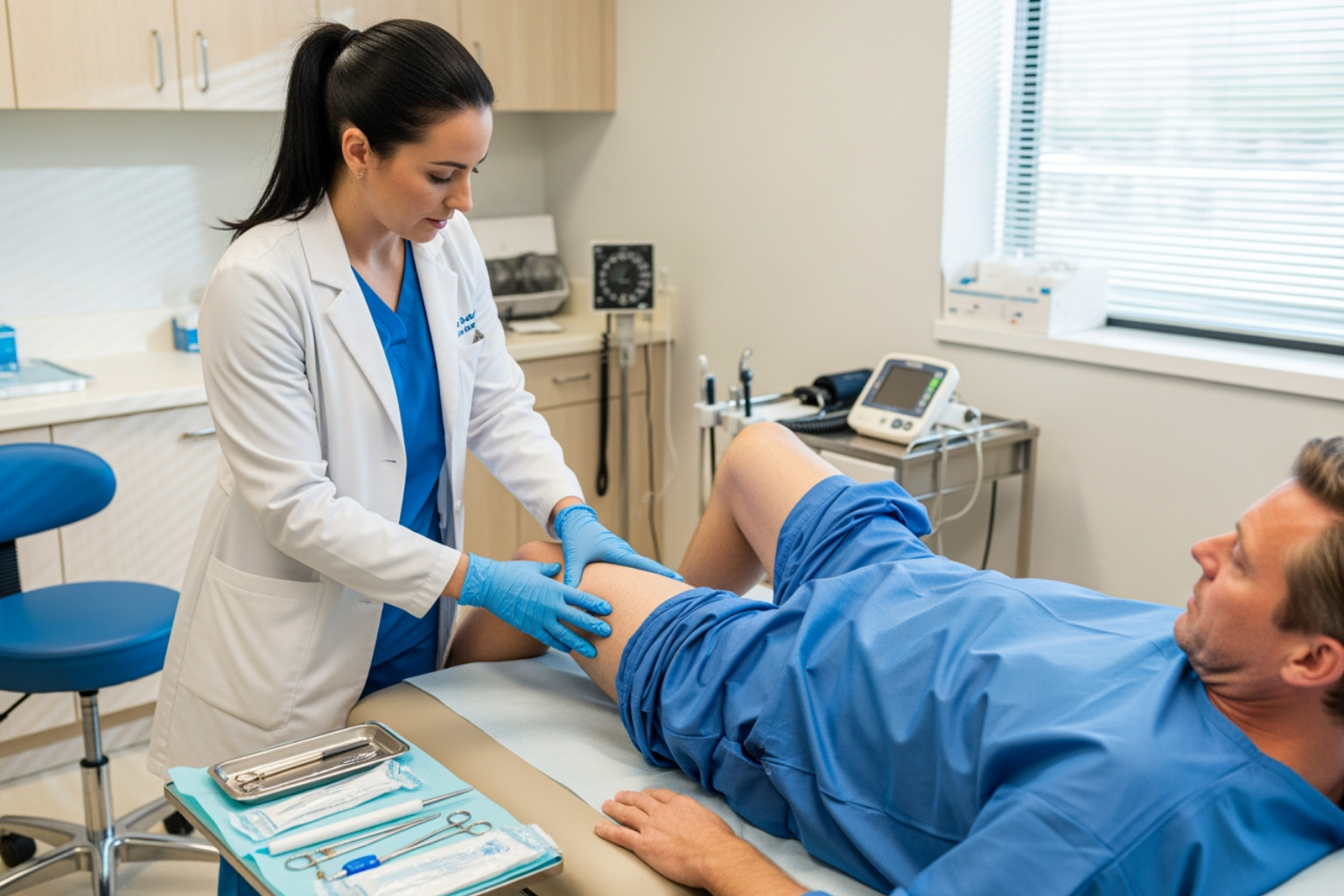
To diagnose the cause of your soreness in thighs, your provider will conduct a physical exam and a medical history review. They will check for tenderness and swelling, test your range of motion, and ask about when the pain started and what affects it.
Based on these findings, they may order further tests:
- X-rays: To check for bone issues like fractures or arthritis.
- Magnetic Resonance Imaging (MRI): For a detailed view of soft tissues like muscles and nerves.
- Ultrasound: To visualize soft tissue injuries or look for blood clots (DVT).
- Electromyography (EMG)/Nerve Conduction Studies: To assess nerve and muscle function.
- Blood Tests: To check for signs of inflammation or infection.
- Joint Fluid Test: To analyze fluid from a joint for infection or gout.
The National Center for Biotechnology Information provides more details on these diagnostic tests.
Your Guide to Thigh Pain Treatment and Relief
Once you have a diagnosis for your soreness in thighs, you can focus on relief. Treatments vary, but many strategies can be used at home or with professional help to get you moving comfortably again.
At-Home Care for Thigh Soreness
For muscle-related thigh soreness, home care can be very effective. The R.I.C.E. method (Rest, Ice, Compression, Elevation) is ideal for new injuries. As recommended by health authorities like NHS Inform, you should rest the muscle, apply ice for 15-20 minutes at a time for the first 48 hours, use a compression bandage, and lift your leg to reduce swelling.
After 48 hours, Heat therapy can soothe chronic stiffness by increasing blood flow. Apply heat for 10-15 minutes. Once initial pain subsides, Gentle stretching and movement can prevent stiffness. See our guide on how to relieve muscle soreness. Over-the-counter medication like ibuprofen can also help manage pain and inflammation.
Topical Creams for Targeted Relief
For localized soreness in thighs, topical creams deliver targeted relief. Options include:
- Menthol-based creams for a cooling sensation.
- Nerve pain relief creams to calm irritated nerves, as detailed in our complete guide to nerve pain relief creams.
- Muscle rubs for strains and aches. See our ultimate checklist for best muscle pain relief creams.
- Anti-inflammatory creams for conditions like bursitis.
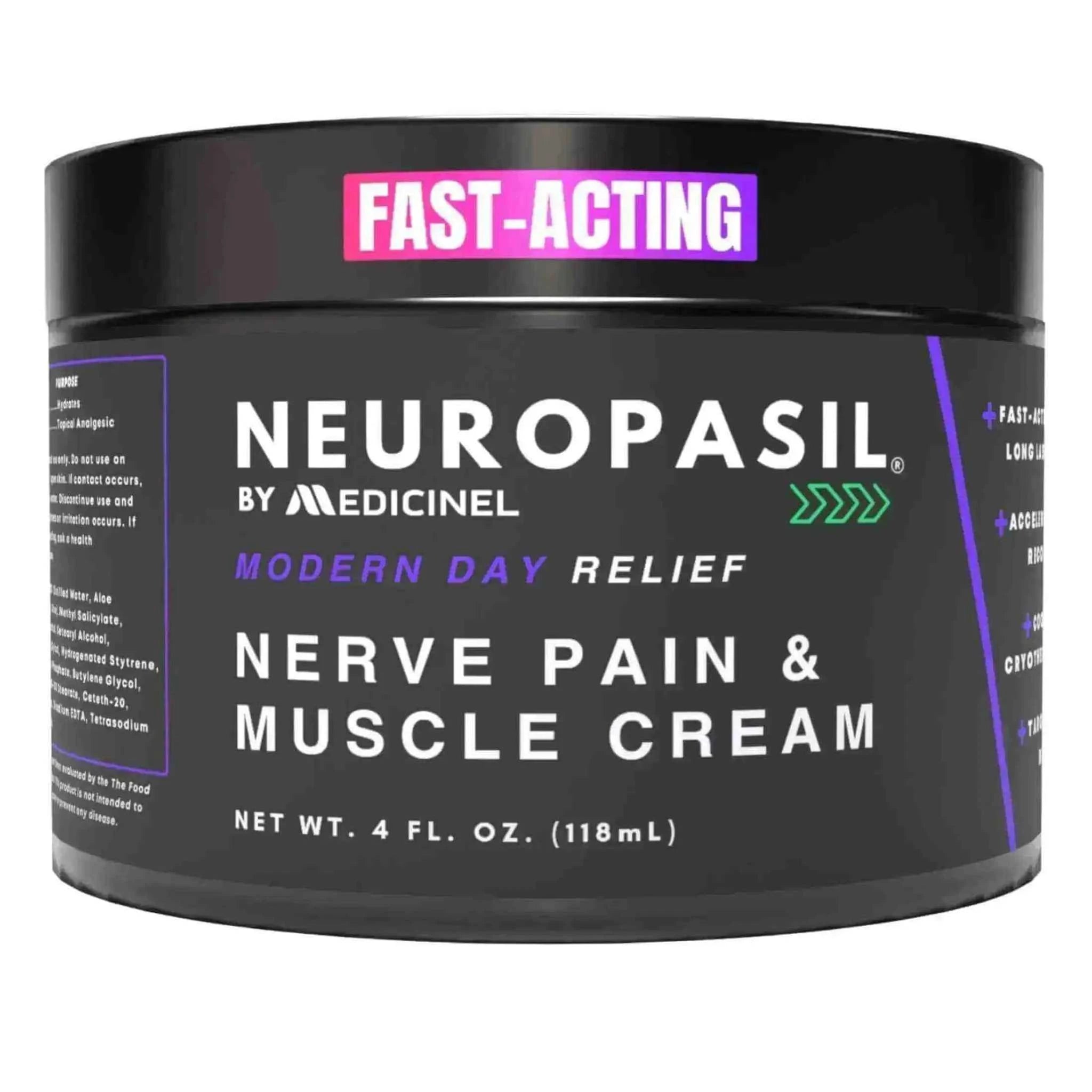
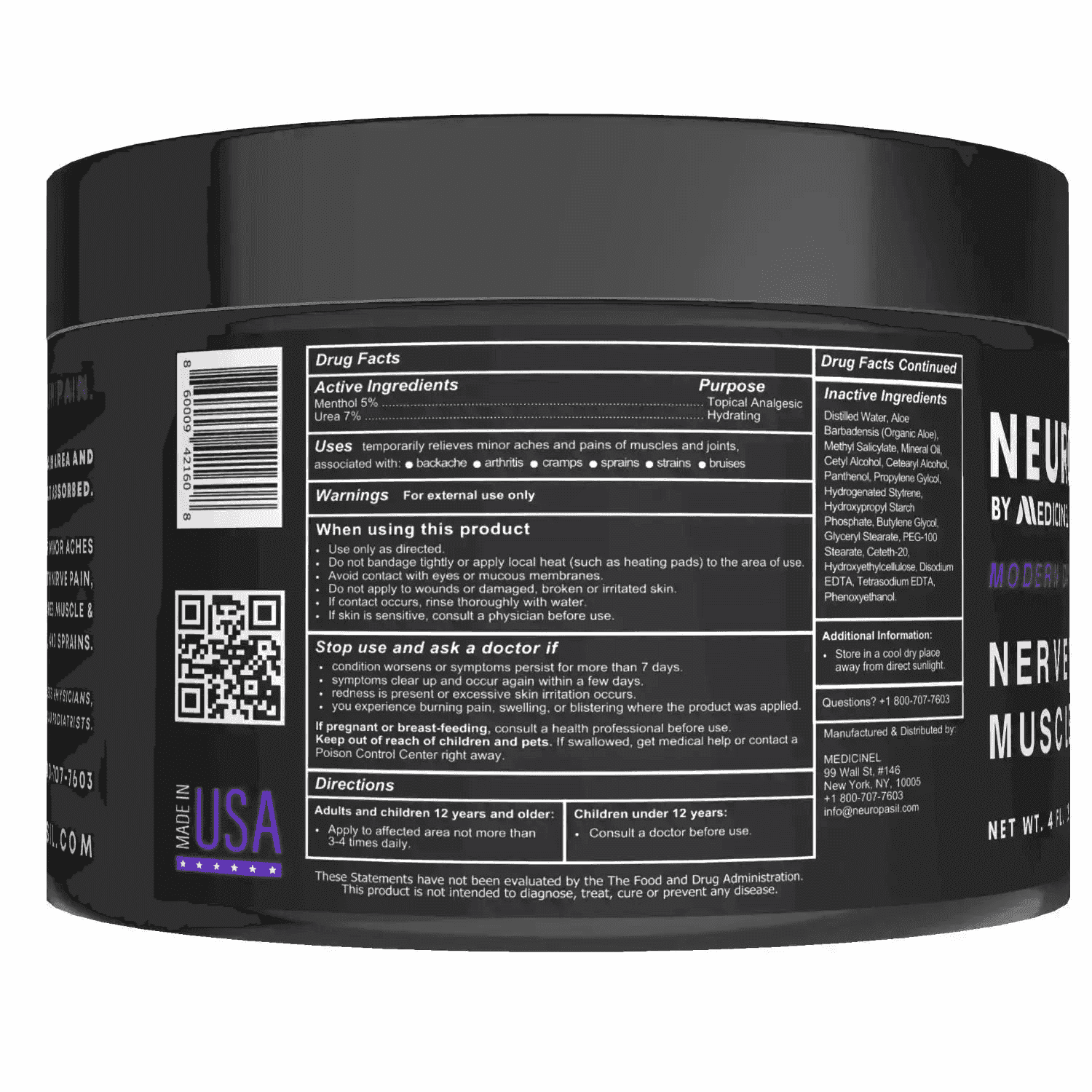
At Neuropasil, our natural, fast-acting cream is designed for both muscle and nerve-related soreness in thighs. The unique blend of Menthol, Aloe, and Urea provides targeted, soothing relief. Customers from athletes to those with chronic conditions like neuropathy and fibromyalgia rely on Neuropasil for daily pain management and gentle, effective support.
Medical and Professional Treatments
If home care isn't enough for your soreness in thighs, professional treatments may be necessary. Physical therapy can help by creating a personalized exercise program to strengthen muscles, improve flexibility, and restore proper movement. Your doctor may also prescribe Prescription medication, such as stronger anti-inflammatories, muscle relaxants, or specific nerve pain drugs. For serious conditions like DVT, blood thinners are essential.
Injections, like corticosteroids, can reduce localized inflammation in conditions like bursitis. In rare cases of severe tears, hernias, or nerve entrapment, advanced care like surgery may be required. Immediate medical intervention is critical for DVT. Explore more professional approaches in our guide to natural pain management.
Frequently Asked Questions about Thigh Soreness
Here are answers to common questions about soreness in thighs.
How can I tell if my thigh pain is a muscle strain or something more serious?
A muscle strain typically follows an activity or injury, with localized pain that feels achy or sharp with movement, possibly with bruising. It usually improves with rest and ice.
Your soreness in thighs may be more serious if you have:
- Sudden, severe pain without injury, especially with swelling, warmth, or redness in one leg (possible DVT).
- Inability to bear weight on the leg (possible fracture or severe tear).
- Nerve symptoms like burning, tingling, or shooting pain (possible sciatica).
- Signs of infection like fever or spreading redness.
If you experience these symptoms or are uncertain, consult a healthcare professional immediately.
Can sitting too much cause soreness in my thighs?
Yes, a sedentary lifestyle is a common cause of soreness in thighs. As confirmed by experts at the Cleveland Clinic, prolonged sitting can lead to:
- Hip flexor tightness: The muscles at the front of your hip become short and tight, causing pain.
- Weak glutes and core: This forces thigh muscles to overcompensate, leading to overuse soreness.
- Increased Meralgia Paresthetica risk: Sitting can compress the nerve in the outer thigh, causing burning and tingling.
- Reduced circulation: Slowed blood flow can contribute to stiffness and discomfort.
Adding more movement to your day, such as standing, walking, and stretching, can help prevent this type of soreness.
How long does it take for thigh soreness to go away?
The recovery time for soreness in thighs depends on the cause.
- Delayed Onset Muscle Soreness (DOMS) from exercise typically resolves in 24 to 72 hours, a timeframe supported by fitness authorities like the American Council on Exercise.
- Minor muscle strains or bruises usually improve within a few days to a week with home care.
- Moderate to severe muscle injuries can take several weeks to a few months to heal and may require physical therapy.
- Chronic conditions like arthritis or fibromyalgia require long-term management.
According to NHS Inform, most general thigh problems should begin to improve within 6 weeks. If your pain is severe or persists longer, consult a doctor to determine the cause and best treatment plan.
Conclusion: Taking the Next Step Towards Pain-Free Thighs
Soreness in thighs has many causes, from simple muscle aches to serious conditions like DVT. Understanding the cause is key to finding relief. By checking symptoms, knowing when to see a doctor, and using the right treatments—from at-home care to professional help—you can manage your pain effectively.
For localized muscle and nerve discomfort, topical solutions offer a direct, fast-acting approach. For targeted, natural relief from muscle and nerve-related thigh soreness, consider a topical cream like Neuropasil. Our blend of Menthol, Aloe, and Urea is designed to provide soothing comfort, helping you get back to your active life in New York City and beyond. Don't let soreness in thighs hold you back; empower yourself with the right knowledge and tools for relief.
References
- American Academy of Orthopedic Surgeons: https://orthoinfo.aaos.org/en/diseases--conditions/burning-thigh-pain-meralgia-paresthetica/
- American Council on Exercise: https://www.acefitness.org/resources/everyone/blog/6908/sore-muscles-after-a-workout-friend-or-foe/
- Cedars-Sinai (Dr. Joshua Scott, MD): https://www.cedars-sinai.org/provider/joshua-scott-864782.html
- Cleveland Clinic: https://health.clevelandclinic.org/what-happens-to-your-body-when-you-sit-all-day/
- Healthline FindCare: https://care.healthline.com/find-care
- Mayo Clinic: https://www.mayoclinic.org/symptoms/thigh-pain/basics/when-to-see-doctor/sym-20050682
- National Center for Biotechnology Information (NCBI): https://www.ncbi.nlm.nih.gov/books/NBK559512/
- National Heart, Lung, and Blood Institute (NHLBI): https://www.nhlbi.nih.gov/health/deep-vein-thrombosis
- NHS Inform: https://www.nhsinform.scot/illnesses-and-conditions/muscle-bone-and-joints/self-management-advice/thigh-problems
- PubMed: https://pubmed.ncbi.nlm.nih.gov/29560406/