What You Need to Know About Hamstring Pull Recovery
Recovery for hamstring pull injuries follows a structured approach that can take anywhere from a few days to several months, depending on how severe your injury is.
Quick Recovery Timeline:
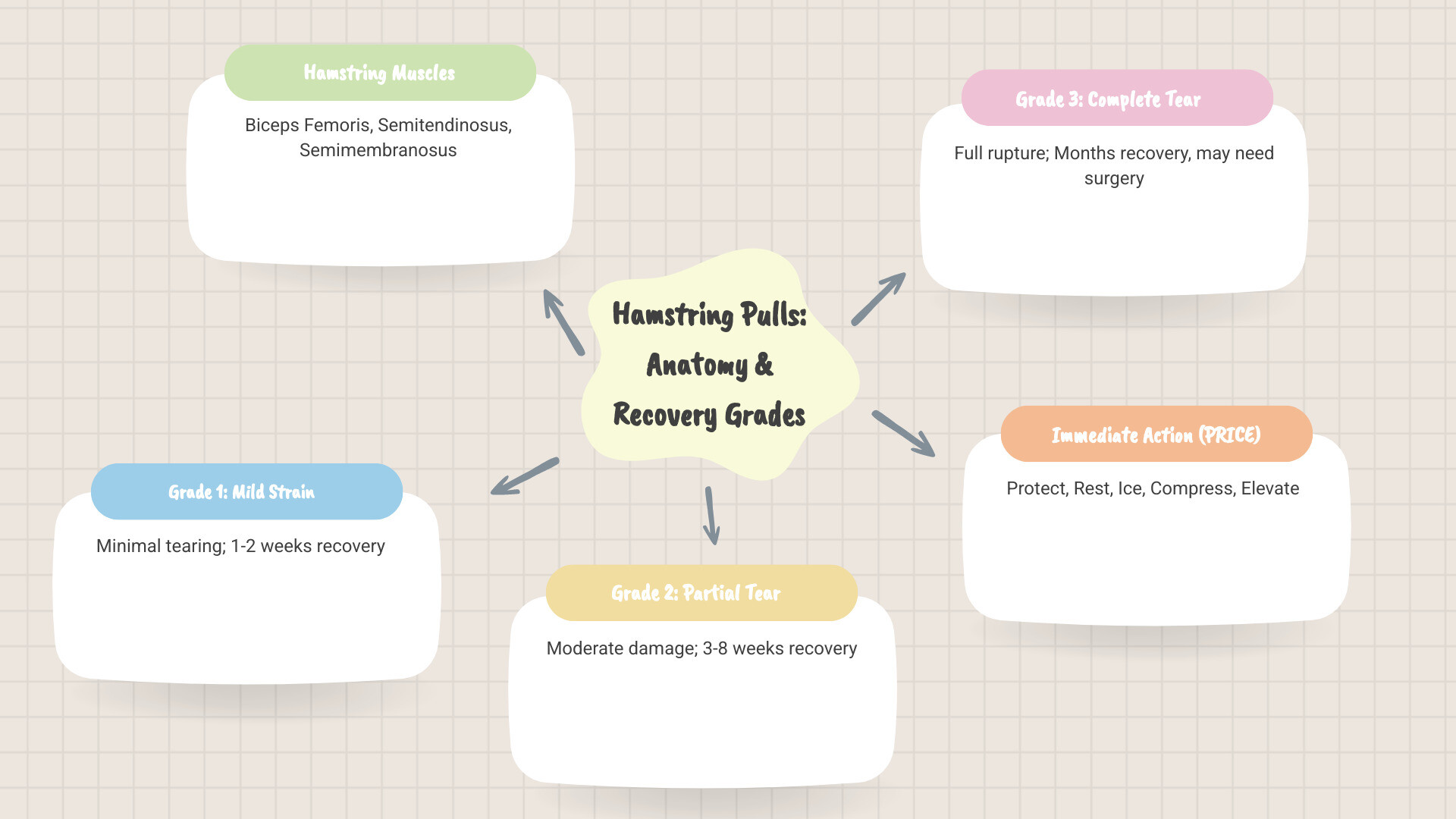
- Grade 1 (Mild Strain): Few days to 2 weeks
- Grade 2 (Partial Tear): 3 to 8 weeks
- Grade 3 (Complete Tear): Several months, may require surgery
Immediate Steps (First 72 Hours):
- Protect the injured leg and stop activity immediately
- Rest and avoid putting weight on the leg
- Ice for 15-20 minutes every 2-3 hours
- Compress with an elastic bandage
- Lift the leg above heart level
A hamstring pull happens when one of the three muscles at the back of your thigh—the biceps femoris, semitendinosus, or semimembranosus—stretches too far and tears. You'll usually feel a sudden sharp pain, sometimes with a popping sensation, during activities like sprinting, jumping, or even climbing stairs. Athletes experience these injuries frequently, but anyone can pull a hamstring during everyday activities.
The pain you feel isn't just inconvenient—it's your body telling you that muscle fibers have torn and need time to heal properly. Rushing back to activity too soon is one of the biggest mistakes people make, leading to reinjury and chronic problems that can last for years.
I'm Tony Enrico, and through my work helping thousands of people find relief from nerve and muscle pain, I've seen how proper recovery for hamstring pull injuries makes all the difference between full healing and ongoing problems. My mission with Neuropasil is to provide not just effective pain relief, but real guidance for getting back to the activities you love.
Recovery for hamstring pull terms made easy:
First 72 Hours: Immediate Steps After a Hamstring Injury
The moments immediately following a hamstring injury are crucial for setting the stage for effective recovery for hamstring pull. Taking the right steps can significantly impact your healing timeline and prevent further damage. Our primary goals during these initial 72 hours are to minimize pain and swelling, protect the injured area, and assess the severity of the injury. We know it's tempting to "walk it off," but trust us, your future self will thank you for being patient and proactive.
For more detailed insights into general muscle strain treatment, you can refer to our guide: More info about muscle strain treatment.
The PRICE Protocol Explained
The PRICE protocol is our go-to strategy for immediate care after a hamstring pull. It's a simple yet powerful acronym that stands for Protection, Rest, Ice, Compression, and Elevation. Let's break down each component:
- Protection: This means immediately stopping any activity that caused the injury or might aggravate it. If you're on the field, get off. If you're running, stop. Protecting the muscle from further strain is paramount.
- Rest: Give your injured hamstring a break. For mild injuries, this might mean avoiding strenuous activities. For more severe pulls, crutches might be necessary to keep weight off the leg and prevent further tearing. The goal is to allow the muscle fibers to begin their repair process undisturbed.
- Ice: Applying ice is a fantastic way to manage pain and reduce swelling. We recommend applying an ice pack (wrapped in a towel to protect your skin) to the injured area for 15 to 20 minutes every 2 to 3 hours while you're awake, especially during the first few days.
- Compression: Using a compression bandage or elastic wrap helps to minimize swelling, which can reduce pain and speed up healing. When wrapping, start from the end farthest from your heart and work your way up. Make sure the bandage is snug but not too tight. If you experience increased pain, numbness, or swelling below the wrapped area, loosen it immediately.
- Elevation: Whenever possible, lift your injured leg above the level of your heart. This helps gravity drain excess fluid away from the injury site, further reducing swelling. Prop your leg up on pillows while resting.
While following PRICE, it's equally important to avoid HARM: Heat, Alcohol, Running, and Massage for the first 3 days. These can actually increase swelling and delay healing during the acute phase.
How to Manage Pain and Swelling
Beyond the PRICE protocol, managing pain and swelling effectively is key to a comfortable and efficient recovery for hamstring pull.

While managing discomfort is a priority, we believe in targeted relief directly at the source of the pain. This is where topical analgesics, especially menthol-based creams, truly shine. Menthol, a compound found in mint oils, provides a cooling sensation that can effectively reduce pain perception and increase your pain threshold. It works by numbing the nerves and constricting blood vessels, which can also help prevent fluid build-up and reduce bruising and swelling.
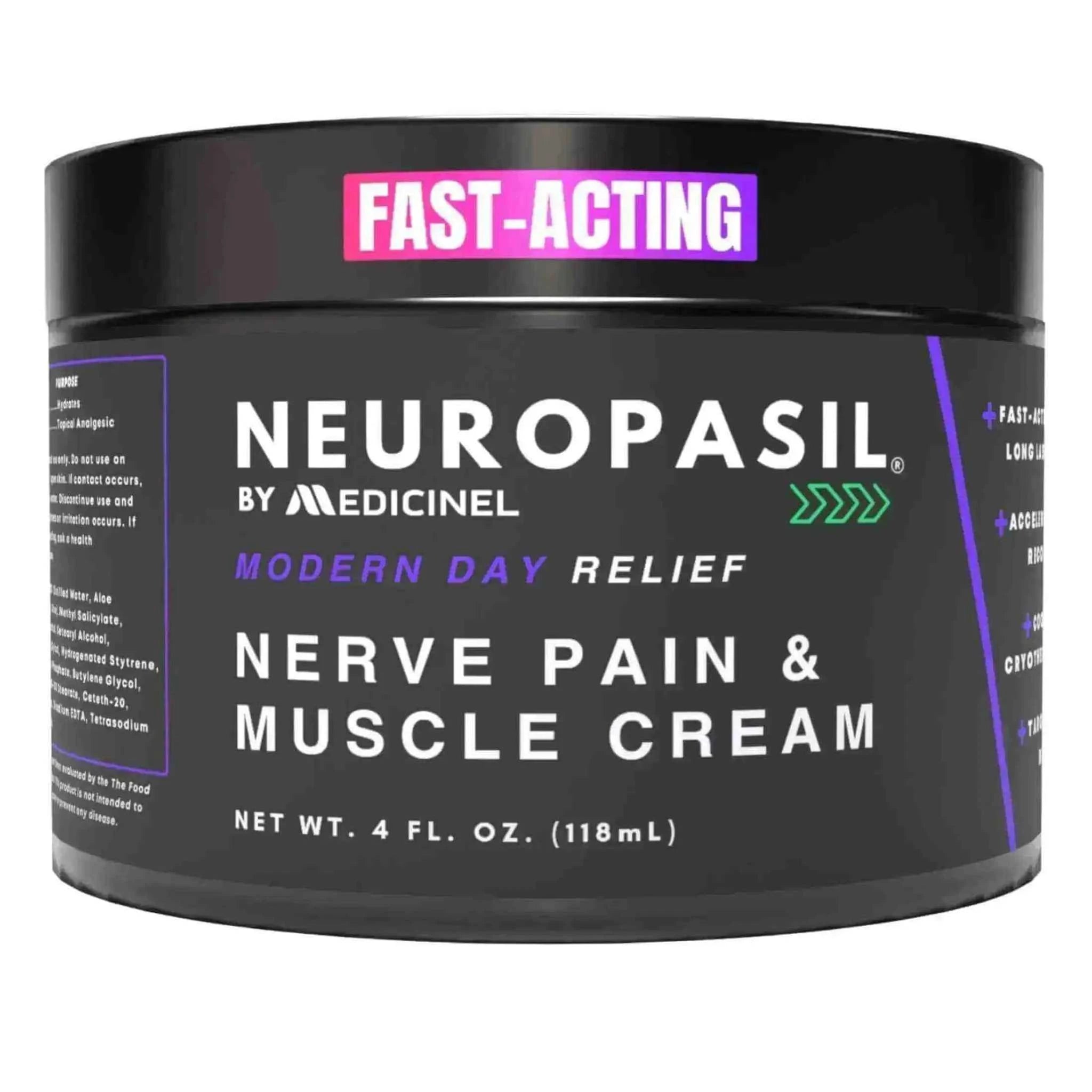
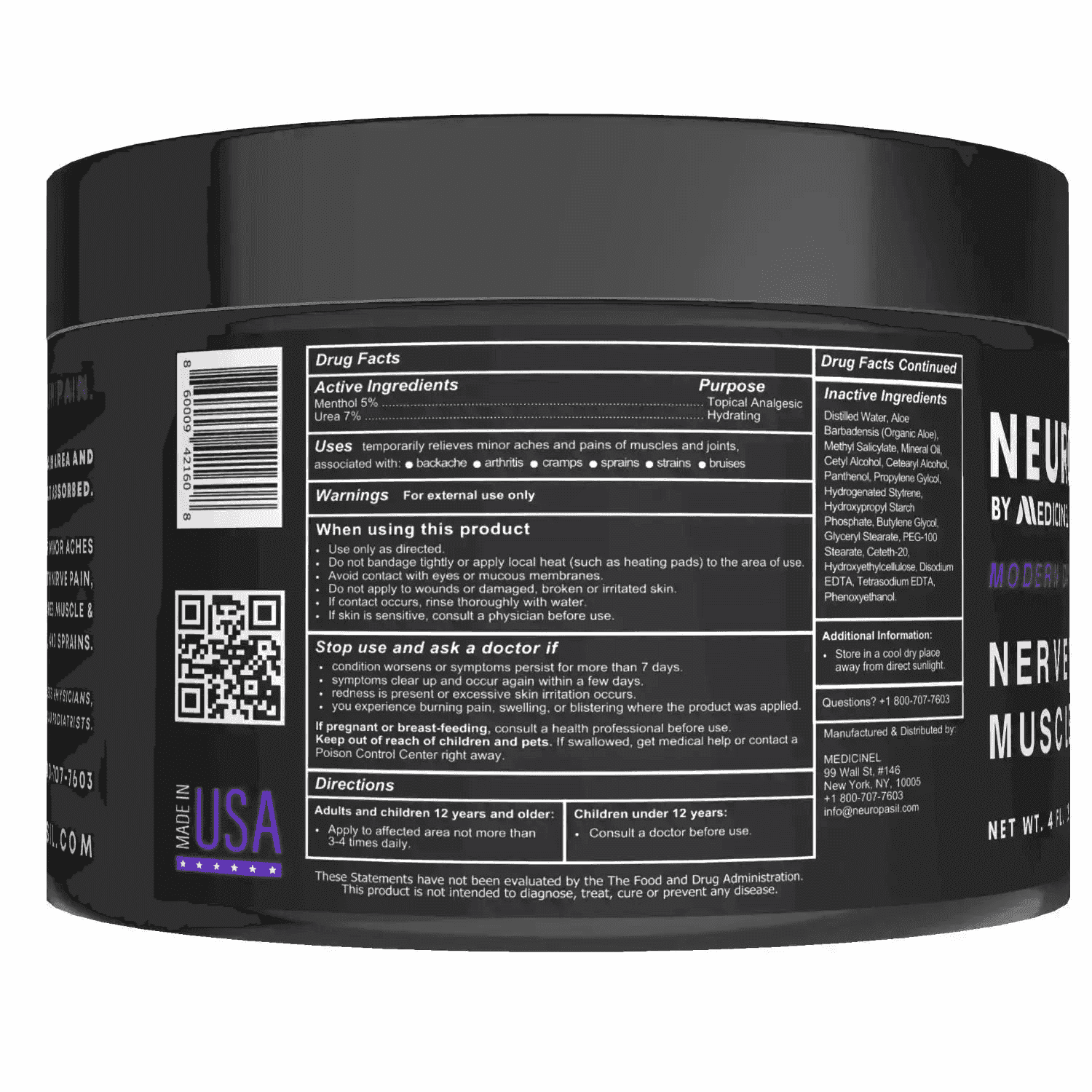
At Neuropasil, we specialize in creating fast-acting topical creams designed to soothe muscle pain and discomfort. Our creams, powered by ingredients like menthol, aloe, and urea, deliver targeted relief directly to the source of your pain. Many athletes use Neuropasil to treat and recover from sore muscles, and it's also effective for strains and sprains.
Want to explore our range of solutions? Check out our guide on The best pain relief creams for muscle pain or directly find Neuropasil Nerve Pain Relief Cream for targeted relief.
When to Seek Medical Attention
While many mild hamstring pulls can be managed at home, know when to seek professional medical attention. Ignoring severe symptoms can lead to complications and a much longer recovery for hamstring pull. We recommend contacting a healthcare provider if you experience any of the following:
- Severe pain that is debilitating or getting worse.
- Inability to walk or bear weight on the injured leg.
- Large amount of swelling or bruising that is significant or worsening.
- A distinct "pop" or "snap" sound at the time of injury, which might indicate a more severe tear or even an avulsion fracture (where the tendon pulls a piece of bone away).
- Numbness or tingling in your leg or foot.
- Symptoms not improving after a few days of self-care.
- Your leg feels very stiff or is difficult to move.
A healthcare provider will typically perform a physical exam, checking for swelling, tenderness, and assessing pain with different leg movements. For more severe injuries, they might recommend imaging tests like an MRI or ultrasound to determine the extent of the damage, or an X-ray to rule out an avulsion fracture. For urgent advice, services like NHS 111 online can guide you on when to seek help. For comprehensive medical guidance, resources like Hamstring Muscle Injuries - OrthoInfo - AAOS are invaluable.
Understanding Your Injury: Grades, Symptoms, and Healing Times
Understanding the severity of your hamstring injury is the cornerstone of effective recovery for hamstring pull. Hamstring injuries are classified into different grades, and each grade has distinct symptoms, treatment pathways, and expected healing times. This classification helps us tailor the recovery process to your specific needs.
The 3 Grades of Hamstring Strains
Healthcare providers classify hamstring strains based on the extent of muscle fiber damage:
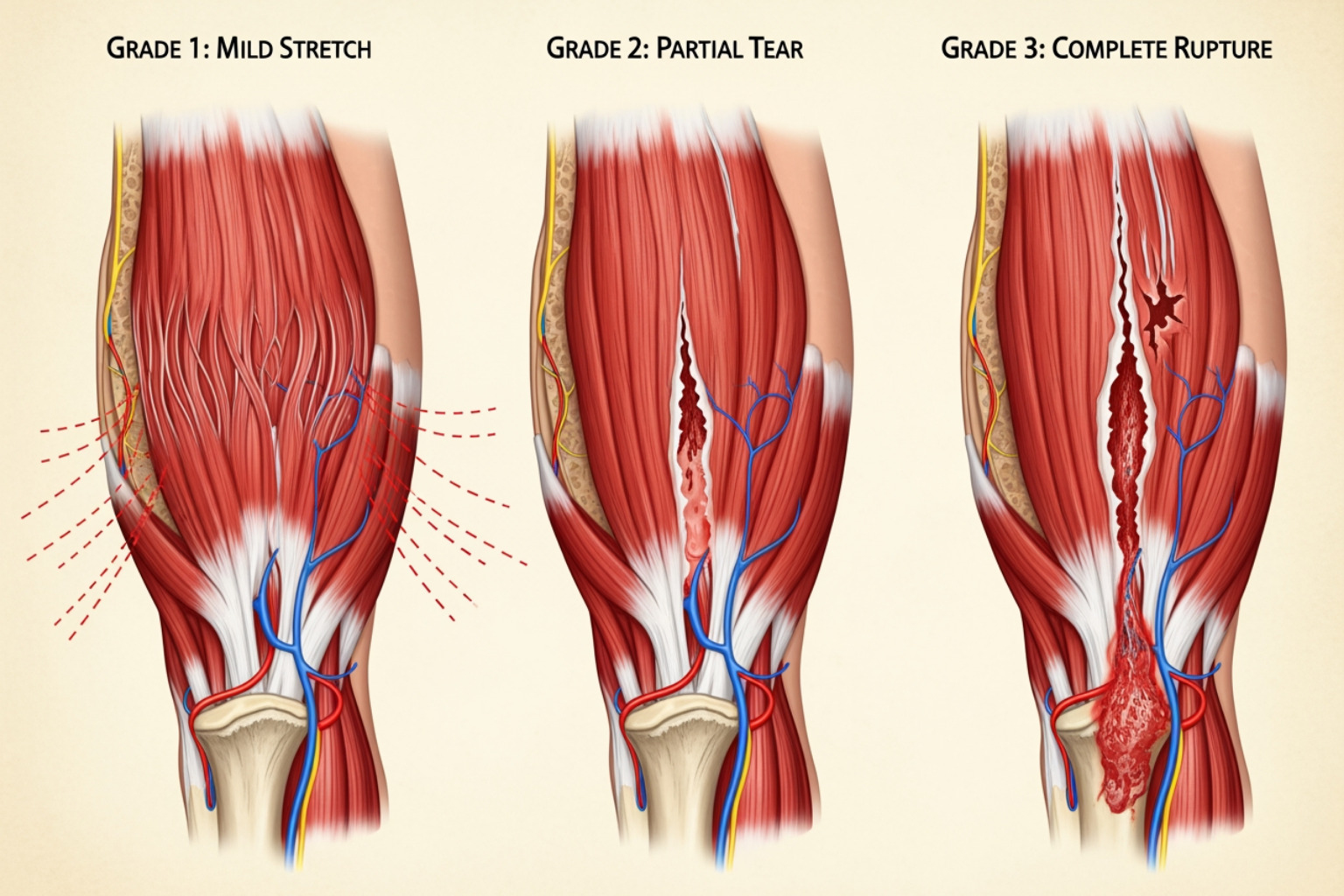
- Grade 1 (Mild Strain): This is a minor pull or strain where only a few muscle fibers are stretched or torn. You might feel sudden, radiating pain and stiffness, but usually, there's no significant loss of strength. You can typically walk, though it might be slightly uncomfortable.
- Grade 2 (Partial Tear): A moderate strain involves a partial tear of the muscle fibers. The pain is more intense, and you'll likely experience increased swelling, bruising, and noticeable weakness in the hamstring. Activities like walking become more painful and difficult, and you might have a noticeable limp.
- Grade 3 (Complete Tear): This is the most severe injury, involving a complete rupture of the muscle or tendon. You'll likely experience severe pain, tenderness, and significant swelling and bruising. A "pop" sound is often heard or felt at the time of injury. There's a significant loss of strength and function, making it very difficult or impossible to walk without assistance. In some cases, the muscle might even "ball up" at the back of the thigh.
Typical Recovery for Hamstring Pull by Grade
The timeline for recovery for hamstring pull varies significantly depending on the grade of the injury:
- Grade 1 Injuries: These mild strains typically heal relatively quickly. You might feel better in less than a week, with full recovery often within a few days to 2 weeks. Symptoms like pain and soreness may last two to five days.
- Grade 2 Injuries: Partial tears require more time for the muscle fibers to repair. Healing can take anywhere from 3 to 8 weeks. Symptoms can last up to a few weeks or a month.
- Grade 3 Injuries: Complete tears are the most serious and demand the longest recovery period. These can take several months to heal, and in some cases, recovery could extend as long as a year, especially if surgery is involved.
Several factors can influence these timelines, including your age, overall health, adherence to your rehabilitation program, and the specific location of the tear within the hamstring muscles.
Surgical Options and Long-Term Effects
Surgery is typically reserved for the most severe hamstring injuries, specifically:
- Tendon Avulsion Injury: This occurs when the hamstring tendon completely tears away from its attachment point on the pelvis or shinbone, sometimes even pulling a small piece of bone with it.
- Complete Muscle Rupture: While less common, a full tear of the muscle belly that doesn't heal with conservative treatment might also warrant surgical intervention.
During surgery, an orthopedic surgeon will reattach the torn tendon or muscle using stitches or anchors. The rehabilitation process after surgery is intensive and prolonged. For a proximal hamstring repair (near the pelvis), rehabilitation often takes at least 6 months. Distal hamstring repairs (near the knee) typically require about 3 months of rehabilitation before a return to athletic activities. During the initial post-surgical period, you'll likely need to keep weight off the leg and use crutches and potentially a brace.
Even after successful recovery for hamstring pull, there can be potential long-term effects, particularly with severe injuries. These might include:
- Chronic tightness: The injured muscle may feel tighter than before the injury.
- Scar tissue formation: The healing process often involves the formation of scar tissue, which can be less flexible than healthy muscle tissue.
- Increased reinjury risk: A previous hamstring injury is a significant risk factor for future injuries, especially if rehabilitation isn't completed thoroughly or if activity is resumed too soon.
The Phased Approach to Hamstring Rehabilitation
Effective recovery for hamstring pull isn't about rigid timelines; it's about a criterion-based progression, meaning you advance through phases when your body is ready, not just because a certain number of weeks have passed. Physical therapy plays a pivotal role in this journey, guiding you through exercises that restore strength, flexibility, and function. The goal, as highlighted by resources like Hamstring injury - Diagnosis and treatment, is to ensure a safe and complete return to your normal activities.
Here are the typical phases we follow in hamstring rehabilitation:
Phase 1: Gentle Motion and Pain Control (First Week)
Our primary goal in this initial phase is to reduce pain and swelling, promote early tissue healing, and prevent muscle atrophy without stressing the injured hamstring. We focus on protected range of motion and very gentle, pain-free movements.
- Manual Therapy: Light massage techniques, like soft tissue mobilization (STM) or myofascial release, can help with pain and swelling.
- Gentle Stretching: We might introduce very gentle stretches for surrounding muscles like the hip flexors and calves, but we generally avoid direct hamstring stretching at this stage to prevent further strain. If there’s nerve tension, nerve gliding exercises might be introduced.
- Isometric Exercises: These involve contracting the muscle without moving the joint. Examples include "hamstring sets" (gently pressing your heel into the floor while sitting) and "glute sets" (squeezing your gluteal muscles). These help maintain muscle activation without putting undue stress on the healing fibers.
Phase 2: Building Back Strength and Flexibility (Weeks 2-6)
Once pain and swelling have subsided and you can perform basic movements without discomfort, we progress to restoring your normal walking gait and improving motor control.
- Gentle Stretching: We introduce gentle hamstring stretches, such as the doorway stretch. For this, you lie on your back near a doorway, extend one leg through the doorway, and slide the injured leg up the wall until you feel a gentle stretch. Hold this for at least 1 minute, repeating 2-4 times. Never bounce!
-
Isotonic Exercises: These involve moving the joint through a range of motion against resistance. Examples include:
- Hamstring Curls (lying down): Lying on your stomach, gently lift your foot towards your buttock by bending your knee. Slowly lower it back down.
- Bridges: Lying on your back with knees bent and feet flat, lift your hips off the floor, engaging your glutes and hamstrings.
- Hip Extension (standing): Facing a wall, kick your affected leg straight back behind you, keeping the knee straight.
- Cardiovascular Activity: We'll also start low-impact activities like stationary biking to improve blood flow and maintain fitness without impact. Progressive walking is also initiated, gradually increasing duration and intensity.
Phase 3: Advanced Strengthening and Return to Activity Prep (Week 6+)
This phase is all about building robust strength, power, and endurance, preparing your hamstring for the demands of your sport or daily activities. The focus shifts to more dynamic and sport-specific movements.
- Eccentric Strengthening: These exercises are crucial because hamstring injuries often occur during eccentric contractions. Nordic hamstring curls (where a partner holds your ankles as you slowly lower your body forward) and single-leg deadlifts are excellent for this.
- Plyometrics: Jumping and hopping drills are introduced to improve explosive power, but only when your strength and control are adequate.
- Jogging Progression: We'll guide you through a gradual return-to-running program, starting with walk/jog intervals and slowly increasing the jogging duration, adhering to the "10% rule" (no more than a 10% increase in mileage per week). Initial runs should ideally be on softer surfaces.
- Single-Leg Closed Chain Exercises: Exercises like single-leg squats and lunges help improve stability and functional strength.
Throughout these phases, constant communication with your physical therapist is key. They will assess your progress through functional tests, including strength measurements (like the Limb Symmetry Index, or LSI), hop tests, and balance assessments, to determine when you're ready to progress.
Returning to Action and Preventing Future Injuries
The final, and perhaps most challenging, stage of recovery for hamstring pull is the safe return to your desired activities or sports, coupled with strategies to prevent reinjury. This isn't just about feeling "good enough"; it's about being strong, flexible, and confident enough to perform without hesitation. For more general insights into muscle health, you can always Learn more from our blog.
Signs You Are Ready to Return to Sports
Returning to sports too soon is a recipe for reinjury. We rely on a combination of objective criteria and your subjective feeling of readiness:
- Full Range of Motion: Your injured leg should have the same flexibility as your uninjured leg.
- Pain-Free Movement: You should be able to perform all sport-specific movements, including sprinting, jumping, and cutting, without any pain.
- Strength Equal to Uninjured Leg: Objective testing, often through isokinetic dynamometry, should show that your injured hamstring's strength is at least 90% (or even 100%) of your uninjured side (Limb Symmetry Index).
- Ability to Sprint and Jump Without Pain: You should be able to perform maximal effort sprints and various hop tests (single leg hop for distance, triple hop) with good form and without pain, achieving similar distances to your uninjured leg.
- Psychological Confidence: This is crucial. You should feel mentally ready and confident in your hamstring's ability to withstand the demands of your sport, without fear of reinjury.
- Functional Testing: Your physical therapist may conduct specific functional tests, like the Y-Balance Test or agility drills, to ensure your body can handle dynamic movements.
The Dangers of Returning Too Soon
The temptation to get back to your sport or intense activities can be strong, but the dangers of returning too soon are significant:
- High Reinjury Rate: Hamstring injuries have one of the highest reinjury rates among athletes. If you haven't fully healed, you're much more likely to pull it again, often worse than the first time.
- Chronic Hamstring Problems: Repeated injuries can lead to chronic tightness, persistent pain, and long-term functional limitations.
- Development of Scar Tissue: Rushing the healing process can result in more dense, less elastic scar tissue, making the muscle more susceptible to future injury.
- Worsening the Tear: A minor tear can become a partial tear, and a partial tear can become a complete rupture if you push through pain.
- Longer Overall Recovery Time: While you might feel like you're saving time by returning early, a reinjury almost always means a significantly longer and more frustrating recovery period in the long run.
How to Prevent Future Hamstring Injuries
Prevention is always better than cure, especially when it comes to hamstring pulls. We recommend incorporating these strategies into your routine:
- Proper Warm-up: Always warm up for at least 10 minutes before any physical activity. This increases blood flow to your muscles, making them more pliable and less prone to injury.
- Dynamic Stretching: Incorporate dynamic stretches (like leg swings) before exercise to prepare your muscles for movement.
- Regular Strengthening Exercises: Focus on strengthening your hamstrings, glutes, and core. Eccentric training, like Nordic hamstring curls, has been shown to be particularly effective in preventing hamstring injuries.
- Improving Flexibility: Stretch for three to five minutes after physical activity, targeting your hamstrings, hip flexors, and quadriceps. Consistent stretching helps maintain muscle length and elasticity.
- Listening to Your Body: Pay attention to fatigue and muscle soreness. Don't push through pain. If something feels off, take a break.
- Avoiding Overexertion: Gradually increase the intensity, duration, and frequency of your workouts. Avoid sudden spikes in activity that can overload your muscles. Don't exercise when you're feeling tired.
Frequently Asked Questions about Hamstring Pull Recovery
We get a lot of questions about recovery for hamstring pull injuries. Here are some of the most common ones we hear:
How long does a pulled hamstring take to heal?
The healing time for a pulled hamstring varies significantly based on its severity:
- Grade 1 (mild strain): These usually heal within a few days to two weeks. Some very mild strains might resolve even faster.
- Grade 2 (partial tear): Expect a recovery period of three to eight weeks.
- Grade 3 (complete tear): These severe injuries can take several months to heal, and if surgery is required, the recovery could extend for six months to a year or more.
What are the signs that a hamstring injury is healing properly?
As your hamstring heals, you should notice a gradual and consistent improvement in your symptoms. Key signs of proper healing include:
- A steady reduction in pain and tenderness at the injury site.
- Decreased swelling and bruising.
- An increase in your pain-free range of motion.
- The ability to bear more weight on the injured leg without discomfort.
- Improved strength and stability in the affected leg during daily activities.
- A return to normal walking patterns without a limp.
Can I walk with a pulled hamstring?
Whether you can walk with a pulled hamstring depends entirely on the grade of your injury:
- For mild (Grade 1) strains, walking may be possible, though you'll likely experience some discomfort, stiffness, or a dull ache.
- For moderate to severe (Grade 2-3) injuries, walking is often very painful and difficult, if not impossible. In these cases, using crutches is usually necessary to allow the muscle to rest and prevent further damage. It's crucial not to push through severe pain when walking, as this can worsen the tear and prolong your recovery for hamstring pull.
Conclusion
Navigating the recovery for hamstring pull can feel like a marathon, not a sprint. But by understanding the different grades of injury, taking immediate action, diligently following a phased rehabilitation program, and prioritizing prevention, you can achieve a successful and lasting recovery.
Patience is your best friend. Listen to your body, respect the healing process, and don't rush your return to activity. Gradual progression is key to rebuilding strength and flexibility, and minimizing the risk of reinjury. And for those moments when pain and discomfort threaten to derail your progress, Neuropasil is here to provide targeted, soothing relief, helping you stay comfortable throughout your healing journey.
We're committed to supporting your health and wellness every step of the way. Visit our homepage to learn more.