Why Recovering from a Pulled Hamstring Requires the Right Approach
Exercises for pulled hamstring recovery are essential for healing properly and getting back to your normal activities without risking reinjury.
Quick Answer: Best Exercises for Pulled Hamstring Recovery
- Gentle Stretching - Towel hamstring stretch, seated hamstring stretch (after initial swelling subsides)
- Isometric Strengthening - Hamstring sets (heel digs into floor)
- Progressive Strengthening - Glute bridges, prone hamstring curls, straight leg raises
- Low-Impact Cardio - Swimming with pull buoy, stationary bike, walking
- Advanced Exercises - Single-leg RDLs, lunges (only after full pain-free movement)
A pulled hamstring—also called a hamstring strain—happens when one or more of the three muscles at the back of your thigh (the semitendinosus, semimembranosus, and biceps femoris) gets overstretched or torn. This injury is surprisingly common. In fact, hamstring injuries account for 37% of all muscle traumas in professional sports, making them the most common noncontact injury athletes face.
Whether you're a runner who felt a sudden pop during a sprint, a weekend warrior who overdid it at the gym, or someone who simply bent down the wrong way, hamstring injuries can sideline you for days, weeks, or even months depending on severity.
The good news? Most hamstring strains heal well with the right combination of rest, targeted exercises, and gradual progression back to activity. The key is understanding what grade of strain you have (mild pull, partial tear, or complete tear) and following a recovery plan that matches your injury severity.
I'm Tony Enrico, founder of Neuropasil, and I've dedicated my work to helping people reclaim their lives from muscle and nerve pain. Over the years, I've seen countless athletes and active adults successfully recover from hamstring injuries using proper exercises for pulled hamstring rehabilitation, combined with natural pain management strategies.
Exercises for pulled hamstring basics:
Step 1: Identify the Severity - Symptoms and Grades
When you've injured your hamstring, the first step towards recovery is understanding the extent of the damage. Hamstring injuries range from mild strains to complete tears, and identifying the severity will guide your treatment and recovery plan.
Common Symptoms of a Hamstring Injury
A hamstring injury often announces itself with a sudden, sharp pain in the back of your thigh. Depending on the severity, you might also experience:
- A popping or snapping sensation at the time of injury, indicating a more severe tear.
- Immediate pain or tenderness in the back of the thigh, especially when walking, bending over, or straightening your leg.
- Swelling and bruising that can develop within a few hours or days after the injury. The presence and extent of bruising can sometimes indicate the severity; for instance, significant bruising or injury close to the buttock or knee might suggest the hamstring tendon has pulled off the bone.
- Weakness in your leg, making it difficult to bear weight or perform normal activities.
- Limited range of motion in the affected leg.
When to See a Doctor
While many mild hamstring strains can be managed at home, it's crucial to know when to seek professional medical advice. We recommend consulting a healthcare provider if you experience:
- Very painful or worsening pain.
- A large amount of swelling or bruising, or if it's getting worse.
- It hurts to walk or stand using the injured leg, or you can't bear weight on it.
- Your leg feels very stiff or is difficult to move.
- You have sudden numbness or tingling in the leg.
- Your injury doesn't seem to be healing as expected after a few days of home care.
A doctor can accurately diagnose the grade of your injury through a physical exam, checking for tenderness and assessing pain with different leg movements. They may also use imaging tests like X-rays (to rule out avulsion fractures where a piece of bone is pulled away), ultrasound, or MRI to confirm the diagnosis and determine the extent of the tear, especially for more complicated injuries or those not healing as expected.
The Role of Physical Therapy
For most hamstring strains, physical therapy plays a crucial role in recovery. A physical therapist can teach you safe stretching and strengthening exercises for pulled hamstring rehabilitation, helping to restore strength, flexibility, and mobility. They will guide you through a balanced program that progresses as your injury heals, focusing on movements that stretch the hamstrings while also building strength.
When Surgery is Needed
Surgery for a hamstring injury is rare, typically reserved for severe cases, such as:
- A complete tear (Grade 3) where the muscle has pulled completely free from the pelvis or shinbone (an avulsion injury).
- When a large part of the muscle is torn and significantly retracted.
In these instances, surgery is performed to reattach the hamstring tendon to the bone. Recovery after surgery can be extensive, taking several months, and will always be followed by a comprehensive rehabilitation program.
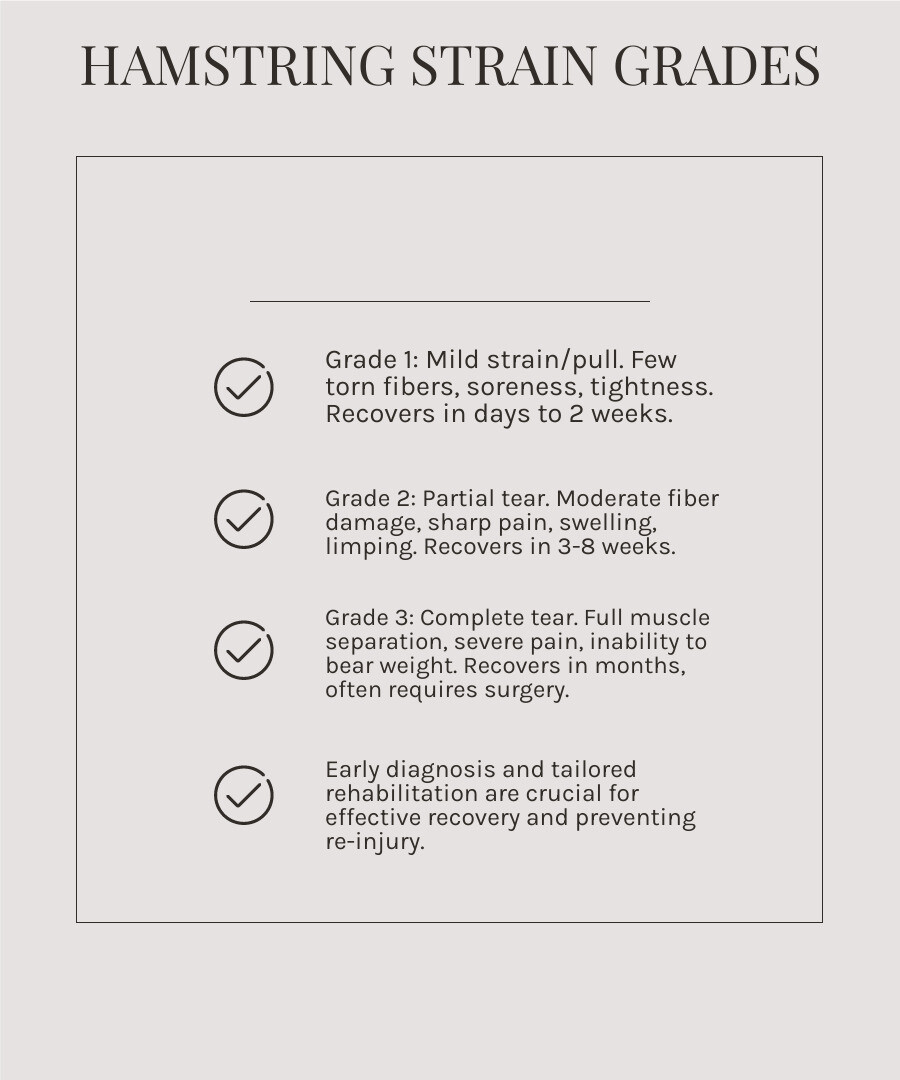
Here's a quick overview of the different grades of hamstring strains:
| Grade | Description | Common Symptoms | Typical Recovery Time |
|---|---|---|---|
| Grade 1 | Mild strain/pull | Soreness, tightness, minimal swelling | A few days to 2 weeks |
| Grade 2 | Partial tear | Sharp pain, noticeable swelling/bruising, limping | 3 to 8 weeks |
| Grade 3 | Complete tear/avulsion | Severe pain, inability to bear weight, significant swelling | Months, often requires surgery |
Step 2: Immediate First Aid - The RICE Protocol
Once you've identified a potential hamstring injury, the immediate goal is to reduce pain and swelling. The RICE protocol is your best friend in the first 48-72 hours after the injury.
Rest
The first and most critical step is Rest. Stop any physical activity that causes pain. Continuing to use an injured hamstring can worsen the tear and significantly prolong recovery. If walking is painful or you cannot bear weight on your leg, we recommend using crutches to keep the leg as still as possible. This allows the injured muscle fibers to begin the healing process undisturbed.
Ice
Applying ice helps to reduce pain and inflammation.
- How to apply ice: Use an ice pack wrapped in a thin cloth or towel to prevent direct contact with your skin.
- Duration: Apply ice for 15 to 20 minutes at a time.
- Frequency: Repeat this every 2 to 3 hours while you're awake for the first few days.
- Benefits: Ice constricts blood vessels, which limits swelling and inflammation, and can also help numb the nerve endings, providing pain relief.
Compression
Compression helps minimize swelling and provides support to the injured area.
- How to wrap: Use an elastic compression bandage, wrapping it firmly but not too tightly around the injured thigh. Start wrapping from the end farthest from your heart.
- Important: Loosen the bandage if you experience increased pain, numbness, or if swelling appears below the wrap. Remove it before sleeping.
- Benefits: Compression helps to reduce fluid buildup in the injured area, which can lessen pain and promote healing.
Elevation
Elevating your injured leg helps to reduce swelling by allowing gravity to drain fluid away from the injury site.
- Positioning the leg: When resting, try to keep your injured leg raised above the level of your heart. You can do this by propping it up on pillows.
- Benefits: Reducing swelling is key to pain management and faster healing.
Step 3: Maintain Fitness with Safe Cardio
A pulled hamstring doesn't mean you have to abandon your fitness goals entirely! Low-impact aerobic exercises for pulled hamstring recovery are incredibly beneficial. They help maintain cardiovascular health, improve blood flow to the injured muscle (which is vital for healing), and prevent deconditioning without putting excessive stress on your hamstring.
Swimming
Swimming is an excellent low-impact option. The buoyancy of water reduces the load on your joints and muscles, making it gentle on your healing hamstring.
- Low-impact nature: The water supports your body weight, minimizing impact.
- How to modify: To specifically protect your hamstring, we recommend using a pull buoy between your thighs. This keeps your legs afloat and allows you to focus solely on upper body propulsion, minimizing leg movement and hamstring engagement.
- Focus on upper body: This modification lets you get a great cardiovascular workout without aggravating the injury. As your hamstring heals, you can gradually reintroduce gentle flutter kicks.
- Why swimming is a great low-impact workout.
Rowing Ergometer
A rowing ergometer can be a fantastic tool for cardio, but with a pulled hamstring, modifications are key.
- Upper-body ergometer (UBE): For early recovery, an upper-body ergometer (UBE) is ideal. This machine allows you to use only your arms and upper body, completely bypassing leg involvement. This means you can incorporate cardio early into your recovery without risking your hamstring.
- Full-body option when pain-free: As your hamstring heals and becomes pain-free, you can gradually reintroduce leg drive on a standard rowing ergometer, starting with light resistance and controlled movements. The rowing ergometer is a whole-body exercise but can be modified to only use the upper body.
Stationary Bike
When you're ready to introduce some gentle leg movement, a stationary bike is a safe choice.
- When to start (pain-free): Only begin stationary biking once you can pedal without any pain or discomfort in your hamstring.
- Low resistance: Start with very low resistance and a steady, comfortable pace. Avoid any settings that mimic hills or sprints, as these can put too much strain on your healing muscle.
- Controlled motion: The stationary bike provides a controlled, smooth motion that helps increase blood flow and maintain leg strength without high impact.
- Benefits of stationary biking for joints.
Elliptical Machine & Walking
These two options offer excellent low-impact cardio as your recovery progresses.

- Elliptical's gliding motion: An elliptical machine provides a smooth, gliding motion that mimics running but without the harsh impact. This reduces stress on your hamstring and joints. Start slowly and ensure the movement is completely pain-free.
- Walking as a safe starting point: For many, walking is the first and safest cardio option after a hamstring injury. Begin with short, slow walks on flat surfaces.
- Pain-free pace: The golden rule for both elliptical and walking is to stay within a completely pain-free range. If you feel any discomfort, slow down, shorten your duration, or take a break. Gradually increase your speed, duration, and incline as your hamstring tolerates it.
- Walking for Exercise is a great way to reintroduce activity. Elliptical machines are also known to go easy on your joints.
Step 4: Gentle Stretching and Strengthening Exercises for a Pulled Hamstring
Once the initial pain and swelling have subsided (typically after the RICE phase), it's time to introduce gentle exercises for pulled hamstring rehabilitation. The key here is gradual progression and always listening to your body. Pain is your body's signal to back off.
When to Begin Exercises
We recommend starting gentle stretching and isometric (muscle contraction without movement) strengthening exercises within a few days to a week after injury, or as soon as your pain allows and with approval from your healthcare provider. The goal is to restore flexibility and begin rebuilding strength without re-injuring the muscle.
Importance of Gradual Progression
Rushing back into full activity or aggressive exercises too soon is a primary cause of reinjury. We emphasize starting with low-intensity, controlled movements and slowly increasing the duration, repetitions, and resistance as your hamstring gets stronger. This methodical approach ensures proper healing and builds resilient muscle tissue.
Benefits of Strengthening Hamstrings
Strong hamstrings are crucial for preventing future injuries, improving overall leg function, and enhancing athletic performance. By strengthening these muscles, we help create a balance with the quadriceps, reducing the risk of strains caused by muscle imbalances. Strong hamstrings also improve stability and mobility for daily activities.
Safe Hamstring Stretching Exercises for a Pulled Hamstring
Always perform these stretches gently and without bouncing. Hold each stretch for about 30 seconds.
- Seated Hamstring Stretch: Sit on the floor with both legs extended straight in front of you. Reach towards your toes, keeping your back straight and knees slightly bent if needed. You should feel a gentle pull in the back of your thighs.
- Standing Hamstring Stretch: Stand with one heel slightly in front of you, toes pointing up. Gently hinge at your hips, keeping your back straight, and reach towards your toes until you feel a gentle stretch.
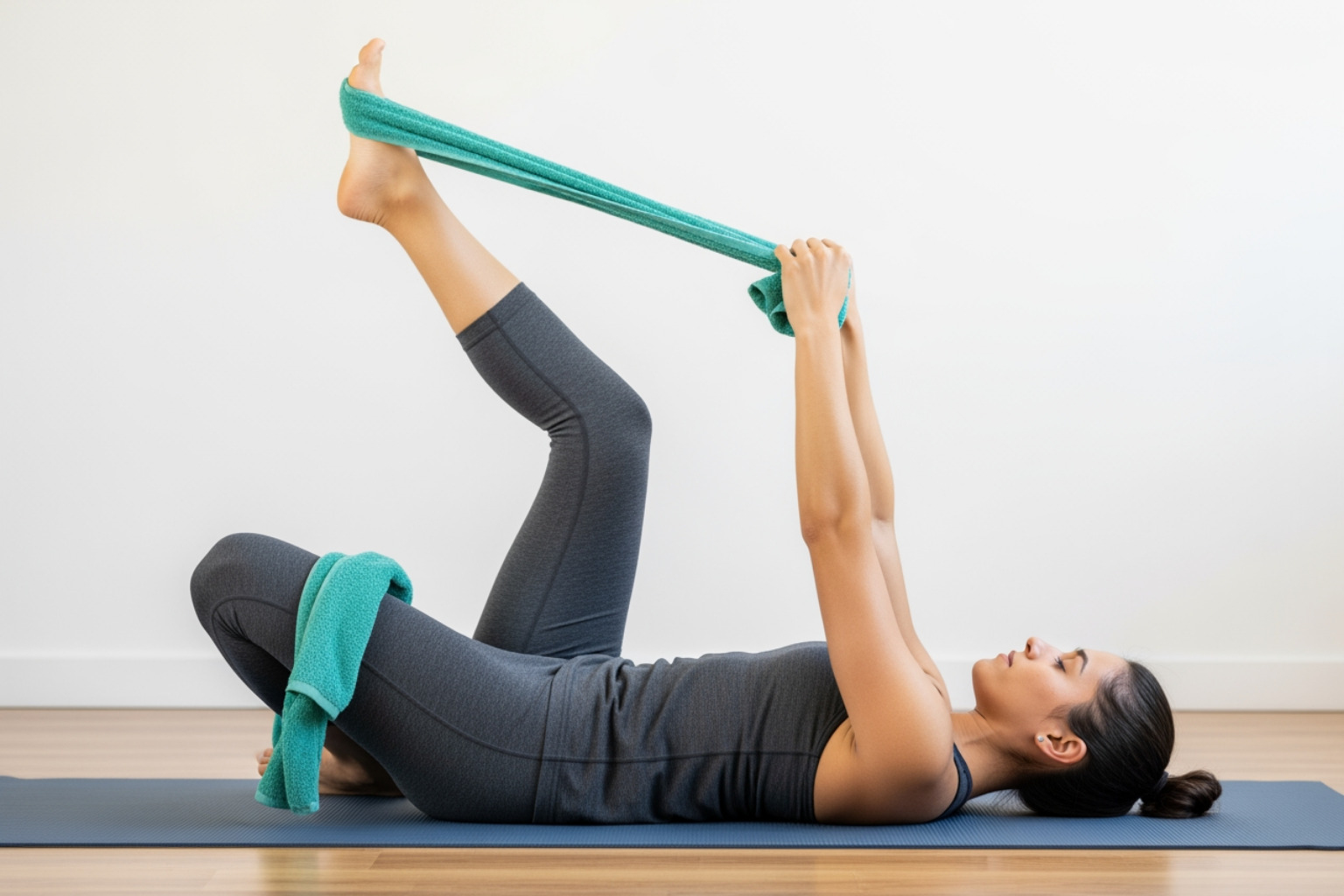
- Towel Hamstring Stretch: Lie on your back with one leg bent and the foot flat on the floor. Loop a towel around the ball of your other foot. Gently straighten that leg towards the ceiling, using the towel to pull your foot slightly towards your head. Keep your knee slightly bent if necessary to avoid pain. This is a great way to control the stretch.
Effective Hamstring Strengthening Exercises for a Pulled Hamstring
These exercises should be introduced gradually and performed without pain.
- Isometric Hamstring Set (Heel Digs): Sit with your affected leg bent. Gently press your heel into the floor, tightening the muscles on the back of your bent leg (hamstring). Hold for 6 seconds, then relax. Repeat 8-12 times. This helps activate the muscle without movement.
- Glute Bridges: Lie on your back with knees bent and feet flat on the floor, hip-width apart. Engage your core and glutes, then lift your hips off the floor until your body forms a straight line from shoulders to knees. Lower slowly. This strengthens both glutes and hamstrings.
- Prone Hamstring Curls: Lie on your stomach. Slowly bend your knee, bringing your heel towards your glute, and then slowly lower it back down. Start without weights and gradually add ankle weights or resistance bands as tolerated. Aim for 3 sets of 15-30 repetitions.
- Straight Leg Raises: Lie on your back with one leg straight and the other bent. Keeping the straight leg’s knee locked, slowly lift it to the height of your bent knee, then slowly lower it. This strengthens the hamstrings and hip flexors.
- Advanced Exercises: As you progress and your hamstring becomes significantly stronger, you can introduce more challenging movements like Single Leg Romanian Deadlifts (RDLs) and Lunges. These should only be performed once you have achieved full pain-free movement and strength in basic exercises, and ideally under the guidance of a physical therapist.
Working with a physical therapist is a great way to learn safe stretches and exercises custom to your specific injury.
Step 5: Prevent Re-Injury and Return to Activity
The final, and perhaps most crucial, step in recovering from a pulled hamstring is preventing reinjury and safely returning to your desired activity level. The risks associated with returning to activity too soon are significant, including chronic pain, prolonged recovery, and a higher likelihood of future hamstring strains. We know it's tempting to jump back in, but patience is a virtue here.
Risks of Returning to Activity Too Soon
Returning to sports or strenuous activities before your hamstring is fully healed and strengthened is a recipe for disaster. Research shows that hamstring injuries have a high recurrence rate, often because individuals return to activity prematurely. An incompletely healed hamstring is weaker, less flexible, and more susceptible to tearing again, often more severely.
Muscle Imbalance
One of the common culprits behind hamstring injuries is muscle imbalance, particularly between the powerful quadriceps at the front of the thigh and the hamstrings at the back. When the quads are significantly stronger than the hamstrings, the hamstrings can be overloaded, especially during activities involving sudden acceleration or deceleration. Our rehabilitation programs focus on not only strengthening the hamstrings but also ensuring overall lower body balance.
Prevention Tips
To minimize your risk of future hamstring injuries and ensure a smooth return to activity:
-
Warm-Up and Cool-Down:
- Warm-up: Always start your workouts or sports activities with a thorough warm-up, including light cardio and dynamic stretches (e.g., leg swings, walking lunges). This prepares your muscles for activity and increases blood flow.
- Cool-down: After exercising, perform static stretches (like the ones mentioned in Step 4) to improve flexibility and help your muscles recover.
-
Build Strength and Flexibility:
- Continue incorporating hamstring strengthening exercises for pulled hamstring recovery into your routine, even after you feel fully recovered. Focus on eccentric strengthening, where the muscle lengthens under tension, as this is particularly effective for injury prevention.
- Don't forget your glutes and core! A strong core and glutes provide stability and support for your hamstrings, reducing their workload.
- Maintain overall flexibility through regular stretching, as tight muscles are more prone to injury.
-
Listen to Your Body:
- This cannot be stressed enough. Never push through pain. If an activity causes discomfort, stop.
- Avoid overtraining and ensure you get adequate rest between workouts. Muscle fatigue reduces the muscle's ability to absorb stress and increases injury susceptibility.
- Stay well-hydrated. Dehydration can lead to muscle cramping and increase the risk of tears.
- Gradually return to sport or high-intensity activities. This means slowly increasing intensity, duration, and frequency over weeks or months, rather than jumping straight back to your previous level. A gradual approach helps your muscles adapt and rebuild resilience.
Step 6: Frequently Asked Questions about Hamstring Recovery
We often get asked common questions about hamstring recovery. Here are some of the most frequent ones:
How long does a pulled hamstring take to heal?
The recovery time for a pulled hamstring significantly depends on the grade of the injury:
- Grade 1 (Mild Strain): A mild strain may just require a few days of resting and an ice pack for treatment. Symptoms like pain and soreness can last two to five days, with full recovery typically within a few days to two weeks.
- Grade 2 (Partial Tear): These injuries generally take a few weeks to several months to heal. Symptoms can last up to a few weeks or a month.
- Grade 3 (Complete Tear/Avulsion): These are the most severe and will take months to heal, often requiring surgery. Rehabilitation for a proximal hamstring repair (near the buttock) typically takes at least 6 months, while a distal hamstring repair (near the knee) requires approximately 3 months before returning to athletic activities. For a detailed overview, you can check out this hamstring injury recovery overview.
Can I walk on a pulled hamstring?
Whether you can walk on a pulled hamstring depends entirely on the severity of the injury and your pain level.
- Grade 1: With a mild strain, you may be able to walk gently, but we recommend avoiding any activity that causes pain.
- Grade 2 or 3: For partial or complete tears, walking will likely be painful and difficult. You may need crutches to avoid putting weight on the injured leg.
- Pain is your guide: If walking causes any pain, it's best to rest and avoid putting weight on the leg. Pushing through pain can worsen the injury and prolong recovery.
Should I use ice or heat on a pulled hamstring?
Both ice and heat can be beneficial, but they serve different purposes and should be used at different stages of recovery.
- Ice: We recommend using ice during the first 48-72 hours after the injury. Ice helps to reduce inflammation, swelling, and pain by constricting blood vessels. Apply ice for 15-20 minutes every 2-3 hours.
- Heat: After the initial inflammatory phase (typically after 72 hours), heat can be introduced. Heat increases blood flow to the area, which can promote healing and help relax tight muscles. It's particularly useful for muscle stiffness and spasms. Never use heat on a fresh injury or if there is swelling.
Step 7: Your Complete Recovery and Pain Management Plan
Recovering from a pulled hamstring is a journey that requires patience, consistency, and a smart, phased approach. We've walked you through the crucial steps, from understanding your injury's severity to implementing immediate first aid, maintaining fitness, and building strength to prevent future strains.
Key Takeaways
- Patience is crucial: Healing takes time. Rushing the process significantly increases the risk of reinjury.
- Gradual progression: Always start with gentle movements and slowly increase intensity, duration, and resistance. Listen to your body and back off if you feel pain.
- Holistic approach: Combine rest, low-impact cardio, targeted stretching, and strengthening exercises for pulled hamstring rehabilitation for the best outcomes.
- Professional guidance: Don't hesitate to consult a doctor or physical therapist for diagnosis, personalized treatment plans, and guidance, especially for more severe injuries or if you're an athlete.
For targeted topical pain relief from muscle soreness, a menthol-based cream like Neuropasil can help manage discomfort. Its blend of natural ingredients, including Aloe, Urea, and Menthol, provides a soothing sensation that can be beneficial for those experiencing sore muscles during recovery or after strenuous activity. Athletes, in particular, find Neuropasil effective for post-workout recovery and muscle pain management.
Your body is resilient, but it needs the right care to heal properly. By following these steps, you'll be well on your way to a full recovery and a stronger, more resilient hamstring.
Learn more about treating muscle strains on our blog.
References
- Oleksy Ł et al. (2021). Why Is Hamstring Strain Injury so Common in Sport Despite Numerous Prevention Methods? Frontiers in Physiology. https://pmc.ncbi.nlm.nih.gov/articles/PMC8155520/
- Poudel B et al. (2023). Hamstring Injury. StatPearls. https://www.ncbi.nlm.nih.gov/books/NBK558936/
- Paulsen E. (2024). Is swimming cardio? Why it's the ultimate, low-impact workout. Mission Health. https://www.missionhealth.org/healthy-living/blog/is-swimming-cardio-why-its-the-ultimate-low-impact-workout
- Liao S. The Benefits of Stationary Biking. Arthritis Foundation. https://www.arthritis.org/health-wellness/healthy-living/physical-activity/other-activities/benefits-of-stationary-biking
- American Academy of Orthopaedic Surgeons. (2020). Hamstring Muscle Injuries. OrthoInfo. https://orthoinfo.aaos.org/en/diseases--conditions/hamstring-muscle-injuries/
- UPMC HealthBeat. (2017). Exercises to Rehab a Hamstring Strain. https://share.upmc.com/2017/07/rehab-hamstring-strain/