When Sciatica Pain So Bad You Can't Walk Strikes: What You Need to Know Right Now
Experiencing sciatica pain so bad you can't walk is a frightening and debilitating ordeal. When sharp, electric-shock sensations shoot down your leg and every movement feels impossible, you need answers fast.
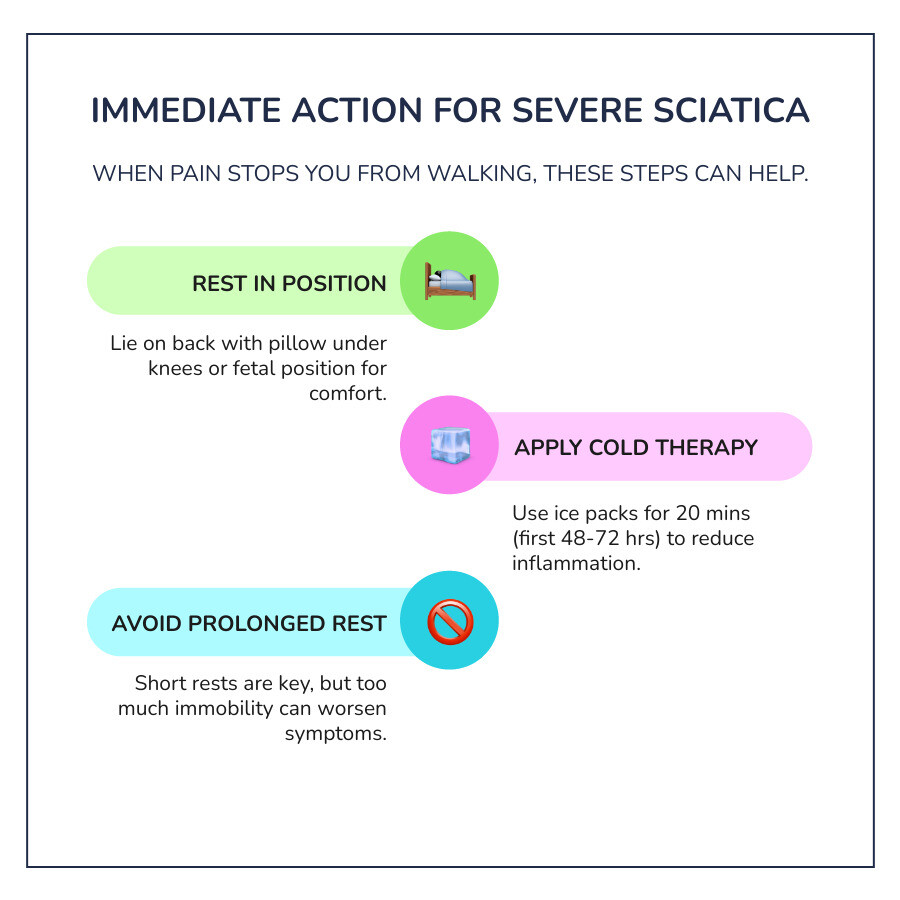
If you're experiencing severe sciatica that prevents walking, here's what to do immediately:
- Find a comfortable resting position - Lie on your back with a pillow under your knees, or curl into a fetal position.
- Apply cold therapy - Use ice packs for 20 minutes at a time during the first 48-72 hours to reduce inflammation.
- Avoid prolonged bed rest - Short periods of rest are okay, but staying immobile too long can worsen symptoms.
- Seek emergency care if you experience - Loss of bladder/bowel control, numbness around genitals, or weakness in both legs.
- Call your doctor if - Pain persists beyond a week, you experience severe muscle weakness, or symptoms rapidly worsen.
The good news is that while up to 40% of people experience sciatica, an estimated 80-90% recover without surgery. Most cases improve within 4-6 weeks with the right approach.
Sciatica occurs when something compresses or irritates the sciatic nerve, which runs from your lower back down each leg. Common causes include herniated discs, spinal stenosis, or inflamed muscles. When this compression is severe, the pain can make standing or walking feel impossible.
I'm Tony Enrico, and I've dedicated my work to helping people overcome debilitating nerve pain. Through my experience developing relief strategies for thousands dealing with sciatica pain so bad you can't walk, I've learned that the right combination of immediate action and smart changes can restore your mobility.
Sciatica pain so bad can't walk terms to remember:
First, Understand Why Sciatica Can Be So Debilitating
When you have sciatica pain so bad you can't walk, understanding the cause can ease your fear. Sciatica isn't a disease; it's an alarm signaling pressure on your sciatic nerve.
The sciatic nerve is the longest and thickest nerve in your body, running from your lower spine down each leg. It's formed from five nerve roots (L4, L5, S1, S2, and S3). When this nerve is squeezed or irritated, it sends intense pain signals down its pathway, which can make walking impossible.
What causes this nerve compression? Usually, it's a structural issue in your spine. Herniated discs are the main culprit, causing up to 90% of sciatica cases. When the soft inner gel of a spinal disc pushes through a tear in its outer layer, it can press on a nerve root, causing both mechanical pressure and chemical inflammation.
Spinal stenosis, a narrowing of the spinal canal, is another common cause, especially with age. This narrowing squeezes nerve roots, triggering pain that often worsens with standing or walking.
Piriformis syndrome occurs when a small buttock muscle tightens and compresses the sciatic nerve. While less common, it can be just as debilitating.
All these conditions create nerve compression and inflammation, leading to the radiating pain, numbness, and weakness that make walking feel impossible. For a deeper look at causes, see The Definitive Guide to What Causes Sciatic Nerve Pain.
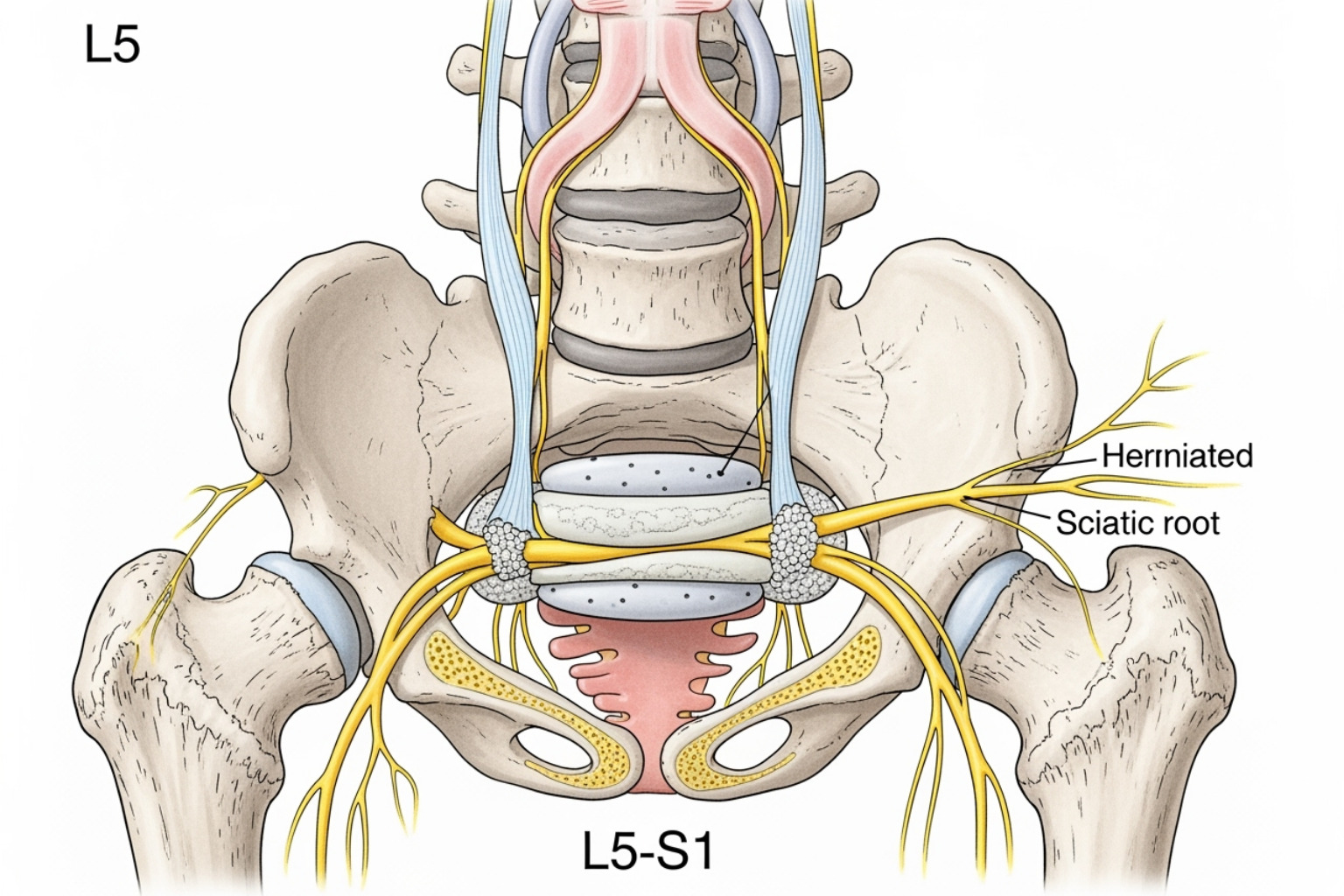
What are the main symptoms?
Sciatica pain is often described as a sharp, burning sensation or an electric shock shooting from the lower back, through the buttock, and down one leg, sometimes to the toes. The pain typically affects only one side of the body.
Beyond radiating pain, you may experience:
- Numbness: A "dead" or disconnected feeling along the nerve's path.
- Tingling: A "pins and needles" sensation that can be constant or intermittent.
- Weakness: Difficulty lifting your foot (foot drop), standing on your toes, or maintaining balance. This weakness, combined with pain, is often what makes walking impossible.
Symptoms may worsen with coughing, sneezing, or straining, as these actions increase pressure on spinal nerves. The primary symptom that brings many here is difficulty standing or walking, where even simple movements become unbearable.
Understanding these symptoms is the first step toward relief. For more details, see our guide on Sciatica Pain Symptoms.
Change 1: Master Immediate Pain Management
When sciatica pain so bad you can't walk has you sidelined, your immediate goal is to stop the pain. There are steps you can take right now to reduce the intensity and start your journey back to mobility. This is about getting through the acute phase to create enough relief to begin recovery.
Find the Right Resting Position
Your instinct to lie down is correct, but prolonged bed rest can slow recovery by causing muscle and joint stiffness. The goal is short-term rest, not days in bed.
Sitting is often the enemy. It increases pressure on your lower back discs, which can worsen nerve compression. If you must sit, use a reclined position to support your spine.
Positions for relief:
- Fetal position: Lie on your side, curled up with a pillow between your knees. This opens up the spaces between your vertebrae, taking pressure off the nerve.
- Lying on your back: Place a pillow under your knees to maintain your spine's natural curve and reduce tension on the sciatic nerve.
The key is short-term rest only. As soon as the pain subsides slightly, begin gentle movements. Research confirms that advice to stay active is generally better than advice to rest in bed for acute low-back pain and sciatica. For more on managing back discomfort, see our article on managing Lower Back Pain.
Use Hot & Cold Therapy
When dealing with sciatica pain so bad you can't walk, temperature therapy is a powerful tool for immediate pain management.
Start with cold for the first 48-72 hours. During an acute flare-up, inflammation is high. Apply an ice pack wrapped in a thin towel to the most painful area on your lower back or buttock for 15-20 minutes at a time, several times a day. The cold constricts blood vessels, reducing swelling, and numbs the area for temporary relief.
Switch to heat after the initial inflammation subsides. After the first few days, heat can be beneficial. A heating pad or warm bath increases blood flow, delivering oxygen and nutrients to support healing. It also relaxes tight muscles that may be contributing to nerve compression. Apply heat for 15-20 minutes at a time.
Some people find alternating between hot and cold offers the best results. Listen to your body and do what feels most soothing. For more tips on easing leg discomfort, explore our guide on Easing Aches: Simple Solutions for Leg Pain Relief.
Change 2: Adopt Gentle Movement & Targeted Stretches
When you have sciatica pain so bad you can't walk, the idea of moving can be daunting. However, gentle movement is one of the most effective tools for recovery. While a day or two of rest during a severe flare-up is fine, prolonged inactivity can worsen sciatica by causing muscles to tighten and joints to stiffen.
Why Gentle Movement is Crucial
Gentle movement is medicine. It reduces inflammation by promoting circulation, which flushes out inflammatory chemicals. Physical activity also releases endorphins, your body's natural pain relievers, which can improve your mood. Furthermore, movement prevents stiffness and improves blood flow, delivering essential nutrients to damaged tissues and speeding up the healing process. Our guide on Finding Freedom: How to Naturally Relieve Sciatica Pain explores these principles further.
Safe Exercises When You Can't Walk
Even if walking is impossible, you can perform gentle movements from your bed or the floor. The rule is to move slowly, breathe deeply, and stop if you feel sharp pain. A gentle stretch is the goal, not acute pain.

Here are three gentle stretches for severe sciatica:
Knee-to-Chest Stretch: Lie on your back with knees bent. Gently bring one knee to your chest, holding for 20-30 seconds while breathing deeply. Release and repeat on the other side. This helps decompress the lower spine.
Pelvic Tilts: Lie on your back with knees bent and feet flat. Tighten your abdominal muscles and tilt your pelvis upward, flattening your lower back against the floor. Hold for a few seconds and repeat 8-12 times. This strengthens core muscles and improves spinal mobility.
Sciatic Nerve Glides (Nerve Flossing): Lie on your back and bring one knee toward your chest. Interlace your fingers behind the thigh. Slowly straighten your leg toward the ceiling until you feel a gentle stretch, flexing your foot. Then, point your toes as you slowly bend your knee back. Repeat this smooth motion 5-10 times to help the sciatic nerve glide more freely, a technique supported by research on nerve mobilization.
Water therapy can also be transformative. The buoyancy of warm water reduces gravity's impact, allowing for pain-free movement. These exercises are about encouraging healing, not pushing through pain. For more on relieving nerve compression, see our guide Freedom from the Squeeze: How to Relieve a Pinched Nerve.
Change 3: Implement Smart Home Remedies & Lifestyle Tweaks
When you're thinking, "my sciatica pain is so bad I can't walk," it's easy to feel helpless. However, your home is full of opportunities for relief. Small, consistent changes can create powerful momentum toward recovery and help prevent future episodes.
How to manage when sciatica pain is so bad you can't walk at home
Effective relief strategies are often readily available.
Over-the-counter (OTC) medications can be lifesavers during a flare-up. NSAIDs like ibuprofen (Advil) and naproxen (Aleve) tackle both pain and the inflammation compressing your sciatic nerve. Always follow label instructions and consult your doctor if you have other health conditions. Acetaminophen (Tylenol) is another option for pain, though it doesn't address inflammation.
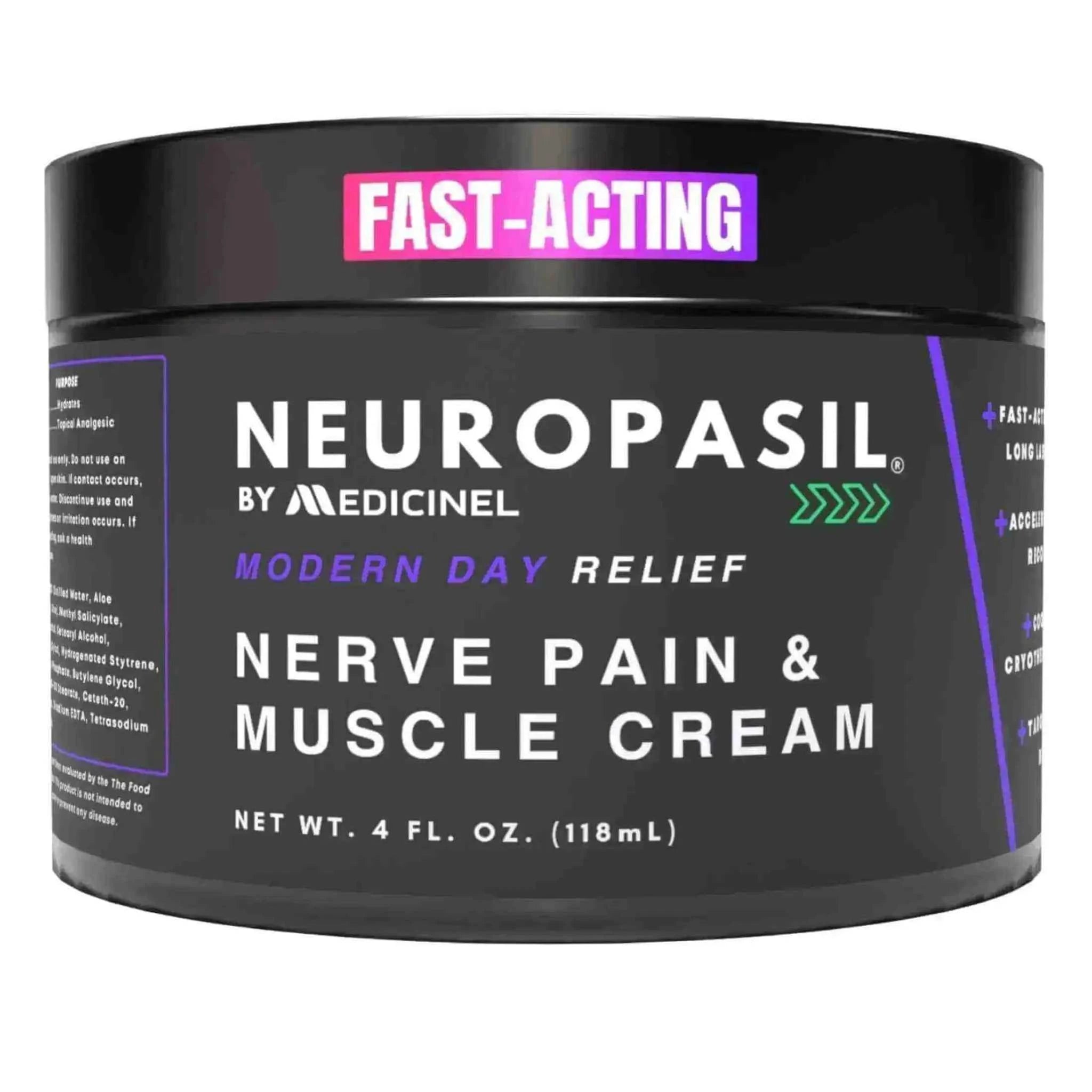
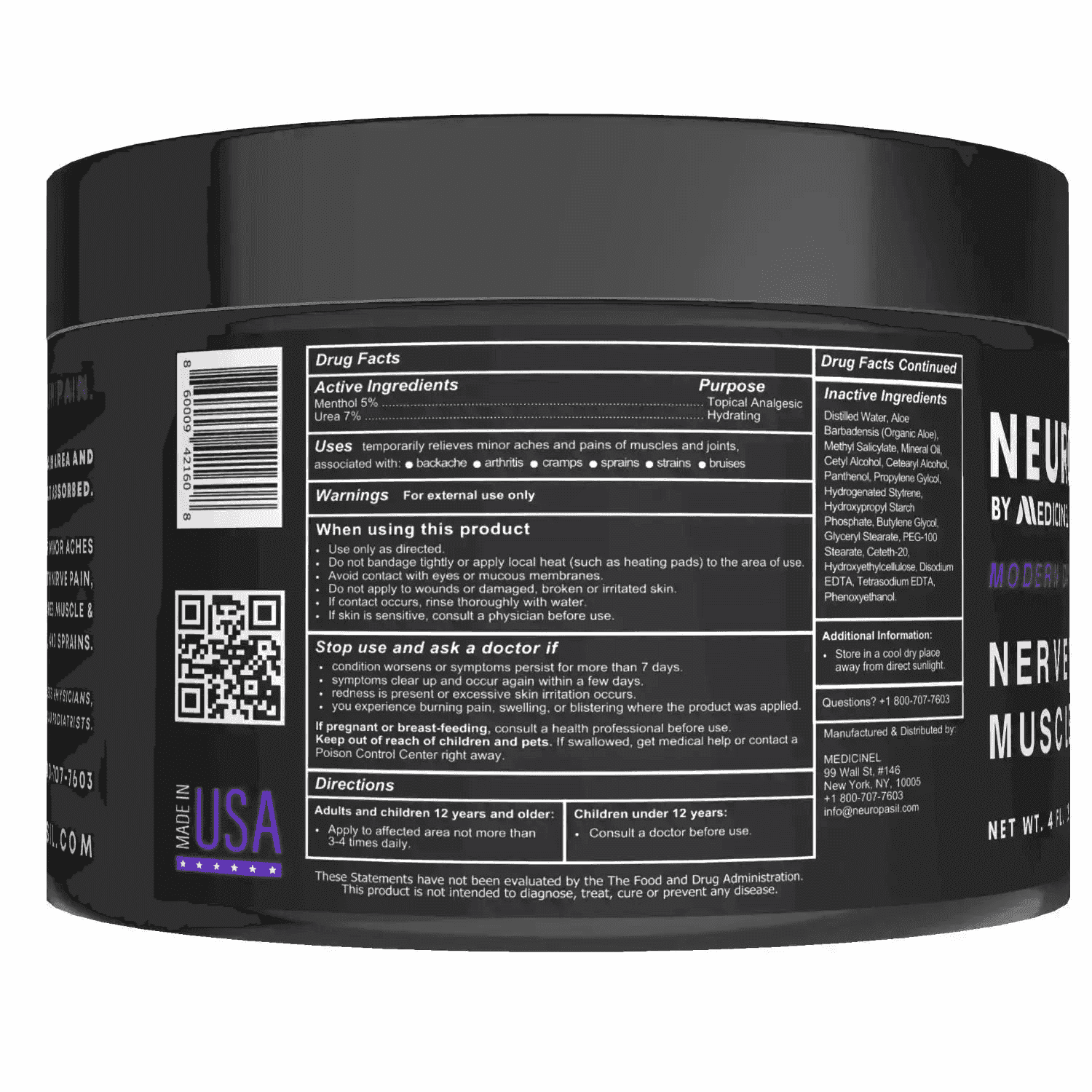
Topical pain relief is a secret weapon for targeted comfort. Unlike pills, a quality pain relief cream delivers soothing ingredients directly where you need them. Menthol-based creams provide a cooling sensation that interrupts pain signals. Many find relief from sciatica pain so bad they can't walk with Neuropasil's natural, fast-acting cream. Its Aloe, Urea, and Menthol formula offers immediate, targeted comfort, helping users move more freely and sleep better. For more on this approach, see The Ultimate Guide to Best Cream for Sciatica Pain.
Long-Term Lifestyle Adjustments for Prevention
Once the acute pain is managed, focus on building a lifestyle that protects your spine.
- Posture Correction: Avoid slouching. Sit and stand tall, imagining a string pulling you up from the crown of your head. Keep your shoulders relaxed and your spine in its natural curves.
- Ergonomics: Use a supportive chair with lumbar support, position your screen at eye level, and keep your feet flat on the floor. Stand and stretch every 30-45 minutes.
- Supportive Mattress: A medium-firm mattress that supports your spine's natural curves is ideal. A sagging mattress can cause misalignment.
- Healthy Weight: Extra weight, especially around the midsection, increases pressure on your lumbar discs. Losing even a small amount of weight can reduce back strain.
- Proper Lifting Techniques: Bend at your knees, not your waist. Keep objects close to your body and lift with your legs, keeping your back straight. Never twist while lifting.
- Quit Smoking: Nicotine restricts blood flow to your spinal discs, making them more vulnerable to injury and slowing healing. Research suggests smoking may worsen neuropathic pain.
These adjustments are about progress, not perfection. Each small change builds a stronger foundation against future sciatica attacks.
Change 4: Know Your Professional Treatment Options
When sciatica pain so bad you can't walk persists despite home care, it's time to seek professional help. This is a smart decision, and the good news is that most people respond well to conservative treatments, with surgery rarely being necessary.
Conservative Medical Treatments
An encouraging statistic: 80-90% of sciatica cases resolve without surgery. The key is finding the right professional treatments for your situation.
Physical therapy is a cornerstone of recovery once acute pain subsides. A physical therapist will create a personalized program to rebuild strength and mobility. They focus on strengthening your core muscles (your body's natural back brace) and improving flexibility with targeted stretches for your hamstrings, glutes, and lower back. They also teach proper posture and body mechanics. A 2020 clinical trial showed that people who started physical therapy early had greater improvements in pain and mobility. You can find the study here: Early physical therapy for sciatica study.
If OTC medications aren't enough, your doctor may prescribe short-term relief options. Muscle relaxants can ease painful spasms, while oral corticosteroids offer powerful anti-inflammatory effects. For nerve-specific pain, medications like gabapentin can calm overactive nerve signals. For non-medication approaches, see our guide on Drug-Free Sciatica Solutions.
Injections and Alternative Therapies

If conservative treatments fall short, epidural steroid injections may be the next step. A doctor injects corticosteroids near the irritated nerve root to deliver concentrated anti-inflammatory medication. This can provide significant relief for up to three months, creating a window to engage more effectively in physical therapy. Research shows these injections can be effective for nerve root pain: Epidural corticosteroid injections for radiculopathy and spinal stenosis.
Many people also find relief through alternative therapies. Acupuncture may stimulate the body's natural pain-relief mechanisms. Massage therapy can relax tight muscles, like the piriformis, that may be compressing the sciatic nerve. Chiropractic care focuses on spinal alignment to reduce pressure on nerve roots. These complementary approaches work best when integrated with your primary medical treatment plan.
Combining professional treatments with our natural, targeted topical relief cream can help manage symptoms effectively. For more rapid relief strategies, explore our guide: Sciatica Relief: Quick Solutions.
Change 5: Know When 'Sciatica Pain So Bad Can't Walk' Is an Emergency
While most sciatica improves with care, there are times when sciatica pain so bad you can't walk becomes a medical emergency. It's crucial to recognize these red flags to prevent permanent damage.
Emergency Red Flag Symptoms
If you experience any of the following symptoms with severe sciatica, go to the emergency room or call 911 immediately. These can be signs of Cauda Equina Syndrome (CES), a surgical emergency where nerve roots at the bottom of the spinal cord are severely compressed.
- Loss of bladder or bowel control: Sudden difficulty urinating, or inability to hold urine or stool.
- Saddle anesthesia: Numbness or tingling in the areas a saddle would touch (buttocks, perineum, inner thighs).
- Progressive leg weakness: Rapidly worsening weakness that makes it increasingly difficult to stand or walk.
- Foot drop: Inability to lift the front part of your foot, causing it to drag.
- Bilateral sciatica: Severe pain, numbness, or weakness in both legs simultaneously.
Also seek emergency care if debilitating sciatica follows a traumatic injury (fall, car accident) or is accompanied by fever, chills, or unexplained weight loss, as these could indicate a spinal fracture, infection, or tumor.
Understanding these red flags is critical. For more information, the medical community offers resources like this practical guide to Cauda Equina Syndrome. Do not hesitate to seek immediate help if you notice these symptoms.
Long-Term Outlook and Complications
For the vast majority of people, the outlook is positive. As Harvard Health notes, time is often a great healer. Approximately 80% to 90% of people with sciatica recover without surgery, typically within four to six weeks. Your body has a remarkable capacity to heal.
However, ignoring severe sciatica can lead to complications. Chronic pain can develop if the nerve compression lingers, turning an acute episode into a long-term problem. In rare, severe cases, prolonged nerve compression can cause permanent nerve damage, resulting in persistent muscle weakness or loss of sensation. This is why recognizing emergency symptoms is so important.
Recurrence is also possible, which highlights the importance of the lifestyle adjustments and exercises discussed earlier as an insurance policy against future flare-ups.
Timely treatment is crucial. Knowing when to seek professional help and following through with therapy dramatically improves your chances of a full recovery and minimizes the risk of long-term complications. You can read more about the positive prognosis here: Taming the pain of sciatica.
Frequently Asked Questions about Severe Sciatica
When you're dealing with sciatica pain so bad you can't walk, questions are inevitable. Here are answers to the most common concerns.
How long does it take for severe sciatica to go away?
Recovery time varies. Milder sciatica may improve within four to six weeks with proper care. However, when sciatica pain is so bad you can't walk, recovery can take several months. The good news is that, as noted by Harvard Health, 80-90% of cases resolve without surgery. Your body can often heal itself, sometimes even reabsorbing the disc material pressing on the nerve. Persistence with gentle stretches, physical therapy, and lifestyle adjustments is key. Recovery may not be linear, with good and bad days, but most people do get better.
Is it better to sit or lie down with severe sciatica?
Lying down in a supported, neutral position is generally better than sitting. Sitting, especially with poor posture, increases pressure on your lower back discs by about 40% compared to standing, which can intensify nerve compression. Lying down takes this load off your spine, allowing it to decompress.
However, avoid prolonged bed rest. While short periods of rest are necessary when pain peaks, staying immobile for too long leads to stiffness and muscle weakness, slowing your recovery. The goal is to alternate brief rest with gentle movement as soon as you can tolerate it.
What should I avoid if my sciatica pain is so bad I can't walk?
Knowing what not to do is crucial for recovery.
- Avoid prolonged sitting or complete bed rest: Stay active with gentle, frequent movements to prevent stiffness.
- Avoid heavy lifting: This puts tremendous strain on your lower back and can aggravate the issue.
- Avoid twisting movements: Any activity involving spinal rotation can be detrimental to an irritated sciatic nerve.
- Avoid high-impact exercises: Running, jumping, and intense aerobics can jar your spine and worsen nerve irritation.
- Avoid bending forward from the waist: This increases pressure on your spinal discs. Bend at your knees and hips instead.
- Never push through severe, sharp pain: This is your body's signal to stop. Pushing through agony will only prolong your recovery and risk further damage.
Managing sciatica pain so bad you can't walk requires patience. Avoid these activities, focus on gentle healing, and give your body the support it needs. For more natural relief strategies, our article Finding Freedom: How to Naturally Relieve Sciatica Pain offers additional insights.
Conclusion: Take Your First Step Towards a Pain-Free Life
When sciatica pain so bad you can't walk disrupts your life, it's easy to feel frustrated and exhausted. The sharp, shooting pain can make simple movements feel monumental. But you are not powerless, and you are not alone.
This guide has outlined five essential changes to help you reclaim your mobility:
- Master immediate pain management with rest and temperature therapy.
- Adopt gentle movement and targeted stretches to promote healing.
- Implement smart home remedies and lifestyle tweaks, including effective topical relief like Neuropasil's natural cream, powered by Aloe, Urea, and Menthol.
- Know your professional treatment options, from physical therapy to injections.
- Recognize emergency red flag symptoms to prevent permanent damage.
Recovery from severe sciatica takes time, and progress may not always be linear. That's normal. What matters is moving forward, one small step at a time. The evidence is on your side: as confirmed by sources like Harvard Health, 80-90% of people recover without surgery. Time, combined with the right approach, is a powerful healer.
You've already taken a crucial step by educating yourself. Now, put that knowledge into action. Whether you start with a gentle stretch, apply a soothing cream, or call your doctor, each action brings you closer to the pain-free life you deserve.
We're here to support you. Learn more about managing sciatica pain and find lasting relief with our comprehensive resources and natural solutions.
References
This guide on sciatica pain so bad you can't walk is based on research from medical journals, clinical trials, and trusted healthcare institutions to provide accurate, evidence-based information.
Dahm, K. T., et al. (2010). Advice to rest in bed versus advice to stay active for acute low-back pain and sciatica. Cochrane Database of Systematic Reviews. Read the full study
Fritz, J. M., et al. (2021). Physical Therapy Referral From Primary Care for Acute Back Pain With Sciatica: A Randomized Controlled Trial. Annals of Internal Medicine. Access the research
Shipton, E. A. (2018). Physical Therapy for Patients with Sciatica. Pain and Therapy.
Spine-health. (2019). Pain and Sitting: What to Do. Read the article
Davis, D., & Maini, K. (2021). Sciatica. StatPearls.
Harvard Health Publishing. (2017). Taming the pain of sciatica: For most people, time heals and less is more. Harvard Medical School. Read the article
Harvard Health Publishing. Endorphins: The brain's natural pain reliever. Learn more
Cleveland Clinic. (2023). Sciatica. Visit Cleveland Clinic's guide
Cleveland Clinic. Good Posture. Read about posture
Mayo Clinic. (2023). Sciatica - Diagnosis and treatment. Mayo Clinic's sciatica guide
National Center for Biotechnology Information. (2022). A practical guide to Cauda equina syndrome. Access the guide
National Center for Biotechnology Information. (2007). Effects of Smoking on Neuropathic Pain in Two People With Spinal Cord Injury. Read the research
National Center for Biotechnology Information. (2015). Epidural corticosteroid injections for radiculopathy and spinal stenosis. Annals of Internal Medicine. View the study
National Center for Biotechnology Information. (2016). The effects of self-mobilization techniques for the sciatic nerves on physical functions and health of low back pain patients with lower limb radiating pain. Access the study
National Center for Biotechnology Information. (2007). Massage therapy helps to increase range of motion, decrease pain and assist in healing a client with low back pain and sciatica symptoms. Read the research
National Center for Biotechnology Information. (2015). The Efficacy of Acupuncture for the Treatment of Sciatica: A Systematic Review and Meta-Analysis. View the meta-analysis
National Center for Biotechnology Information. (2007). Diagnosis and treatment of sciatica. Access the full review
Barricaid. What to Do when Your Sciatica Is So Bad You Can't Walk. Read the guide
HSSH. Sciatica Pain So Bad You Can't Walk? What To Do. View the article
Henry Ford Health. (2024). What Doctors Wish Patients Knew About Sciatica. Read the insights
Healthline. Is Walking Good for Sciatica? Experts Weigh In. Access the article
OWC Health. (2024). Sciatica Pain So Bad You Can't Walk: Causes, Symptoms, and Recovery. Read the guide