Why Quick Recovery After Workout Matters More Than You Think
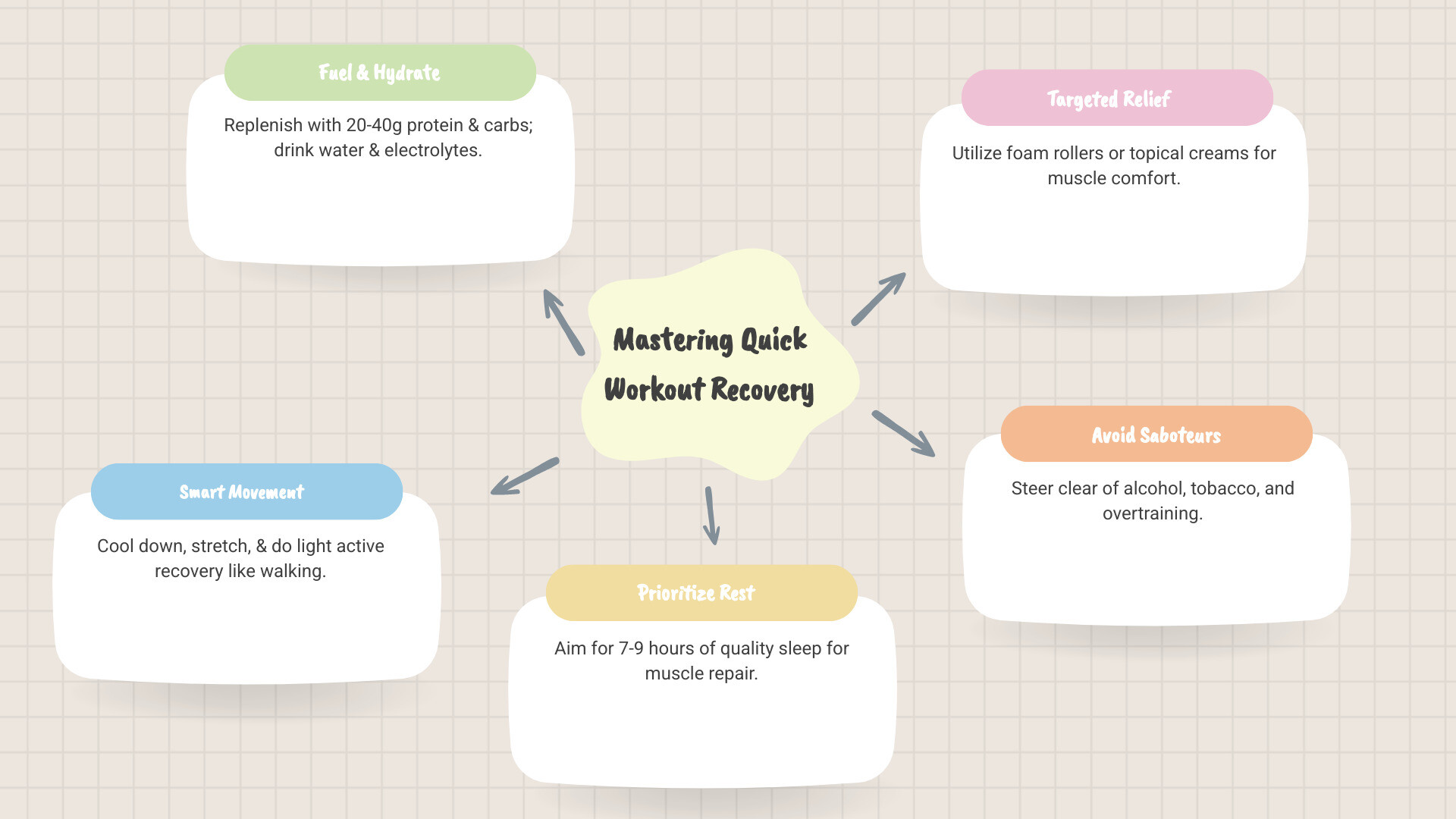
Quick recovery after workout is essential for building stronger muscles, preventing injury, and getting back to training sooner. Here's what works:
- Refuel with protein and carbs within 30-60 minutes (20-40g of each)
- Hydrate properly to replace lost fluids and electrolytes
- Cool down and stretch for 5-10 minutes post-exercise
- Prioritize 7-9 hours of sleep for muscle repair
- Try active recovery like light walking or swimming
- Use targeted tools like foam rollers or topical creams
- Avoid recovery saboteurs like alcohol and overtraining
When you push your body during exercise, you create microscopic tears in your muscle fibers. This damage triggers inflammation—not as a problem, but as a signal that your body needs to repair and rebuild. This process is called Delayed Onset Muscle Soreness (DOMS), and it typically kicks in 12-48 hours after your workout.
Recovery isn't just about feeling less sore. It's when your muscles actually grow stronger. Without proper recovery, you risk injury, decreased performance, and burnout. The good news? You have control over how quickly and effectively your body bounces back.
I'm Tony Enrico, and through my work with athletes and active individuals dealing with muscle and nerve pain, I've learned that smart quick recovery after workout strategies make all the difference in achieving long-term fitness goals. Whether you're training for competition or simply trying to move without pain, these seven evidence-based strategies will help you recover faster and train smarter.
Glossary for quick recovery after workout:
1. Refuel with Protein and Carbohydrates
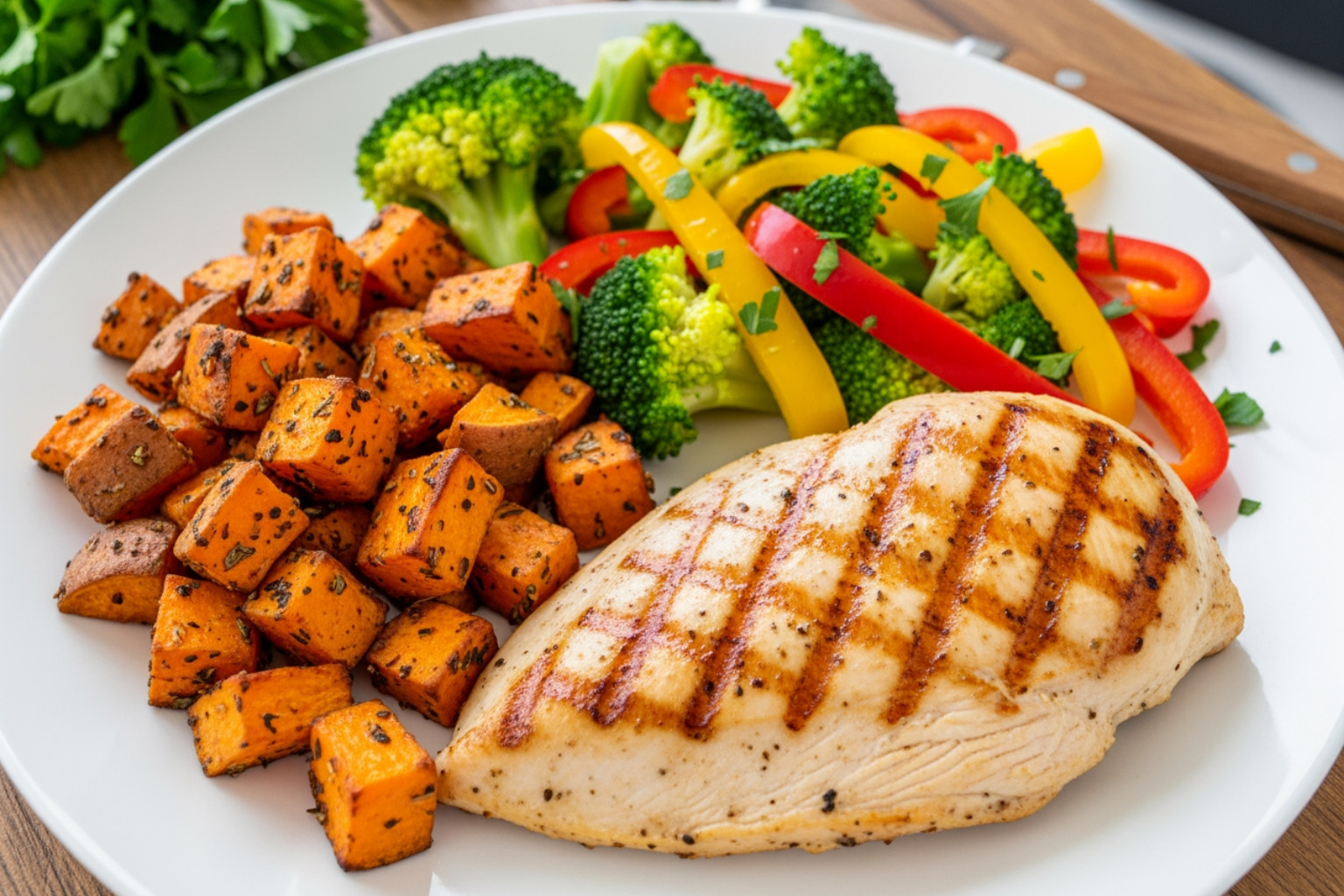
Think of your body after a tough workout like a construction site after a storm. Your muscles have taken a beating, your energy reserves are running on empty, and your body is desperately looking for the raw materials it needs to rebuild. This is where smart nutrition becomes your best recovery tool.
The minutes and hours after you finish exercising create what researchers call the post-workout nutrition window. Your muscles are primed and ready to absorb nutrients, making this the perfect time to give them what they need. During your workout, you've created microscopic tears in your muscle fibers and burned through your glycogen stores—the carbohydrate fuel that powers your movements. Now your body needs two things: building blocks to repair the damage and energy to fuel the repair crew.
For an intense or long workout lasting 60 minutes or longer, aim for 20 to 40 grams of protein and 20 to 40 grams of carbohydrates within 30 minutes of finishing. This combination isn't random—it's based on how your body actually recovers. The protein supplies amino acids for muscle repair, while the carbs replenish your depleted energy stores and help shuttle those amino acids where they need to go.
The Role of Nutrition in a Quick Recovery After Workout
Protein is the star player in muscle repair. When you exercise, the proteins that make up your muscle fibers get damaged. Your body needs amino acids—the building blocks of protein—to patch things up and build back stronger. Scientific research on protein supplementation suggests that consuming roughly 1.6 grams of protein per kilogram of body weight daily is enough to maximize muscle growth, though the International Society of Sports Nutrition recommends a broader range of 1.4–2.0 g protein/kg for building and maintaining muscle mass.
But protein can't work its magic alone. Carbohydrates play an equally important role in quick recovery after workout. They're your body's preferred fuel source, especially during intense exercise. When you work out hard, your glycogen stores get depleted. Without adequate carbs to refill these tanks, your body struggles to perform the repair work your muscles desperately need.
The beauty is in how carbs and protein work together. Carbohydrates trigger an insulin response that helps deliver amino acids to your muscles more efficiently. Meanwhile, protein provides the raw materials for repair. It's like having both the delivery truck and the building supplies show up at the same time—everything just works better.
The amount you need depends on your body composition and how hard you trained. A light 30-minute jog requires less nutritional support than a two-hour marathon training run. Listen to your body and adjust accordingly.
Some foods are particularly good at supporting recovery. Eggs offer all the essential amino acids your muscles crave. Salmon brings protein plus anti-inflammatory omega-3 fatty acids that can help reduce soreness. Berries like blueberries and raspberries pack antioxidants that combat the oxidative stress from exercise. Greek yogurt provides both quick and slow-digesting proteins, plus beneficial probiotics. And oatmeal delivers complex carbohydrates that steadily refill your glycogen stores while providing filling fiber.
A balanced post-workout meal might look like grilled chicken with sweet potato and broccoli, or a smoothie with Greek yogurt, berries, and oats. The key is getting both protein and carbs in forms your body can use.
While the immediate post-workout window matters, don't forget that recovery happens around the clock. Maintaining a balanced diet throughout the day supports sustained recovery and keeps you ready for your next training session. For more detailed strategies, check out a practical guide to improving workout muscle recovery.
2. Hydrate to Flush and Replenish
Think of water as your body's delivery system. It carries nutrients to your muscles, flushes out waste products, and keeps every cellular process running smoothly. During a workout—whether you're hitting the gym, running through Central Park, or doing a home HIIT session—you lose a surprising amount of fluid through sweat. And it's not just water you're losing. Those salty beads dripping down your face contain essential minerals called electrolytes that your muscles desperately need to function properly.
When you don't replace what you've lost, your body starts sending distress signals. You might experience muscle cramps, fatigue, headaches, or notice your performance dropping off a cliff. Dehydration doesn't just make you feel miserable in the moment—it actively slows down your recovery by hampering the very processes your body needs to repair and rebuild muscle tissue. Understanding dehydration symptoms and risks can help you recognize when your body needs more fluids.
Electrolytes—including sodium, potassium, magnesium, and calcium—do far more than prevent cramping. They regulate nerve signals, control muscle contractions, balance your body's fluid levels, and even help rebuild damaged tissue. When you sweat heavily, you're depleting these vital minerals. For a quick recovery after workout, replenishing both water and electrolytes is non-negotiable. You can read more about electrolytes and why they matter so much.
Hydration and Electrolyte Strategy
The key to staying properly hydrated isn't chugging water when your mouth feels like the Sahara. You need a proactive game plan that starts before you even lace up your sneakers.
Before you start exercising, drink about 13 to 20 ounces of water roughly two hours ahead of time. If you want to be more precise, aim for 2 to 4 milliliters of fluid per pound of body weight between two and four hours before your workout. This gives your body time to absorb the water and establish a good baseline.
During your workout, keep sipping steadily. Try to get down 5 to 10 ounces every 15 to 20 minutes. Yes, this might mean pausing between sets or carrying a water bottle on your run, but your muscles will thank you. The USADA hydration recommendations offer additional guidance for athletes who want to optimize their performance.
After you finish, it's time to replenish what you've lost. A good rule of thumb is to drink 2 to 3 cups of water for every pound you lost during exercise. (If you're curious about how much you're actually sweating out, try weighing yourself before and after a workout.)
Here's a simple trick to monitor your hydration status: check your urine color. You're aiming for a pale yellow, like lemonade. If it's darker, closer to apple juice, you need to drink more water. It's not the most glamorous metric, but it's effective.
Now, about those electrolytes. For shorter workouts under 90 minutes, plain water usually does the job. But if you're going longer, sweating heavily, or exercising in hot conditions, you'll want to replace those minerals. Before you reach for a neon-colored sports drink loaded with sugar, consider natural alternatives. Bananas are packed with potassium. Coconut water provides a natural electrolyte boost. Oranges offer both hydration and potassium. Even foods like raisins, peanuts, and walnuts contribute valuable minerals.
The bottom line? Hydration isn't just about drinking when you're thirsty. It's about giving your body the fluids and minerals it needs to repair muscle tissue, transport nutrients, and maintain all those behind-the-scenes processes that lead to a quick recovery after workout. Get this right, and you'll feel the difference in both your performance and how quickly you bounce back.
3. Cool Down and Stretch Properly
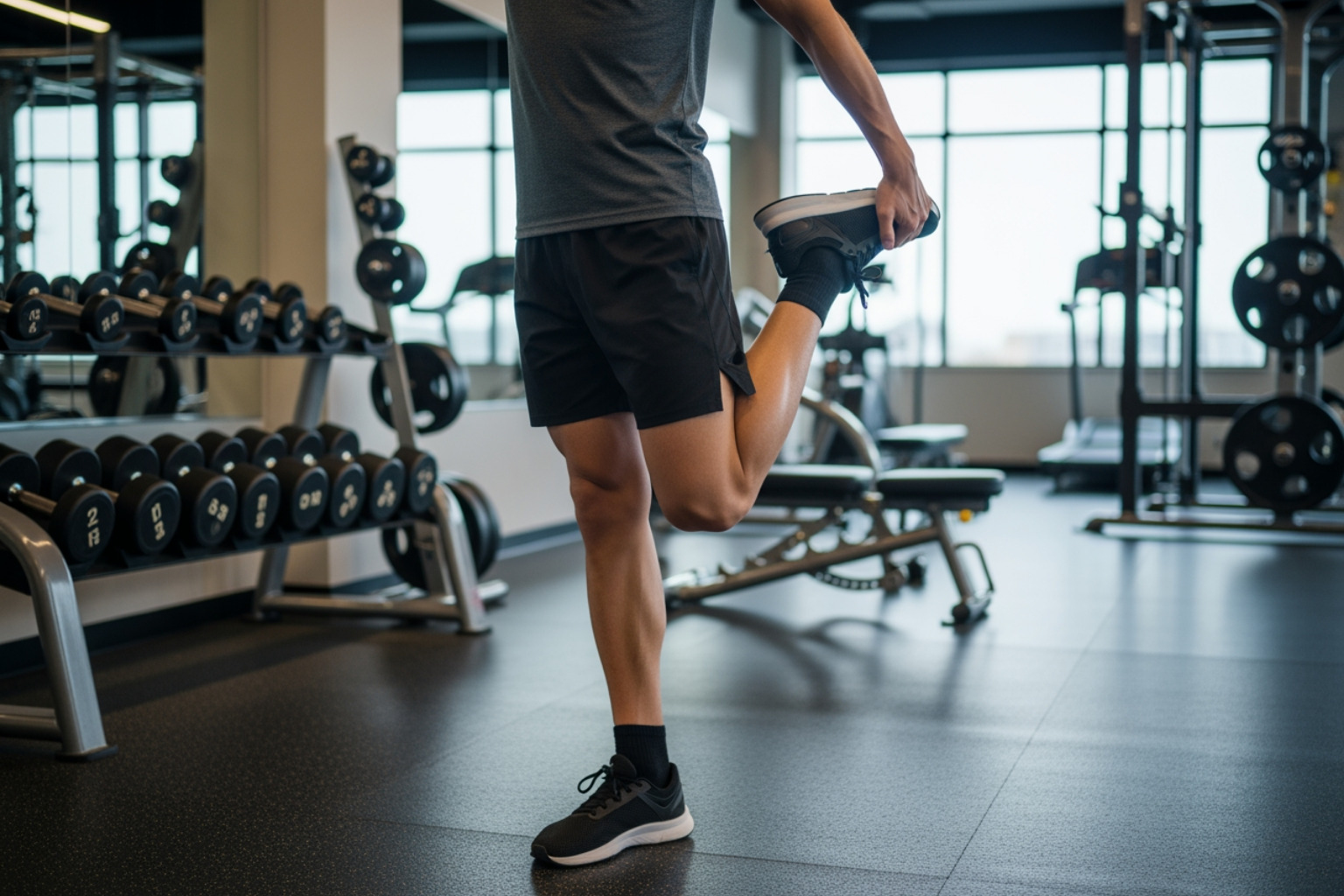
After pushing through that last set or finishing a challenging run through the city, your first instinct might be to collapse on the nearest bench or head straight to the shower. I get it—you're tired. But taking just 5-10 minutes to cool down and stretch properly can make a significant difference in how you feel tomorrow and how quickly your body recovers.
Think of your workout like driving a car. You wouldn't slam on the brakes from 60 mph to zero in a second, right? Your body needs that same gradual transition. A proper cool-down serves a specific physiological purpose: it helps gradually lower your heart rate back to its resting state and prevents blood from pooling in your legs, which can leave you feeling dizzy or lightheaded. This isn't just about comfort—it's about helping your cardiovascular system safely transition from work mode to recovery mode.
The cool-down phase should involve low-intensity cardio for about 5-10 minutes. This could be as simple as walking around the gym, easy cycling on a stationary bike, or a slow jog that gradually decreases to a walk. The American College of Sports Medicine recommends this approach to help your body ease out of exercise safely. Why a cooldown is important goes beyond just feeling good—it's about supporting your body's natural recovery processes.
The Difference Between a Cooldown and Stretching
Here's something many people don't realize: cooling down and stretching are actually two different things, each with its own purpose in your quick recovery after workout routine.
Your cool-down is all about bringing your body back to baseline. It's that gentle movement phase where your heart rate gradually decreases and your breathing returns to normal. This transition period helps your body clear out metabolic waste products that built up during exercise and prevents blood from pooling in your extremities.
Stretching, on the other hand, comes after your cool-down and focuses on lengthening the muscles you just worked. Static stretching—where you hold a stretch for 30-60 seconds—is ideal for this post-workout phase. Focus on the major muscle groups that did the heavy lifting during your session. If you did squats and lunges, spend time stretching your quads, hamstrings, and glutes. Upper body workout? Don't skip your chest, shoulders, and back.
Now, here's where things get interesting. There's been quite a bit of debate in the fitness world about whether stretching actually reduces muscle soreness. A 2021 review found that post-exercise stretching didn't have a significant positive or negative effect on recovery compared to simply resting. But before you skip it entirely, stretching offers other benefits: improved flexibility, better range of motion, and reduced feelings of muscle tightness. Plus, for many of us, it just feels good and provides a mental signal that the workout is complete.
The key is holding each stretch for the right amount of time—aim for 30-60 seconds per muscle group. You should feel a gentle pull, not sharp pain. Breathe deeply and try to relax into each stretch rather than bouncing or forcing it.
If you're dealing with particularly sore legs after leg day, our guide on how to relieve sore legs and recover quickly offers additional strategies that work well alongside your cool-down and stretching routine.
4. Prioritize Quality Sleep
We often get so caught up in optimizing our workouts, counting our macros, and perfecting our form that we overlook the most powerful recovery tool we have available every single night: sleep. While we're tucked under the covers, our bodies are anything but idle. Sleep isn't just downtime—it's when the real magic of quick recovery after workout happens.
During the deepest stages of sleep, our bodies release a surge of growth hormone. This isn't just important for kids growing taller; it's absolutely essential for repairing those microscopic tears in our muscle fibers that we create during exercise. Think of growth hormone as the foreman of your body's overnight construction crew, directing all the repair work that needs to happen. At the same time, protein synthesis—the actual process of rebuilding and strengthening muscle tissue—ramps up significantly during Non-Rapid Eye Movement (NREM) sleep. This is when your body takes those amino acids from your post-workout meal and uses them to build back stronger.
On the flip side, skimping on sleep can seriously derail our recovery efforts. Research on sleep deprivation's effects shows that inadequate rest disrupts our body's natural inflammation response and hampers the production of those crucial muscle-building hormones. Essentially, we're trying to recover with one hand tied behind our back. No amount of protein shakes or fancy supplements can fully compensate for poor sleep.
How to Optimize Sleep for Recovery
Most adults need somewhere between 7 to 9 hours of sleep per night for optimal recovery and overall health. The Sleep Foundation guidelines confirm this range, and if you're training intensely, you might benefit from aiming for the higher end—or even a bit more. Professional athletes often sleep 10 or more hours per night because they understand that recovery happens in bed.
But it's not just about quantity; quality matters enormously. Creating a sleep-conducive environment can transform your nights from restless to restorative. Keep your bedroom cool—around 65-68°F is ideal for most people. Make it dark—really dark. Consider blackout curtains or an eye mask to block out city lights or early morning sun. Minimize noise with earplugs or a white noise machine if you live in a busy area.
Your pre-sleep routine matters too. Try to go to bed and wake up at consistent times, even on weekends, to regulate your body's internal clock. Dim the lights and put away screens at least an hour before bed—that blue light from our phones and laptops can trick our brains into thinking it's still daytime. Instead, wind down with a book, some gentle stretching, or a warm bath. Avoid caffeine after mid-afternoon and skip heavy meals close to bedtime, as both can interfere with falling asleep and sleep quality.
When we prioritize quality sleep, we're essentially giving our bodies an eight-hour window every night to perform essential maintenance and upgrades. The result? Less fatigue, faster muscle growth, and a body that's genuinely ready to tackle the next workout. For more practical strategies on this topic, check out how to recover from muscle fatigue with easy changes.
5. Accept Active Recovery
When we're dealing with sore muscles after a tough workout, our natural instinct might be to plant ourselves on the couch and declare a complete moratorium on movement. I get it—sometimes our bodies feel like they've been through a battle. But here's something I've learned from years of working with active New Yorkers: gentle movement often beats complete stillness when it comes to quick recovery after workout.
Active recovery simply means engaging in low-intensity exercise rather than doing absolutely nothing. It's not about pushing through another hard session; it's about nurturing our bodies with gentle, purposeful movement that actually speeds up the healing process.
The science behind this is fascinating. When we move gently, we increase blood flow to those achy muscles. This improved circulation delivers fresh oxygen and nutrients while simultaneously helping flush out metabolic waste products like lactic acid—the stuff that makes us feel sore in the first place. Think of it like opening the windows in a stuffy room; everything starts to flow and breathe better.
Some of the best active recovery activities include taking a leisurely walk around the neighborhood, doing a few gentle laps in the pool, flowing through some restorative yoga poses, or taking an easy spin on your bike. The golden rule? Keep your effort level around 3 out of 10. If you're breathing hard or breaking a serious sweat, you've gone too far.
Why Active Recovery is Key for a Quick Recovery After Workout
Incorporating gentle movement on our rest days makes a real difference in how we feel. Complete stillness can actually make stiffness worse—our muscles can "lock up" and feel even tighter. When we keep things gently moving, we're supporting our body's natural healing processes rather than fighting against them.
The American College of Sports Medicine confirms what many of us have experienced firsthand: light aerobic exercise helps reduce that post-workout stiffness and gets us feeling more comfortable faster. It's about finding that sweet spot where we're encouraging recovery without causing additional muscle damage.
I often tell people to think of active recovery like gently massaging a sore spot versus poking it hard or ignoring it completely. That middle ground of gentle attention is where the magic happens. The increased circulation helps our body's repair crews get to work more efficiently, clearing out the debris and bringing in the building materials our muscles need to rebuild stronger.
On days when you're particularly sore, a 20-minute walk or 15 minutes of gentle stretching can make you feel remarkably better. You're not being lazy by taking it easy—you're being smart about recovery. For more practical approaches to dealing with muscle discomfort, we've put together 10 smart ways to soothe sore muscles that you might find helpful.
6. Use Targeted Tools for a Quick Recovery After Workout
Sometimes our bodies need a little extra help beyond the basics of nutrition and rest. That's where targeted recovery tools come in—practical, hands-on methods that address muscle soreness directly and can significantly speed up your quick recovery after workout.
Think of these tools as your personal recovery toolkit, each serving a unique purpose in helping you feel better faster. They work by improving circulation, reducing inflammation, and temporarily alleviating pain, which means less downtime between workouts and more consistent progress toward your fitness goals.
One of the most accessible and effective techniques is self-myofascial release, commonly done with a foam roller. If you've ever worked with a physical therapist or spent time in a gym, you've probably seen these cylindrical tools. Foam rolling is essentially giving yourself a deep tissue massage—you apply pressure to specific points on your body to release muscle tightness and those stubborn knots that form after intense exercise. The benefits are real: increased range of motion, reduced DOMS, and improved blood flow to sore areas. Just a few minutes of rolling can make a noticeable difference in how you feel the next day.
Massage therapy has been helping athletes recover for centuries, and modern research backs up what practitioners have known all along. Whether you're booking time with a professional massage therapist or using a massage gun at home, the principle is the same: increased circulation delivers more nutrients and oxygen to affected muscles while helping reduce swelling and tenderness. A comprehensive review of studies on massage for soreness found that massage has a small but significant effect on improving flexibility and decreasing delayed onset muscle soreness after exercise. For those of us in New York City juggling busy schedules, even a 10-minute session with a massage tool can provide meaningful relief.
Cold therapy is another time-tested approach that's gained even more popularity recently. This includes simple ice packs, cold showers, or full cold-water immersion (yes, those ice baths you see athletes posting about). The science behind it is straightforward: cold temperatures help reduce pain, inflammation, and muscle tiredness after strenuous activity. Studies on cold-water immersion at temperatures around 59 degrees Fahrenheit or colder have shown real reductions in delayed-onset muscle soreness. You don't need a fancy setup—a cold shower or ice pack applied to particularly sore areas can work wonders.
Topical Creams for Soothing Relief
When you need targeted relief for specific areas of muscle soreness or nerve discomfort, topical analgesics offer a practical solution. These creams, gels, or patches deliver active ingredients directly where you need them most, bypassing your digestive system entirely. Menthol, one of the most effective ingredients in topical formulations, creates a cooling sensation that temporarily overrides pain signals and provides immediate soothing relief to sore muscles.
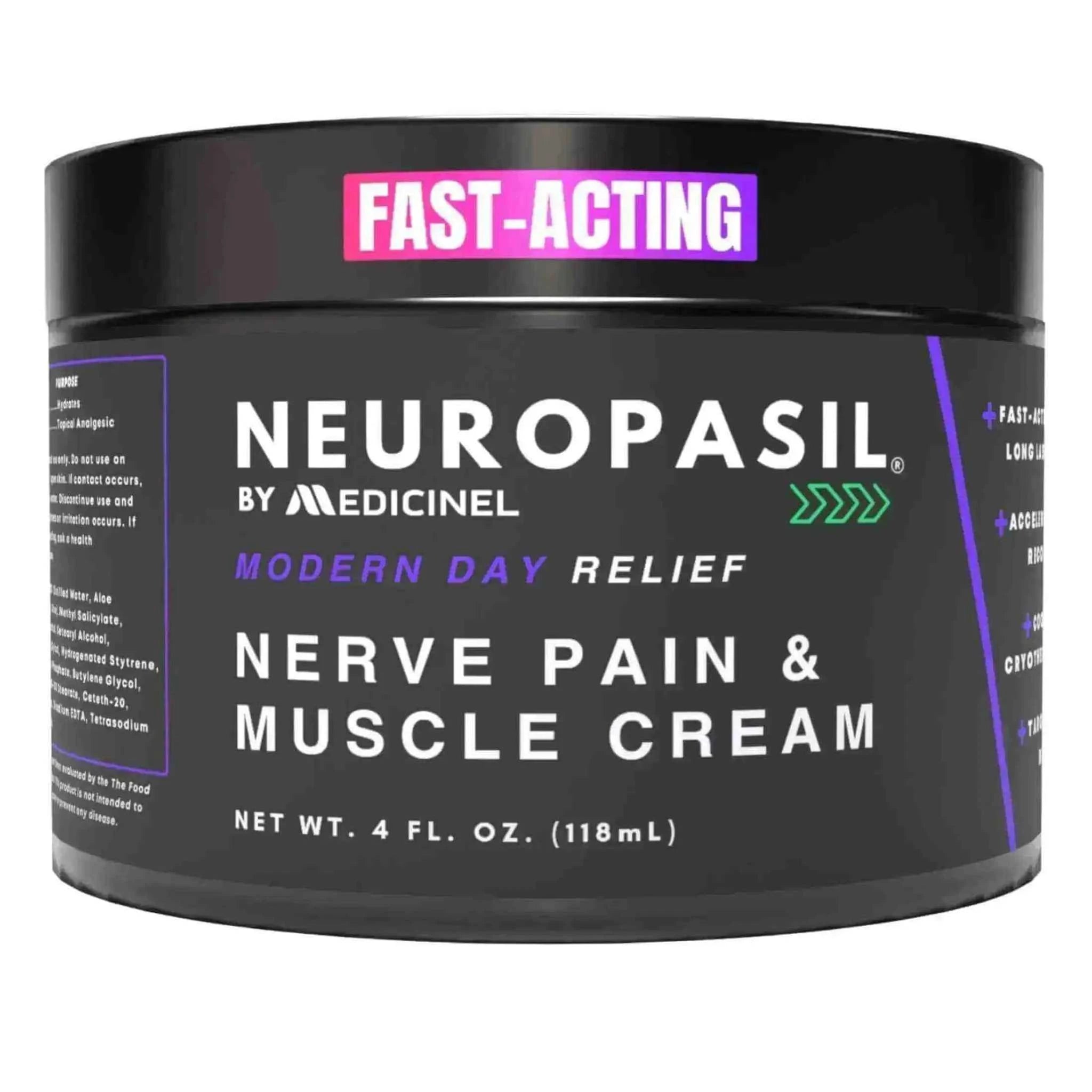
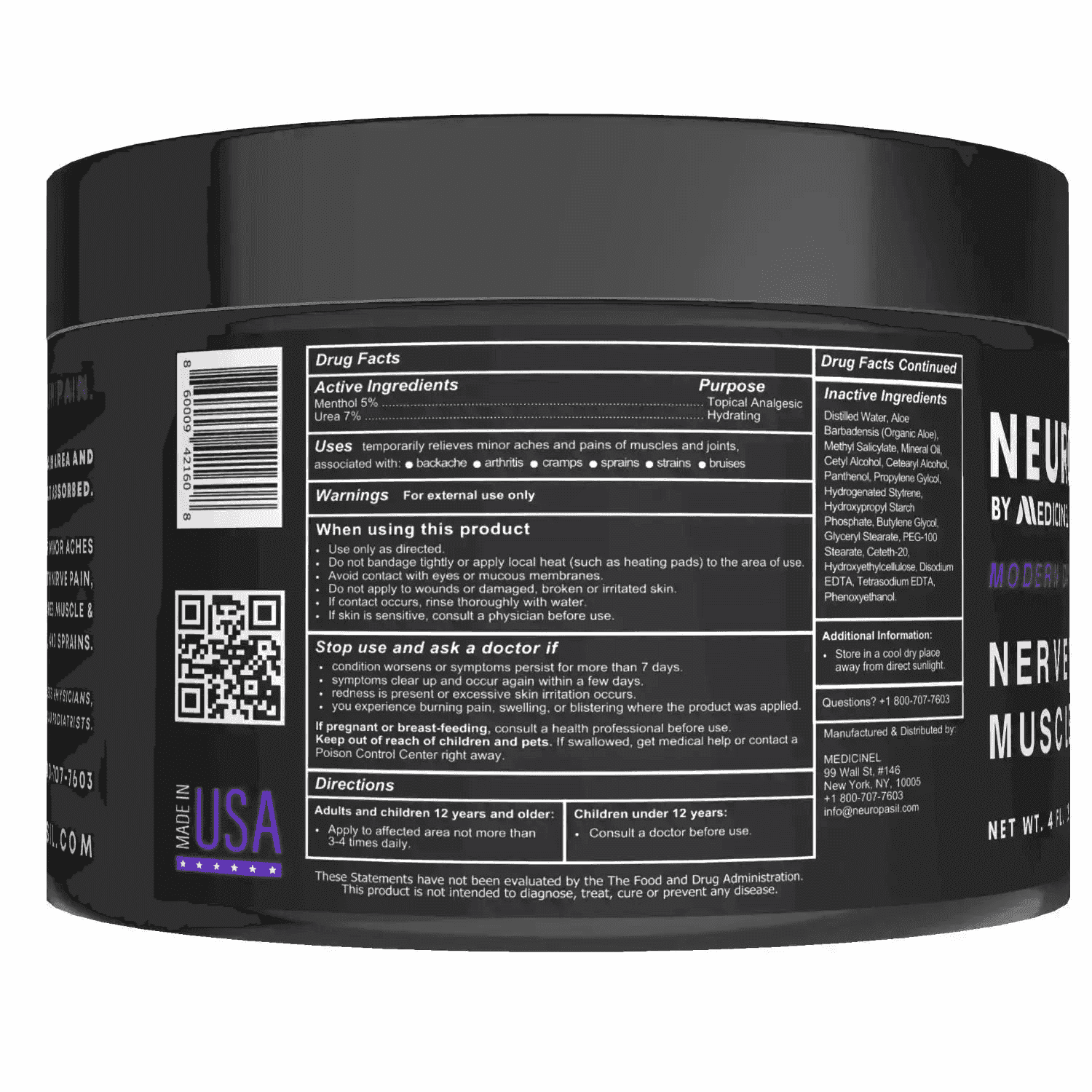
For those dealing with post-workout muscle discomfort or even the nerve pain that can accompany intense training, Neuropasil cream offers a unique blend of Aloe, Urea, and Menthol designed specifically for targeted muscle and nerve comfort. Our customers—including many athletes who train hard and need reliable recovery support—use Neuropasil for everything from strains and sprains to joint discomfort, back and neck pain, cramps, and aching feet. It's the kind of muscle pain relief cream you can keep in your gym bag for immediate post-workout application, or use before bed to ease soreness overnight.
The combination of ingredients in Neuropasil works synergistically: Aloe soothes the skin, Urea helps the active ingredients penetrate deeper, and Menthol provides that cooling sensation that signals relief. Whether you're dealing with DOMS from yesterday's leg day or chronic discomfort that flares up after exercise, having a quality nerve pain relief cream as part of your recovery toolkit can make a real difference in how quickly you bounce back.
For a comprehensive look at managing all types of post-workout discomfort, explore the ultimate guide to relieving muscle soreness, where we dive deeper into combining these various tools for optimal results.
7. Avoid Recovery Saboteurs
While we've covered what to do for a quick recovery after workout, it's equally crucial to know what not to do. Think of it this way: you can eat all the right foods, sleep perfectly, and stretch religiously, but certain habits can quietly sabotage all that hard work. Our lifestyle choices outside the gym matter just as much as what happens inside it.
One of the biggest mistakes I see, especially here in New York where hustle culture reigns supreme, is the temptation to push through without adequate rest. Overtraining isn't a badge of honor—it's a fast track to injury, decreased performance, and complete burnout. Your body is remarkably good at communicating its needs if you're willing to listen. That persistent fatigue, irritability, or nagging ache? Those are signals, not obstacles to overcome. Rest days aren't about being lazy; they're when the actual magic of muscle growth happens.
What to Avoid for Faster Recovery
Let me be straight with you about alcohol. I know that post-workout beer or celebratory cocktail can be tempting, but alcohol is genuinely one of the worst things for muscle recovery. It interferes with protein synthesis—the very process your muscles need to repair and grow stronger. Plus, it disrupts your sleep architecture, preventing you from reaching those deep sleep stages where growth hormone is released. The research is clear: alcohol slows muscular recovery and increases your risk of muscle loss over time. If you're serious about your fitness goals, limiting alcohol consumption is one of the smartest moves you can make.
Similarly, tobacco use undermines your recovery efforts in multiple ways. While the direct research on tobacco's effect on muscle recovery is still developing, we know it significantly increases injury risk and damages overall musculoskeletal health. Smoking restricts blood flow, which means less oxygen and fewer nutrients reaching your recovering muscles. The research on tobacco and musculoskeletal health paints a concerning picture for anyone trying to maintain an active lifestyle.
Your diet quality matters beyond just hitting your protein and carb targets. High-sugar and ultra-processed foods might provide quick energy, but they're essentially empty calories that don't support the complex recovery process your body needs. These foods cause blood sugar spikes and crashes, leaving you feeling sluggish rather than energized. They're also typically devoid of the micronutrients—vitamins, minerals, and antioxidants—that play supporting roles in tissue repair and inflammation management. Stick with whole, nutrient-dense foods that actually fuel recovery, not just fill your stomach.
Here's a controversial one: NSAIDs (nonsteroidal anti-inflammatory drugs) like ibuprofen or naproxen. Yes, they reduce pain and inflammation, but they might be working too well. Some research suggests that regularly taking high doses of these anti-inflammatory medications could actually interfere with muscle growth. Why? Because that inflammation you're suppressing is part of your body's natural repair signal. It's telling your muscles to adapt and grow stronger. By constantly shutting down that signal, you might be sacrificing long-term gains for short-term comfort. Save the NSAIDs for genuine injuries, not routine muscle soreness.
The bottom line is this: quick recovery after workout isn't just about what you add to your routine—it's also about what you avoid. By steering clear of these recovery saboteurs and respecting your body's need for rest, you'll see better results and stay healthier in the long run. If you're struggling with persistent soreness despite your best efforts, our guide on how to fix DOMS after working out offers additional strategies to help you bounce back faster.
Frequently Asked Questions about Post-Workout Recovery
I've talked with countless people in New York City who share similar questions about recovery—questions that deserve straight answers. Let's clear up some common confusion and help you make smarter decisions about your training and rest.
How long does muscle recovery typically take?
The honest answer? It depends. After a relatively light workout, your muscles might bounce back in about 24 hours. But if you've pushed yourself hard—maybe tried a new exercise or increased your intensity—you're looking at anywhere from 24 to 72 hours for full recovery.
Several factors influence how quickly you recover. Workout intensity plays the biggest role—the more strenuous or unfamiliar the exercise, the longer your body needs to repair itself. Your fitness level matters too; seasoned athletes typically recover faster than someone just starting out. Unfortunately, age can slow things down a bit, though staying consistent with good recovery habits helps tremendously. And of course, everything we've discussed so far—nutrition, hydration, and sleep—directly impacts your recovery timeline.
Very intense workouts, especially those involving heavy eccentric movements like downhill running or the lowering phase of weightlifting, might leave you sore for three days or more. This is completely normal. Your body is adapting, getting stronger, preparing for the next challenge.
Can you exercise with sore muscles?
Yes, you absolutely can—with some important caveats. If your soreness is mild, it's generally safe to continue exercising. In fact, light movement often helps more than complete rest. The key is learning to differentiate between normal Delayed Onset Muscle Soreness (DOMS) and actual injury pain.
DOMS feels like a dull, widespread ache in the muscles you worked. It's uncomfortable but manageable. Injury pain, on the other hand, tends to be sharp, localized, and might prevent you from moving normally. If you can't flex and extend your limbs without significant pain after a couple of days, or if something just feels "wrong," listen to that signal and consult a healthcare professional.
When working out with sore muscles, I recommend lowering your intensity—reduce the weight, slow down your pace, or shorten your session. Another smart approach is to work different muscle groups. If your legs are screaming from yesterday's squats, focus on your upper body today. And remember our discussion about active recovery? A gentle walk, easy swim, or light yoga session can actually help flush out soreness by increasing blood flow to those tired muscles. For more practical strategies, check out our guide on reducing muscle soreness after a workout.
What are the risks of not allowing adequate recovery time?
Skipping recovery isn't just uncomfortable—it can seriously derail your fitness goals and harm your health. The increased risk of injury is perhaps the most immediate concern. Overworked, fatigued muscles are vulnerable to strains, tears, and other injuries that can sideline you for weeks or even months. I've seen too many dedicated athletes forced into extended breaks because they pushed through when their bodies were screaming for rest.
Beyond acute injuries, chronic inadequate recovery can lead to overtraining syndrome—a condition characterized by persistent fatigue, declining performance, mood disturbances, hormonal imbalances, and getting sick more often. It's your body waving a red flag, telling you something needs to change.
Ironically, not resting enough actually leads to decreased performance. You might think you're being tough by training every day without proper recovery, but you're actually making yourself weaker. Muscle growth and strength gains happen during recovery, not during the workout itself. Without sufficient rest, your muscles never get the chance to repair and adapt, meaning all that hard work in the gym won't yield the results you're after.
The research is clear: we increase our risk of injury when we don't let our muscles recover between physical exertions. Studies have documented the risks of not recovering properly, showing that inadequate recovery affects everything from performance to hormonal balance. Your quick recovery after workout strategy isn't a luxury—it's a necessity for sustainable fitness progress.
Conclusion: Build Your Ultimate Recovery Routine
We've covered a lot of ground together, and now it's time to bring it all home. Achieving a quick recovery after workout isn't some mystical secret reserved for elite athletes—it's a practical, achievable goal for anyone willing to prioritize their body's needs. Throughout this guide, we've explored seven evidence-based strategies that, when woven into your routine, can dramatically improve how quickly you bounce back, how much soreness you experience, and ultimately, how much progress you make toward your fitness goals.
Think of recovery as the foundation of your fitness house. Without it, everything else you're building—your strength, your endurance, your performance—sits on shaky ground. We've learned that refueling with protein and carbohydrates gives our muscles the building blocks and energy they need to repair. Proper hydration keeps our systems running smoothly and helps flush out waste. Taking the time to cool down and stretch signals to our body that the hard work is done and flexibility matters. Quality sleep is where the magic truly happens—it's when our muscles actually rebuild and grow stronger. Active recovery keeps us moving gently on rest days, maintaining blood flow without adding stress. Targeted tools like foam rollers, massage, and topical relief creams offer direct, soothing comfort when we need it most. And finally, avoiding recovery saboteurs like alcohol, tobacco, and the temptation to overtrain protects all the hard work we've put in.
Here's the truth: there's no one-size-fits-all recovery plan. What works perfectly for your training partner might not be ideal for you. Your body is unique, with its own rhythms, needs, and signals. The real skill lies in listening to those signals and experimenting with these strategies to find your personal recovery formula. Maybe you need an extra hour of sleep. Maybe active recovery feels better than complete rest. Perhaps a topical cream gives you the targeted relief that lets you stay consistent with your training.
Consistency is where the real change happens. Just as sporadic workouts won't build the body you want, sporadic recovery won't give you the results you deserve. When you make recovery as non-negotiable as your training sessions, you're not just reducing soreness—you're investing in sustainable performance, long-term health, and a more enjoyable, pain-free active life.
For those moments when your muscles need extra support, when you're dealing with post-workout soreness or even nerve discomfort from intense training, natural solutions can make all the difference. Discover natural, fast-acting relief and support your recovery with Neuropasil cream, formulated with Aloe, Urea, and Menthol to provide targeted comfort exactly where you need it. Whether you're training for your next personal best or simply want to move through your day without discomfort, a solid recovery plan is your ticket to getting there—and staying there.
References
Throughout this guide on achieving a quick recovery after workout, we've drawn on trusted scientific research and expert insights to ensure every recommendation is backed by evidence. Here are the key sources that informed our strategies:
For our discussion on protein's crucial role in muscle repair and growth, we referenced Jäger R, et al. (2017), whose work with the International Society of Sports Nutrition established comprehensive guidelines on protein and exercise. You can find their full position stand at https://jissn.biomedcentral.com/articles/10.1186/s12970-017-0177-8.
The research by Morton RW, et al. (2017) provided invaluable insights into how protein supplementation affects muscle mass and strength gains. Their systematic review and meta-analysis helped us understand optimal protein intake for recovery, available at https://www.ncbi.nlm.nih.gov/pmc/articles/PMC5867436/.
When exploring how carbohydrates and protein work together during the recovery window, we turned to Kerksick CM, et al. (2017) and their comprehensive position stand on nutrient timing from the International Society of Sports Nutrition. Their findings are detailed at https://www.ncbi.nlm.nih.gov/pmc/articles/PMC5596471/.
Our hydration recommendations came from the US Anti-Doping Agency's evidence-based guidelines, which you can explore at https://www.usada.org/athletes/substances/nutrition/fluids-and-hydration/.
The discussion on post-exercise stretching benefits from the 2021 review by Afonso J, et al., which examined the effectiveness of stretching in both short-term and delayed recovery. Their thorough analysis is available at https://www.frontiersin.org/articles/10.3389/fphys.2021.677581/full.
Understanding sleep's critical role in muscle recovery was informed by Dáttilo M, et al. (2020), whose research on sleep deprivation's effects on skeletal muscle recovery proved invaluable. You can read their findings at https://journals.lww.com/acsm-msse/Abstract/2020/02000/EffectsofSleepDeprivationonAcuteSkeletal.28.aspx.
For our section on targeted recovery tools, we relied on the systematic review and meta-analysis by Davis HL, et al. (2020), which examined how sports massage affects performance and recovery. Their comprehensive analysis is at https://www.ncbi.nlm.nih.gov/pmc/articles/PMC7228568/.
The research by Lakićević N, et al. (2019) helped us understand alcohol's negative impact on muscle recovery following resistance exercise. Their systematic review can be found at https://www.ncbi.nlm.nih.gov/pmc/articles/PMC7739274/.
When discussing tobacco's effects on musculoskeletal health, we drew from Al-Bashaireh AM, et al. (2018) and their systematic review, available at https://www.hindawi.com/journals/jeph/2018/4184190/.
Finally, our understanding of overtraining risks came from Rodrigues F, et al. (2023), whose research examined the relationship between training frequency, overtraining symptoms, and injuries. Their important findings are at https://www.ncbi.nlm.nih.gov/pmc/articles/PMC10138529/.
These peer-reviewed studies and trusted health organizations form the foundation of our approach to helping you achieve a quick recovery after workout. We're committed to providing recommendations rooted in science, not trends or guesswork, so you can recover with confidence.