Why Understanding Shoulder Blade Pain Matters
Shoulder blade pain is a common complaint that affects millions of people every day. Whether you're an athlete pushing through training, an office worker hunched over a keyboard, or someone dealing with persistent discomfort, understanding what's causing your pain is the first step toward relief.
Quick Answer: What Causes Shoulder Blade Pain?
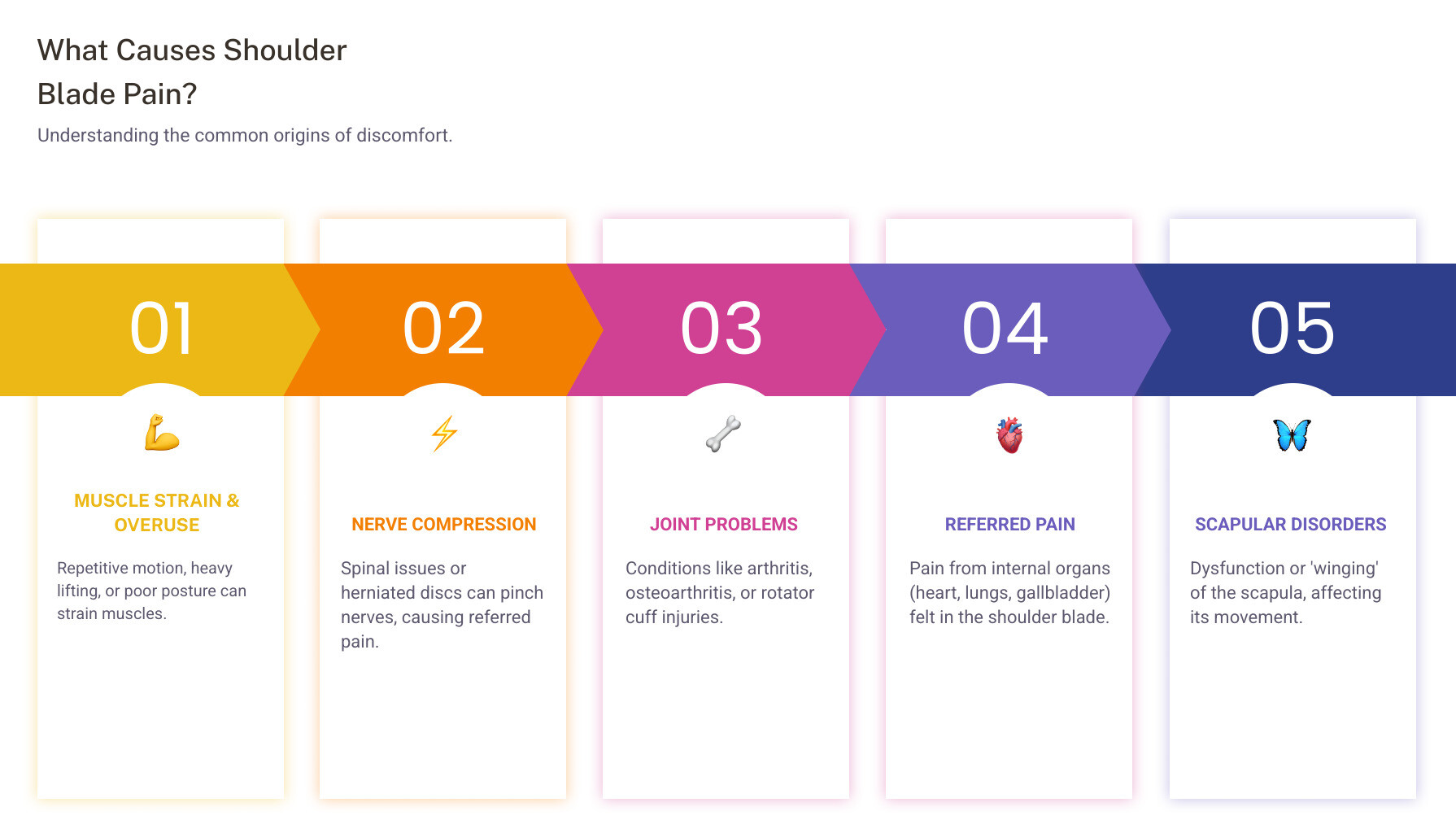
Most shoulder blade pain stems from:
- Muscle strain from overuse, heavy lifting, or poor posture
- Nerve compression from spinal issues or herniated discs
- Joint problems like arthritis or rotator cuff injuries
- Referred pain from internal organs (gallbladder, heart, lungs)
- Scapular disorders like dyskinesis or "winging"
When to seek immediate help: Chest pain, shortness of breath, dizziness, or severe sudden pain may signal a medical emergency.
The pain you feel between or around your shoulder blades—technically called interscapular pain—can range from a dull ache to sharp, stabbing discomfort. It might come and go, or it could be constant. Sometimes it radiates to your neck, arms, or lower back.
Here's what makes shoulder blade pain tricky: the scapula itself is rarely the problem. Your shoulder blade is a large, triangular bone that connects your arm to your torso through a complex network of muscles, tendons, and ligaments. Seventeen muscles attach to this single bone. When any of these structures get strained, injured, or inflamed, you feel it.
But shoulder blade pain isn't always about muscles and bones. Sometimes it's a warning signal from deeper inside your body—your heart, lungs, or abdominal organs can refer pain to this area. That's why knowing the difference between common muscle strain and something more serious can be life-saving.
Most cases resolve with simple home care: rest, ice or heat therapy, gentle stretching, and topical pain relief. But persistent pain, severe discomfort, or pain accompanied by other symptoms requires professional medical evaluation.
I'm Tony Enrico, and through years of working with people seeking relief from nerve and muscle pain, I've seen how shoulder blade pain can disrupt daily life and limit what you love doing. My mission with Neuropasil is to help one million people find comfort and get back to living without constant discomfort.
Common Shoulder blade pain vocab:
Understanding Common Causes of Shoulder Blade Pain
Let's explore the most frequent, typically non-emergency reasons why you might be experiencing discomfort around your shoulder blade. These causes are often related to our daily habits and activities.
Muscle Strain and Overuse
One of the most common culprits behind shoulder blade pain is simple muscle strain or overuse. Think about it: the muscles surrounding your scapula are constantly working to stabilize your shoulder and facilitate arm movement.
- Repetitive motion: Activities that involve repeated arm movements, like throwing a ball, painting, or even prolonged typing, can lead to muscle fatigue and strain.
- Heavy lifting: Improper lifting techniques or attempting to lift objects that are too heavy can instantly strain muscles in your upper back and shoulder.
- Overexertion during exercise: Pushing too hard during a workout without adequate warm-up or proper form can lead to microscopic tears in muscle fibers, resulting in Delayed Onset Muscle Soreness (DOMS) or more significant strains.
- Rotator cuff strain: The rotator cuff, a group of four muscles and their tendons, is crucial for shoulder movement. Strain or injury to these tendons can manifest as shoulder blade pain.
If you've ever felt that nagging ache after a long day or an intense session at the gym, chances are it's due to muscle strain. For those times you've really pushed it, we've found that addressing trapezius muscle strain treatments can be very beneficial.
How Poor Posture Leads to Shoulder Blade Pain
Our modern lifestyles often involve prolonged periods of sitting, whether at a desk, looking at a phone, or relaxing on the couch. This sedentary behavior is a major contributor to shoulder blade pain.
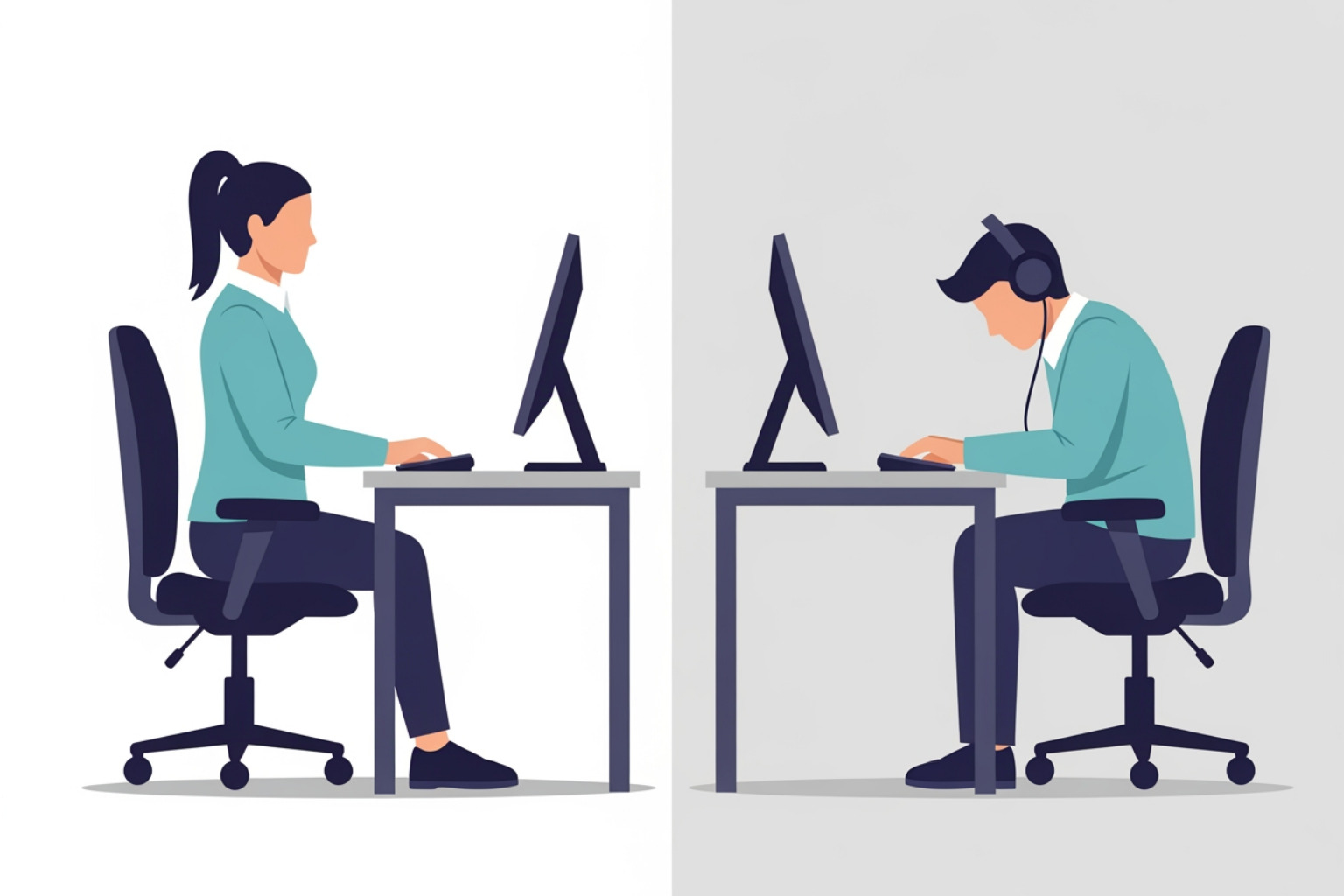
- Slouching and hunching over: When we slouch, our shoulders round forward, and our upper back adopts a C-shape. This puts sustained strain on the muscles between the shoulder blades, which are forced to lengthen and work harder to counteract gravity.
- "Tech neck" and forward head posture: Constantly looking down at screens forces the head forward, placing immense stress on the neck and upper back muscles. This forward head posture can lead to tightness and discomfort, often radiating to the shoulder blade area. Addressing poor posture is crucial for relief.
- Ergonomics: An improperly set up workspace can force you into poor postural habits. Ensuring your computer monitor is at eye level, using a supportive chair, and taking frequent breaks can significantly reduce strain.
Interestingly, recent research suggests that it's not necessarily "bad" posture itself, but the inability to sustain any given posture for a long period that causes issues. Prolonged static positions, regardless of how "good" they are, can lead to discomfort. So, frequent movement and breaks are key!
Direct Injuries and Scapular Disorders
Sometimes, shoulder blade pain comes from a more direct physical cause or a specific condition affecting the scapula itself.
- Falls and direct trauma: A direct blow to the back or a fall onto the shoulder can cause injuries to the bones or soft tissues around the scapula, leading to acute pain.
- Scapula fractures: While rare, accounting for less than 1% of all broken bones, a fracture of the shoulder blade can occur from significant trauma and will cause intense pain.
- Shoulder dislocation: When the humerus (upper arm bone) pops out of the shoulder socket, it can cause severe pain and damage to surrounding structures, including those near the shoulder blade.
- Scapular Dyskinesis: This is a medical term for an alteration or deviation in the normal resting position or motion of the scapula as the arm moves. Often described as a "winged" scapula where the inner border appears more prominent, it indicates muscle weakness or imbalance. This can significantly impact shoulder function and cause shoulder blade pain. You can learn more about scapular disorders and their complexities.
Degenerative and Other Conditions
Beyond acute injuries and postural issues, several chronic or degenerative conditions can contribute to shoulder blade pain.
- Arthritis: Conditions like osteoarthritis, which is the "wear and tear" arthritis, can affect the joints in the spine and shoulder, leading to pain that radiates to the shoulder blade. Ankylosing spondylitis, a form of arthritis primarily affecting the spine, can also cause pain and inflammation in surrounding areas, including the shoulders.
- Spinal stenosis: This is a narrowing of the spinal canal, which can compress nerves and lead to pain, numbness, or tingling that extends to the shoulder blade area.
- Herniated or bulging disc in the neck (cervical spine): When a disc in your neck protrudes or ruptures, it can put pressure on nearby nerves, causing referred pain, numbness, or weakness in the shoulder, arm, and often around the shoulder blade.
- Fibromyalgia: This chronic condition causes widespread pain throughout the body, including the muscles around the shoulder blade, often accompanied by fatigue, sleep problems, and mood issues.
- Myofascial pain syndrome: This is a chronic pain condition where pressure on sensitive points in your muscles causes pain in seemingly unrelated parts of your body. These trigger points are common in the upper back and can lead to persistent shoulder blade pain.
When to Worry: Serious Conditions That Cause Referred Pain
While most shoulder blade pain is benign, it's crucial to understand that sometimes this discomfort can be a warning sign of a more serious underlying health issue. This is known as referred pain, where pain originating from internal organs is felt in the shoulder blade area.
Cardiac (Heart-Related) Emergencies
Heart-related issues can often present as pain in the shoulder, neck, jaw, or upper back, including the shoulder blade region. These are medical emergencies that require immediate attention.
- Heart attack: While often associated with chest pain, a heart attack can manifest as shoulder blade pain, especially in women. According to a 2019 study in the journal Circulation, shoulder pain as a symptom of a heart attack is more common in women than in men. Symptoms to watch for include: crushing chest pain, shortness of breath, dizziness, sweating, and pain radiating down the left arm or to the jaw. If you experience sudden left shoulder pain accompanied by these symptoms, it can be a sign of a heart attack and requires immediate medical attention. We urge you to consult MedlinePlus for more information on cardiac symptoms.
- Aortic dissection: This is a rare but life-threatening condition where there's a tear in the inner layer of the aorta, the body's main artery. It can cause sudden, severe, ripping or tearing pain in the chest that often radiates to the back, including the shoulder blade area.
- Pericarditis: Inflammation of the lining around the heart (pericardium) can cause sharp, stabbing chest pain that sometimes radiates to the left shoulder blade or neck.
If you suspect any of these cardiac emergencies, please go to the nearest ER in New York City immediately.
Pulmonary (Lung-Related) Issues
Certain lung conditions can also cause referred pain in the shoulder blade area.
- Pulmonary embolism: A blood clot in the lungs can cause sudden, sharp shoulder blade pain or back pain, accompanied by difficulty breathing, rapid heart rate, and coughing, sometimes with blood. This is a life-threatening condition.
- Pleurisy: Inflammation of the lining of the lungs (pleura) can cause sharp chest pain that worsens with breathing and may be felt in the shoulder blade.
- Collapsed lung (pneumothorax): This causes a sudden, sharp, stabbing pain in the chest that can radiate to the shoulder blade, along with shortness of breath.
- Lung cancer: In some cases, lung tumors (especially Pancoast tumors at the top of the lung) can press on nerves, leading to persistent and worsening shoulder blade pain that may radiate down the arm.
Abdominal and Other Causes
It might seem surprising, but issues in your abdomen can also cause pain that you feel around your shoulder blade.
- Gallstones: This is a classic example of referred pain. Some sources suggest that up to 60% of people with gallstones experience right shoulder blade pain, often accompanied by upper abdominal pain, nausea, and vomiting, especially after fatty meals.
- Pancreatitis: Inflammation of the pancreas can cause severe abdominal pain that radiates to the back and often the left shoulder blade.
- Liver disease: Certain liver conditions can cause pain in the right upper abdomen that refers to the right shoulder blade.
- Peptic ulcer disease: While primarily causing stomach pain, severe ulcers/symptoms-causes) can sometimes cause referred pain to the upper back or shoulder blade.
- Shingles: This viral infection, caused by the same virus as chickenpox, can cause a painful rash along nerve pathways. If shingles affects the nerves in your upper back, it can cause severe, burning pain around the shoulder blade even before a rash appears.
How to Find Relief from Shoulder Blade Pain
When shoulder blade pain strikes, our primary goal is to find effective, lasting relief. Fortunately, a multi-faceted approach, starting with simple home remedies and potentially moving to professional treatments, can help manage and alleviate discomfort.
At-Home Remedies for Minor Shoulder Blade Pain
For many cases of minor shoulder blade pain due to muscle strain or overuse, simple at-home strategies can be incredibly effective.

- Rest and activity modification: The first step is often to give your body a break. Avoid activities that worsen the pain. If lifting heavy objects triggered the pain, refrain from doing so. If prolonged sitting is the culprit, take frequent breaks to move and stretch.
- Over-the-counter (OTC) medications: Non-steroidal anti-inflammatory drugs (NSAIDs) like ibuprofen or naproxen can help reduce inflammation and pain. Acetaminophen can also provide pain relief. Always follow dosage instructions carefully.
-
General pain management strategies:
- Gentle stretching to improve flexibility.
- Maintaining good posture, even when resting.
- Avoiding sleeping positions that aggravate the pain.
The Role of Heat and Cold Therapy
Alternating between heat and cold is a time-tested strategy for managing muscle and joint pain, including shoulder blade pain.
- Cryotherapy (cold therapy): Applying ice is best for acute injuries or inflammation. Cold helps to constrict blood vessels, reducing swelling and numbing the area, which decreases pain. We recommend applying an ice pack (wrapped in a cloth to protect your skin) for 15-20 minutes at a time, up to four times a day, especially during the first 48 hours after an injury.
- Heat therapy: Once the initial inflammation has subsided (typically after 48 hours), heat can be very beneficial. Heat increases blood flow, which helps relax tight muscles and promotes healing. It's particularly useful for muscle stiffness and soreness. You can use a heating pad, a warm compress, or even a hot shower. Apply heat for 15-20 minutes. As Johns Hopkins Medicine advises, heat is often most useful when muscles are tight.
- Alternating: Many people find relief by alternating between heat and cold, allowing each therapy to provide its unique benefits. Ensure at least two hours between sessions if you're alternating.
Topical Pain Relief Creams
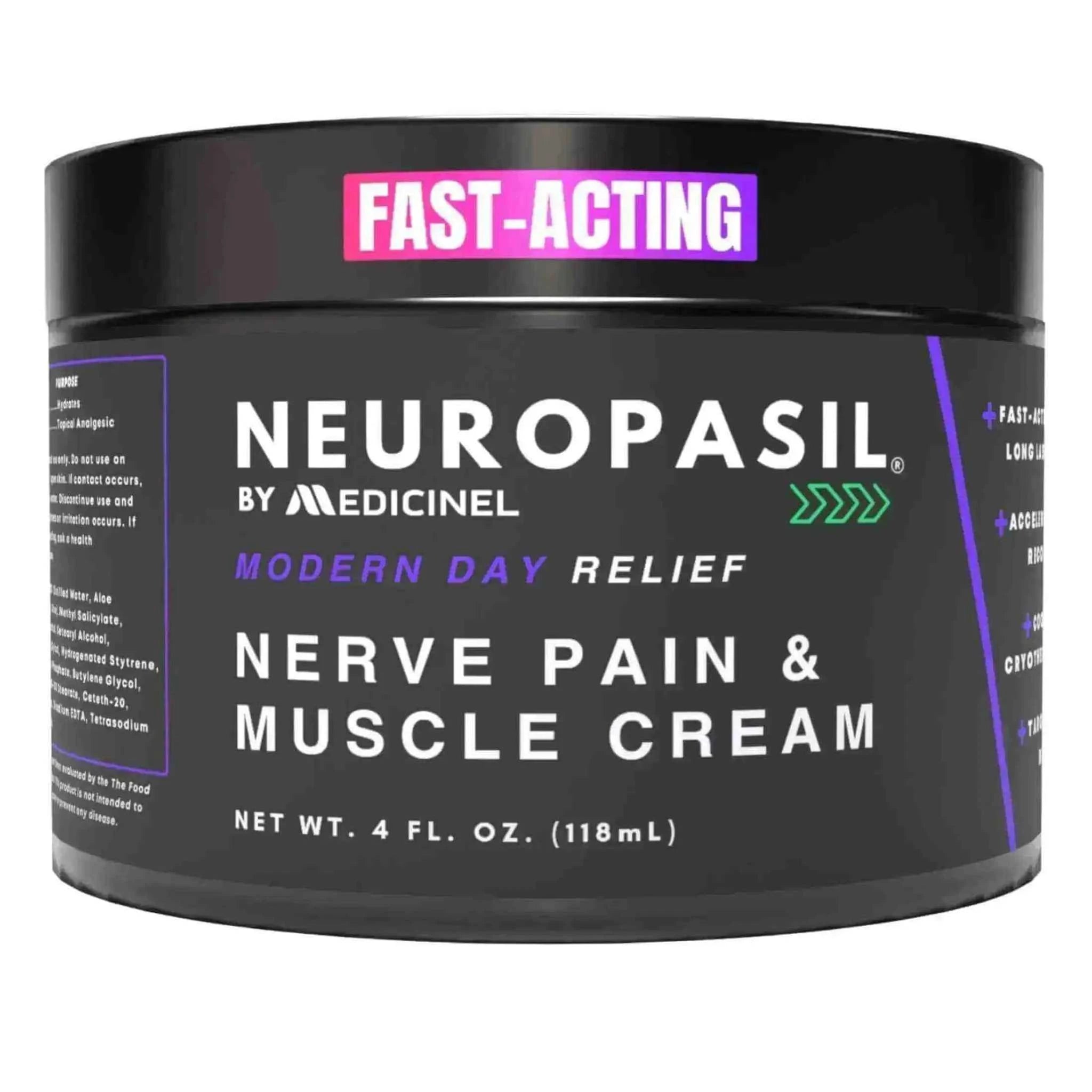
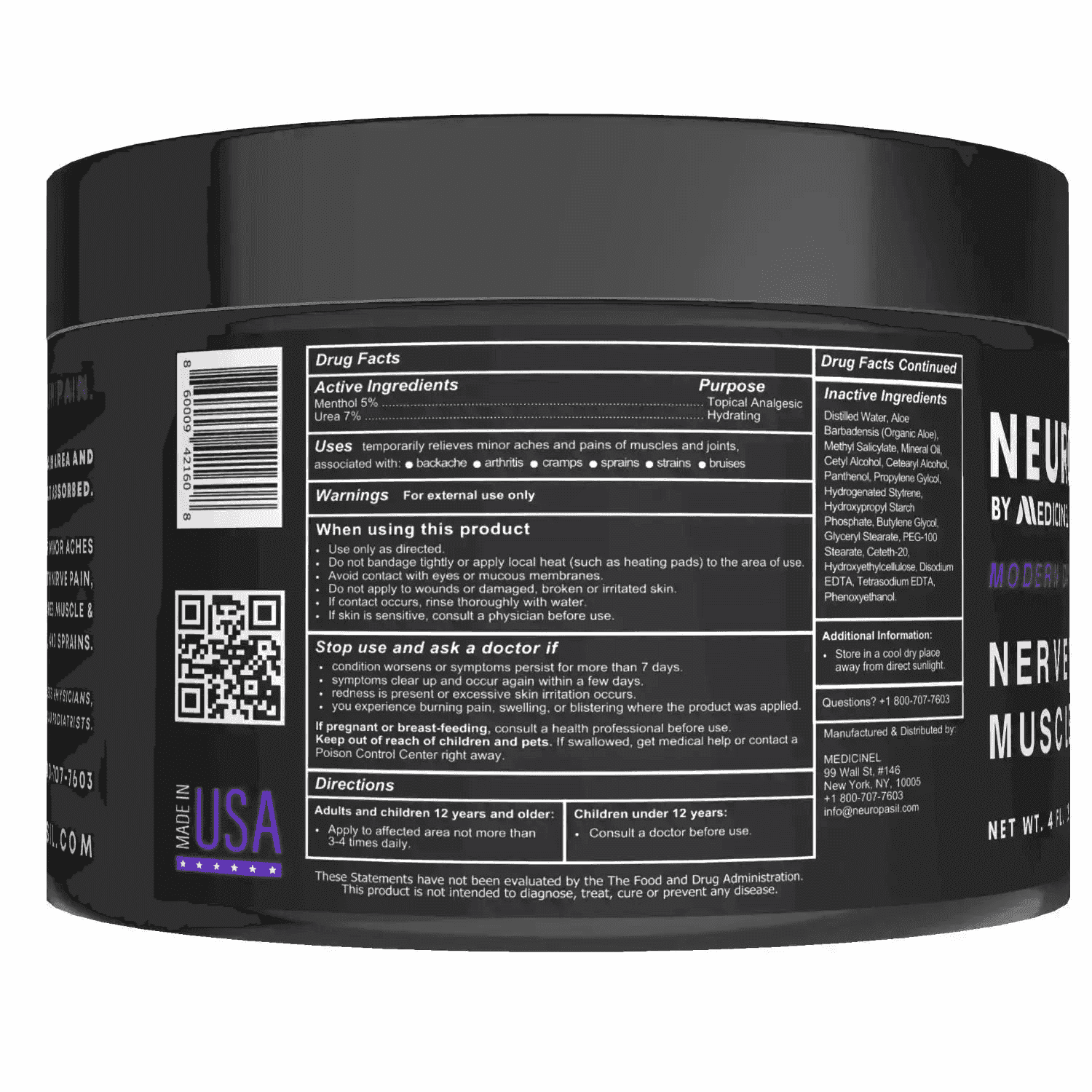
For targeted and localized relief of shoulder blade pain, topical creams can be a game-changer. Our Neuropasil nerve pain relief cream is formulated with natural, fast-acting ingredients like Aloe, Urea, and Menthol to provide soothing comfort directly where you need it.
- Targeted relief: Unlike oral medications that affect your whole system, topical creams work directly on the affected area, providing quick relief for muscle and nerve discomfort around your shoulder blade.
- Soothing ingredients: Menthol provides a cooling sensation that helps to distract from pain and reduce discomfort. Aloe and Urea are known for their skin-soothing and hydrating properties, enhancing the overall comfort.
- Aiding muscle recovery: By reducing localized pain, these creams can help you move more comfortably, which is crucial for preventing stiffness and aiding muscle recovery. For more insights, explore our Neuropasil Nerve Pain Relief Cream and check out our guide on the best pain relief creams for muscle pain.
Stretches and Strengthening Exercises
Stretching and strengthening exercises play a vital role in both treating and preventing shoulder blade pain. They improve flexibility, reduce muscle tension, and build strength to support better posture and movement.
- Improving flexibility: Regular stretching helps to lengthen tight muscles, increasing your range of motion and reducing stiffness.
- Reducing muscle tension: Stretches can release knots and tension in the muscles surrounding your shoulder blade, providing immediate relief.
-
Simple stretches to try:
- Chest stretch: Stand in a doorway, place your forearms on the frame, and gently lean forward until you feel a stretch across your chest. This helps counteract the forward rounding often seen with poor posture.
- Eagle pose arms: While a yoga pose, the arm position helps stretch the upper back and shoulders. Cross one arm over the other at the elbows, then wrap your forearms, pressing palms together. Lift your elbows slightly.
- Shoulder blade squeeze: Sit or stand tall, gently squeeze your shoulder blades together as if trying to hold a pencil between them. Hold for 5-10 seconds, then release. Repeat 10-15 times. This strengthens the rhomboids and trapezius muscles.
- Arm circles: Perform small, controlled circles with your arms, both forward and backward, to gently warm up and mobilize the shoulder joint.
- Core strengthening: A strong core provides a stable foundation for your spine and shoulders, reducing strain on your upper back muscles. Exercises like planks can strengthen your shoulders, back, and core.
We always recommend working with a physical therapist to design an exercise regimen specific to your needs. A 2020 review in the Journal of Orthopaedic & Sports Physical Therapy found that exercise therapy can be as effective at treating shoulder pain as corticosteroid injections and surgical interventions.
Medical Diagnosis and Professional Treatment
While home remedies and self-care are effective for many minor cases of shoulder blade pain, there are times when professional medical attention is essential. It's crucial to know when to see a doctor, especially if your pain is persistent, severe, or accompanied by "red flag" symptoms.
How Doctors Diagnose the Cause
When you visit a doctor for shoulder blade pain, they will conduct a thorough evaluation to pinpoint the underlying cause.
- Physical examination: The doctor will visually inspect your shoulder and back, palpate the area for tenderness, and assess your range of motion and muscle strength. They might perform specific tests like the Scapular Assistance Test (SAT) or Scapular Retraction Test (SRT) if scapular dyskinesis is suspected.
- Medical history: Expect questions about your symptoms, when they started, what makes them better or worse, your activity levels, and any other medical conditions you have.
-
Diagnostic imaging:
- X-ray: Can identify bone fractures, arthritis, or other bony abnormalities.
- MRI (Magnetic Resonance Imaging): Provides detailed images of soft tissues, such as muscles, tendons (like the rotator cuff), ligaments, and spinal discs, to detect tears, inflammation, or nerve compression.
- CT scan (Computed Tomography): Offers more detailed bone imaging than an X-ray and can be useful for complex fractures or spinal issues.
- Ultrasound: Can be used to visualize tendons and muscles in real-time, often to identify rotator cuff tears.
- Electrocardiogram (ECG): If cardiac causes are suspected (e.g., chest pain, shortness of breath), an ECG will be performed to check heart activity.
In New York City, you can find excellent specialists at places like New York Bone & Joint Specialists, who have the latest diagnostic tools to pinpoint the problem. Contact them today for a consultation.
Professional Treatment Options
Once a diagnosis is made, your doctor will recommend a treatment plan custom to your specific condition.
- Physical therapy: This is often a cornerstone of treatment for musculoskeletal shoulder blade pain. A physical therapist will guide you through targeted exercises to strengthen weak muscles, stretch tight ones, improve posture, and restore proper movement patterns. Massage therapy, often a component of physical therapy, can also provide significant relief by releasing muscle tension and improving circulation.
- Prescription medications: For more severe pain or inflammation, a healthcare provider might prescribe stronger NSAIDs, muscle relaxants, or even short courses of oral corticosteroids. Antidepressants can sometimes be used for chronic pain management, as they can affect pain pathways.
- Corticosteroid injections: These injections deliver potent anti-inflammatory medication directly into the affected area (e.g., a bursa or joint) to reduce pain and inflammation. They are typically used for localized, persistent pain that hasn't responded to other treatments.
- Surgery: The good news is that most people do not require surgery to treat shoulder blade pain. However, in cases of severe damage or injury, such as large rotator cuff tears, complex fractures, severe spinal stenosis, or persistent nerve compression that doesn't respond to conservative measures, surgery may be necessary. This could involve repairing torn tendons, decompressing nerves, or stabilizing joints.
For any orthopedic concerns, you can visit an Orthopedic Urgent Walk-In in NYC or book an appointment directly with specialists in Midtown or the Upper East Side.
Lifestyle and Prevention Strategies
Preventing shoulder blade pain and managing it long-term often involves making conscious lifestyle choices.
- Maintaining a healthy weight: Excess weight, especially in the upper body, can increase strain on your spine and shoulder muscles, contributing to pain.
- Anti-inflammatory diet: Incorporating anti-inflammatory foods into your diet can help reduce systemic inflammation that may contribute to pain. Think fruits, vegetables, lean proteins, and healthy fats. We believe in the power of natural ingredients to support your body's health; you can learn more about our ingredients and their benefits.
- Proper hydration: Staying well-hydrated is crucial for joint health and muscle function. Dehydration can exacerbate muscle stiffness and pain.
- Stress management: As we've discussed, stress can significantly worsen muscle tension and pain. Techniques like meditation, yoga, deep breathing exercises, or simply taking time for hobbies you enjoy can make a big difference.
- Regular exercise: Beyond targeted stretches and strengthening, overall physical activity keeps your body strong and flexible. This includes a mix of cardiovascular exercise, strength training, and flexibility work.
Frequently Asked Questions about Shoulder Blade Pain
What does it mean when only my right shoulder blade hurts?
Pain in the right shoulder blade can certainly stem from common musculoskeletal issues like muscle strain, poor posture, or a pinched nerve. However, it is also a classic sign of referred pain from the gallbladder. Conditions like gallstones often cause pain in the right upper abdomen that radiates to the right shoulder blade. If your right shoulder blade pain is accompanied by nausea, vomiting, fatty food intolerance, or upper abdominal pain, it's important to see a doctor promptly to rule out gallbladder issues.
Can stress cause sharp pain between the shoulder blades?
Yes, absolutely. Stress is a significant contributor to muscle tension, particularly in the neck, shoulders, and upper back. When we're stressed, our bodies often enter a "fight or flight" response, causing muscles to tense up and remain contracted. This chronic tension can lead to muscle knots (also known as trigger points) and result in sharp, aching, or burning pain between the shoulder blades. Stress can also make us clench our jaws, hunch our shoulders, and breathe shallowly, all of which exacerbate upper back and shoulder blade pain. Managing stress through techniques like meditation, yoga, or deep breathing can be very beneficial.
How long is too long to have shoulder blade pain?
Most minor cases of shoulder blade pain due to muscle strain or overuse should start to improve within a few days to a week with proper rest and home care. If your pain is severe, unusual, or lasts for more than a couple of days despite home care (like rest, ice/heat, and OTC pain relievers), you should seek medical attention. Furthermore, if your shoulder blade pain is accompanied by any other worrying symptoms such as chest pain, shortness of breath, dizziness, excessive sweating, rapid or irregular heartbeat, lightheadedness, fever, numbness, tingling, or weakness in your arm, sudden difficulty speaking, vision problems, or paralysis on one side of your body, you should seek immediate emergency medical care.
Conclusion
Shoulder blade pain is a widespread issue that can significantly impact your daily life, but understanding its various causes is the first step toward finding relief. While often stemming from common issues like muscle strain, poor posture, or overuse, it's crucial to remember that this pain can sometimes signal more serious underlying conditions, including cardiac or pulmonary emergencies.
Listening to your body and recognizing when your pain warrants professional medical attention is paramount. For minor discomfort, simple home remedies such as rest, heat and cold therapy, gentle stretching, and the targeted relief offered by topical creams like Neuropasil can make a significant difference. For persistent or severe pain, or pain accompanied by alarming symptoms, do not hesitate to consult a doctor. With proper diagnosis and a custom treatment plan, you can effectively manage and overcome shoulder blade pain, getting back to doing what you love.
We hope this guide empowers you with the knowledge to understand and address your shoulder blade pain. For more information and support in your journey towards comfort and well-being, please contact us.
References
- https://nyboneandjoint.com/when-should-i-worry-about-shoulder-blade-pain/
- https://my.clevelandclinic.org/health/symptoms/25122-shoulder-pain
- https://www.healthline.com/health/shoulder-blade-pain
- https://www.medicalnewstoday.com/articles/319774
- https://orthoinfo.aaos.org/en/diseases--conditions/scapular-shoulder-blade-disorders/
- https://medlineplus.gov/ency/article/003171.htm
- https://www.health.com/shoulder-blade-pain-8698654
- https://www.nuffieldhealth.com/article/shoulder-blade-pain-the-symptoms-causes-and-treatments
- https://newsinhealth.nih.gov/2017/08/getting-it-straight
- https://www.hopkinsmedicine.org/health/treatment-tests-and-therapies/ice-packs-vs-warm-compresses-for-pain#:~:text=facts%20in%20mind.-,Heat,useful%20when%20muscles%20are%20tight
- https://www.physio-pedia.com/Scapula
- https://www.ncbi.nlm.nih.gov/books/NBK459224/
- https://www.painscience.com/articles/posture.php
- https://www.mayoclinic.org/diseases-conditions/ankylosing-spondylitis/symptoms-causes/syc-20354808
- https://www.mayoclinic.org/diseases-conditions/spinal-stenosis/symptoms-causes/syc-20352961
- https://www.mayoclinic.org/diseases-conditions/herniated-disk/symptoms-causes/syc-20354095
- https://www.mayoclinic.org/diseases-conditions/fibromyalgia/symptoms-causes/syc-20354780
- https://www.mayoclinic.org/diseases-conditions/myofascial-pain-syndrome/symptoms-causes/syc-20375444
- https://www.ahajournals.org/doi/10.1161/CIRCULATIONAHA.118.036278
- https://www.mayoclinic.org/diseases-conditions/aortic-dissection/symptoms-causes/syc-20369496
- https://www.mayoclinic.org/diseases-conditions/pericarditis/symptoms-causes/syc-20352510
- https://www.mayoclinic.org/diseases-conditions/pulmonary-embolism/symptoms-causes/syc-20354647
- https://www.mayoclinic.org/diseases-conditions/pleurisy/symptoms-causes/syc-20351863
- https://www.mayoclinic.org/diseases-conditions/pneumothorax/symptoms-causes/syc-20351482
- https://www.cancer.gov/publications/dictionaries/cancer-terms/def/pancoast-tumor
- https://www.ncbi.nlm.nih.gov/pmc/articles/PMC3343155/
- https://www.mayoclinic.org/diseases-conditions/pancreatitis/symptoms-causes/syc-20360227
- https://my.clevelandclinic.org/health/diseases/17179-liver-disease
- https://www.niddk.nih.gov/health-information/digestive-diseases/peptic-ulcers-stomach-ulcers/symptoms-causes
- https://www.cdc.gov/shingles/about/index.html
- https://www.jospt.org/doi/10.2519/jospt.2020.0303
- https://www.physio-pedia.com/ScapularDyskinesis#Clinicalexamination
- https://www.apa.org/topics/stress/body
- https://my.clevelandclinic.org/health/symptoms/21229-shoulder-pain#when-to-call-the-doctor
- https://www.picktime.com/nybj
- https://maps.app.goo.gl/7pnARNKGtBpxPQUD7
- https://goo.gl/maps/DJK2RFQbK86ASeM99
- https://goo.gl/maps/tbLhni8BMwj
- https://neuropasil.com/blogs/news/top-7-trapezius-muscle-strain-treatments-for-fast-relief-and-recovery
- https://neuropasil.com/products/neuropasil-nerve-pain-relief-cream-4-oz
- https://neuropasil.com/blogs/news/best-pain-relief-creams-for-muscle-pain
- https://neuropasil.com/pages/ingredients
- https://neuropasil.com