Why Finding the Right Relief Matters
Tight muscle relief doesn't have to be complicated. Whether you're dealing with a stiff neck from your desk job, sore shoulders from stress, or tight legs after a workout, the right approach makes all the difference. Chronic pain, which often involves muscle tightness, affects more than 1 in 5 U.S. adults, an issue that can limit mobility, disrupt sleep, and impact your quality of life, according to the CDC.
Fortunately, most muscle tightness responds well to simple, at-home treatments. Research shows that heat therapy can reduce pain, consistent stretching improves flexibility, and even a single massage can lessen muscle tension. The key is understanding why your muscles are tight so you can choose the right method.
In this guide, we'll explore five proven methods for tight muscle relief, from immediate techniques to long-term prevention. You'll learn when to use heat versus cold, which stretches work best, and how nutrition and stress management play crucial roles in keeping your muscles relaxed and pain-free.
I'm Tony Enrico, and through my work with Neuropasil, I've helped thousands find effective relief using natural, science-backed approaches. This guide combines research-proven methods with practical solutions you can start using today.
Understanding the Root Causes of Muscle Tightness
Lasting tight muscle relief begins with understanding why your muscles are tight in the first place. Muscle knots (myofascial trigger points) and rigid fascia—the connective tissue wrapping your muscles—are common culprits, but they are often symptoms of a deeper issue.
Common causes of muscle tightness include:
- Overexertion: Pushing too hard at the gym can cause microscopic muscle tears, leading to Delayed Onset Muscle Soreness (DOMS) that, according to the American College of Sports Medicine, typically fades within 72 hours.
- Dehydration: Without enough water, muscle tissues lose suppleness and are more prone to cramping.
- Poor Posture: Hunching over a desk forces muscles in your neck, shoulders, and back to work overtime, leading to chronic tension.
- Stress: Anxiety causes the body to tense up as a protective mechanism. If the stress is chronic, so is the muscle tension.
- Inactivity: Sitting for long periods can cause muscles to shorten and stiffen. Research shows that prolonged sitting increases muscle stiffness.

What Causes Chronically Tight Muscles?
When tightness becomes constant, the cause often runs deeper. Repetitive movements from work or sports can lead to chronic tension and trigger points. A sedentary lifestyle is another major factor, as muscles that remain in shortened positions forget how to lengthen properly. In some cases, chronic tightness is due to myofascial pain syndrome, a condition involving persistent and painful trigger points, as defined by Mayo Clinic.
An electrolyte imbalance (low magnesium, potassium, or calcium) can prevent muscles from relaxing properly, as explained by Cleveland Clinic. Chronic tightness may also signal underlying health conditions like fibromyalgia, autoimmune disorders, or neurological issues, which require a doctor's evaluation. If your tightness persists despite at-home care, consult a healthcare professional for a proper diagnosis.
Muscle Stiffness vs. Other Conditions
Knowing what you're dealing with is key to finding the right tight muscle relief.
- Muscle Stiffness: An aching, tight sensation that restricts movement, often after periods of inactivity. It usually responds well to heat, stretching, and massage.
- Joint Stiffness: Pain and limited movement originating from the joint itself, not the surrounding muscle. This may indicate arthritis or a joint injury.
- Muscle Spasticity: Involuntary, uncontrollable muscle contractions caused by neurological conditions like multiple sclerosis or stroke, according to the American Association of Neurological Surgeons. This requires medical management.
- Trigger Points: Specific, hyperirritable knots in a muscle that cause localized and referred pain. They respond well to targeted pressure and release techniques, and are a hallmark of myofascial pain syndrome.
At-Home Techniques for Immediate Tight Muscle Relief
When muscle tightness strikes, you don't have to wait for relief. Many of the most effective strategies for tight muscle relief can be done right in your own home to address restricted blood flow, inflammation, and contracted muscle fibers.
How to Use Heat and Cold Therapy
Knowing when to use heat versus cold is crucial for effective relief.
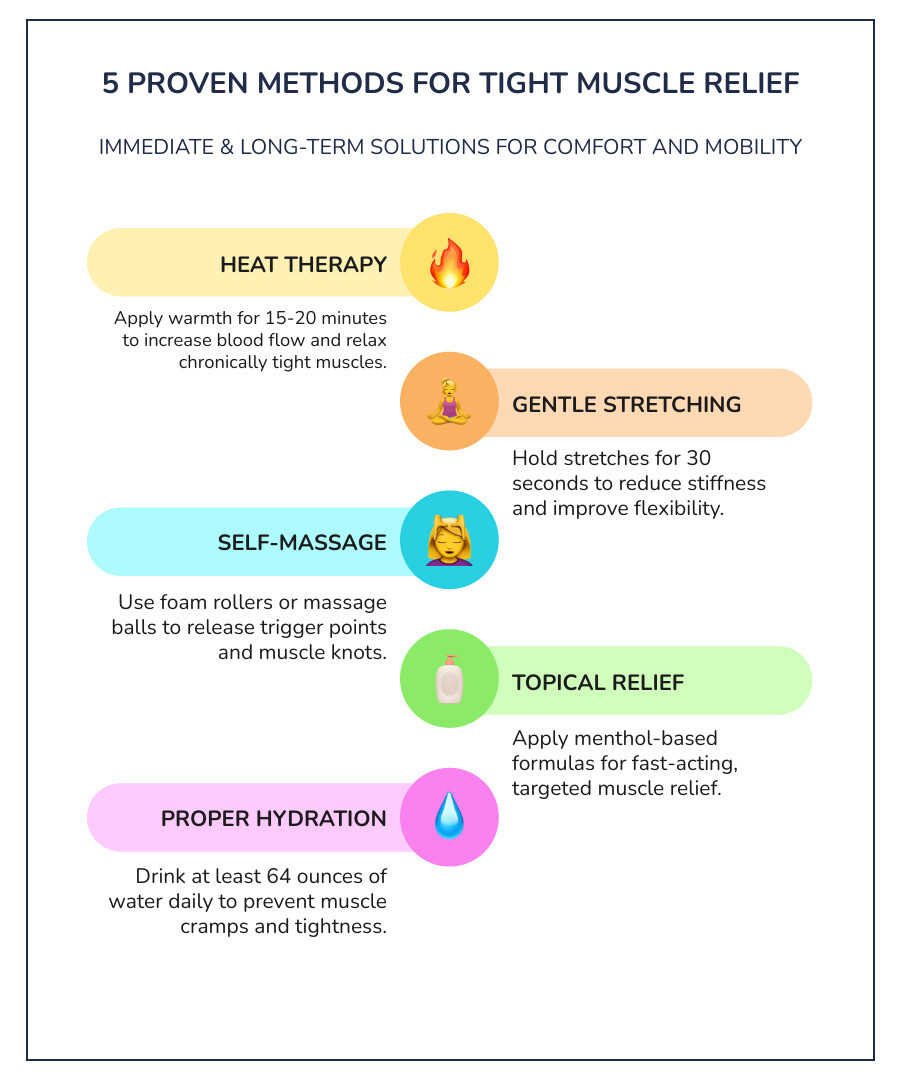
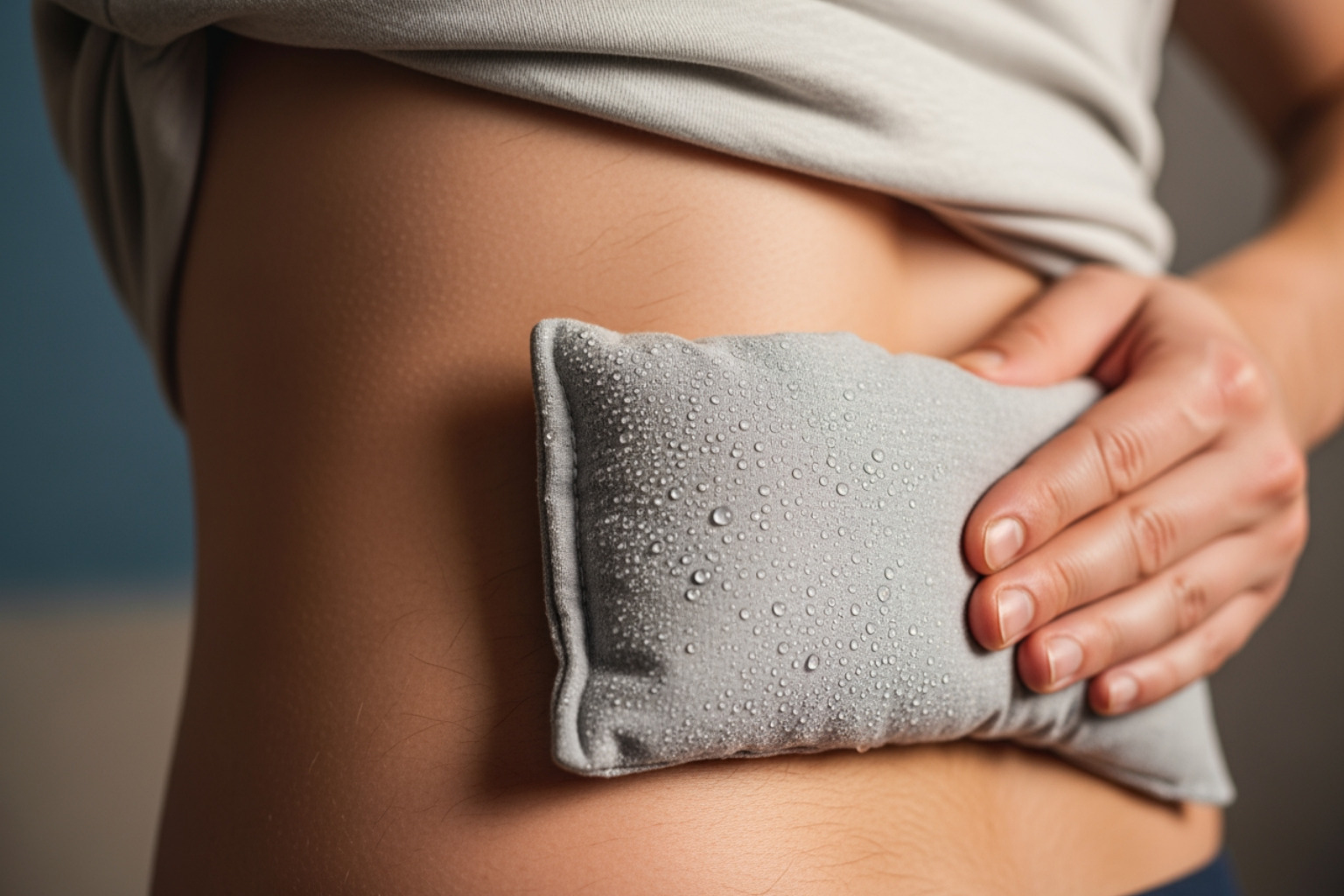
Heat therapy is best for chronic tightness and stiffness. Warmth increases blood flow, bringing oxygen to the area and helping muscles relax. A warm bath, heating pad, or compress for 15-20 minutes can work wonders. A 2022 analysis confirmed that heat application effectively reduces pain in musculoskeletal conditions.
Cold therapy is ideal for acute injuries (within the first 48 hours) involving swelling and inflammation. An ice pack wrapped in a cloth, applied for up to 20 minutes, constricts blood vessels to reduce swelling and numb pain. Health authorities like the NHS advise against applying ice directly to the skin.
The Power of Stretching and Gentle Movement
Sometimes the best remedy for tight muscles is gentle movement. Stretching lengthens shortened muscle fibers and improves range of motion. A 2023 review found that consistent stretching over 3-12 weeks significantly reduces muscle stiffness.
- Dynamic stretching (e.g., arm circles, leg swings) warms up muscles and is perfect before exercise.
- Static stretching (holding a stretch for 15-30 seconds) is best for after a workout when muscles are warm.
- Low-impact cardio like walking or swimming increases blood flow, helping muscles loosen up naturally. The saying "motion is lotion" holds true.
For common tight spots, try these simple stretches: gently tilt your head to each side for a neck stretch, pull one arm across your chest for a shoulder stretch, and lie on your back while pulling one knee to your chest for a lower back stretch. Hold each for 30 seconds.
Massage and Self-Myofascial Release
You can achieve significant relief with self-massage. A 2021 study showed that even a single 20-minute massage can reduce perceived muscle tension.
- Foam rollers are great for large muscle groups like your back, glutes, and thighs.
- Massage balls (like a lacrosse ball) are perfect for targeting smaller areas, such as between the shoulder blades.
When you find a tender knot, or trigger point, apply sustained pressure for 30-60 seconds until you feel it release. You can also use your hands to apply firm, slow strokes to accessible areas like your neck and shoulders. For more tips, see our guide on muscle pain.
Topical Relief for Tight Muscles
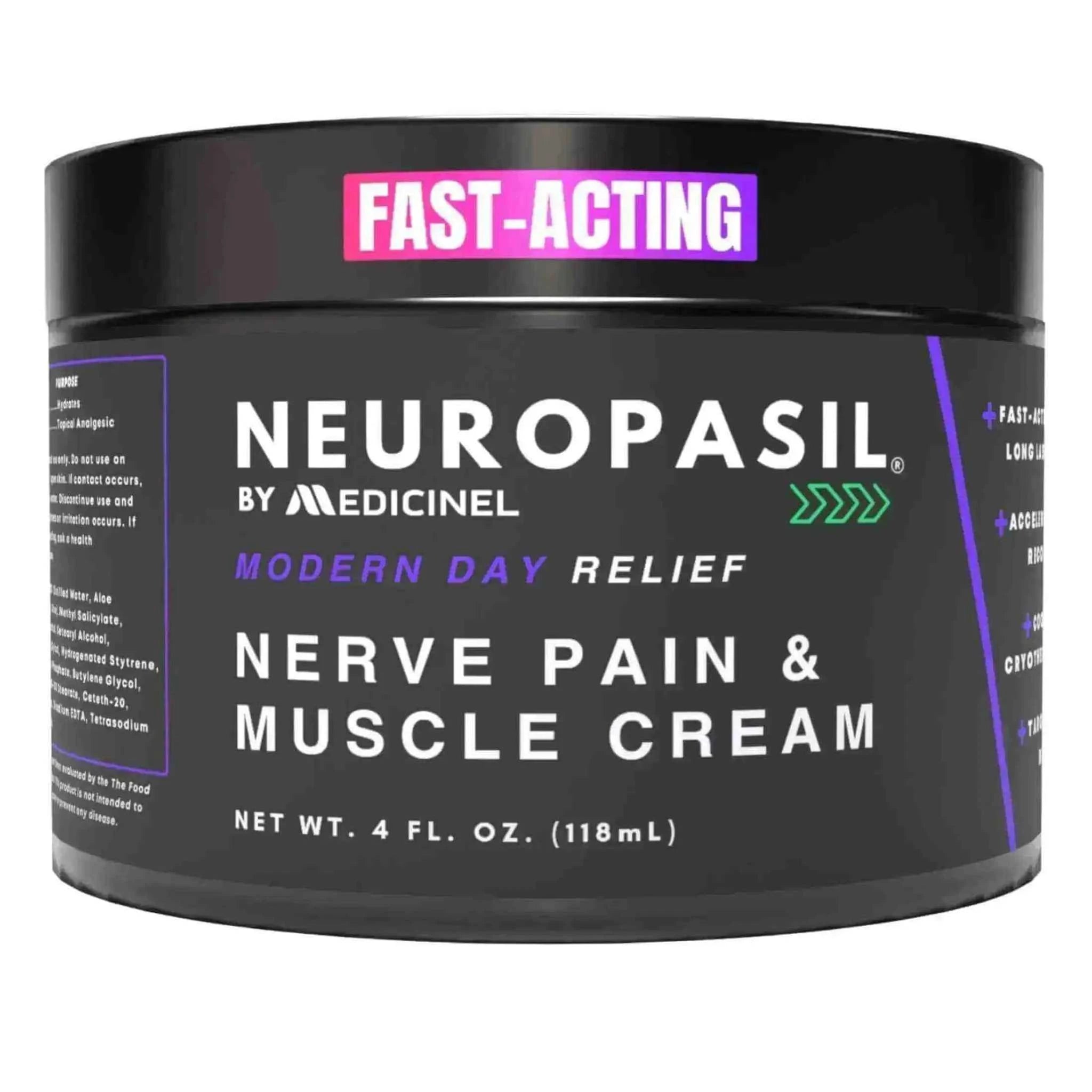
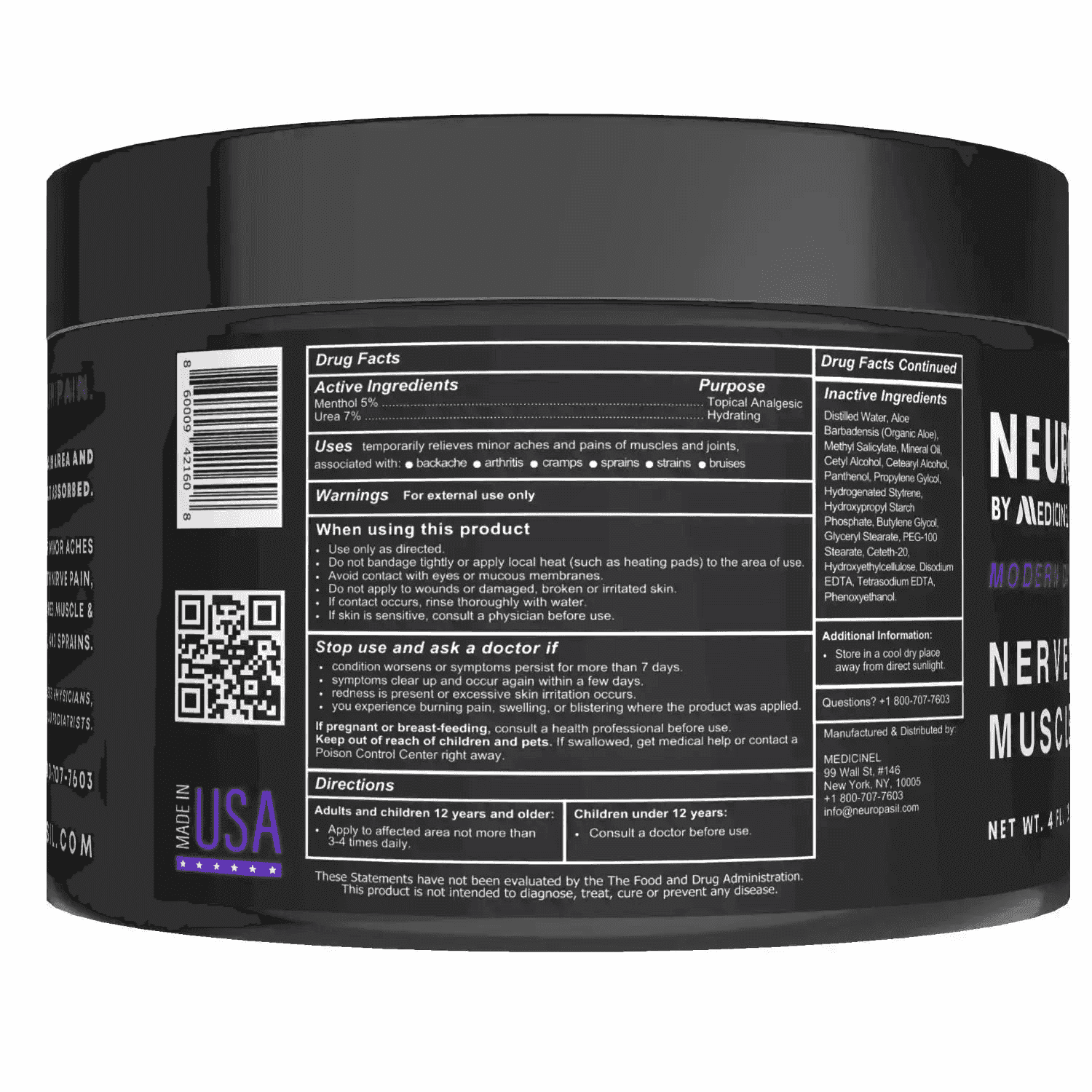
For fast, targeted relief, topical creams deliver active ingredients directly to the source of your pain. Neuropasil was designed for this kind of immediate tight muscle relief.
Our formula combines three powerful natural ingredients: Menthol provides a cooling-to-warming sensation that soothes pain and relaxes muscles, Aloe vera offers anti-inflammatory properties to calm irritated tissue, and Urea helps the other ingredients penetrate deeper for more effective relief.
Topical creams are incredibly versatile. Our customers use Neuropasil for everything from post-workout soreness to chronic pain associated with neuropathy, sciatica, fibromyalgia, and back pain. The benefit is direct application—relief right where you need it, without waiting for a pill to take effect. You can learn more about the science on our ingredients page.
Find fast-acting nerve and muscle pain relief with Neuropasil.
Long-Term Prevention: Lifestyle, Nutrition, and Stress
While quick fixes are helpful, preventing muscle tension in the first place is the ultimate goal. Small, consistent changes to your daily habits, diet, and stress management can keep your muscles loose and comfortable long-term.
The Role of Hydration and Nutrition
What you put into your body directly impacts your muscle health. Dehydration is a common cause of muscle cramps and tightness, so aim for at least 64 ounces of water daily, a common recommendation for general health.
Certain nutrients are also vital for tight muscle relief:
- Magnesium: This mineral acts as a natural muscle relaxant. Find it in leafy greens, nuts, seeds, and whole grains.
- Lean Proteins: Provide the building blocks for muscle repair, reducing the likelihood of chronic tension.
- Electrolytes: Potassium, sodium, and calcium work with magnesium to ensure proper muscle function.
- Vitamin D: A deficiency can contribute to muscle aches, as supported by clinical research.
For more on how specific ingredients can help, visit our page on key ingredients for relief.
Nutrients That May Help
While a balanced diet is key, certain nutrients are especially recognized for supporting muscle health:
- Magnesium: Research suggests it may benefit muscle performance and relaxation.
- Turmeric (Curcumin): This spice has powerful anti-inflammatory properties that can help reduce muscle soreness, according to scientific reviews.
- Omega-3 Fatty Acids: Found in fatty fish and flaxseeds, they help fight inflammation that contributes to chronic pain, as noted by health experts.
- Tart Cherry Juice: Studies show it can reduce muscle soreness and aid recovery after exercise.
Always consult a healthcare professional before starting any new supplement regimen to ensure it's appropriate for your individual health needs.
How Stress Management Helps Your Muscles
Stress is a major, often overlooked, cause of muscle tightness. When you're stressed, your body tenses up in a "fight or flight" response. Chronic stress leads to chronically tight muscles. The American Psychological Association explains that this constant tension is a common physical symptom of stress.
Breaking this cycle is essential for lasting tight muscle relief. Try these simple techniques:
- Progressive Muscle Relaxation (PMR): Systematically tense and then release different muscle groups to learn to let go of tension, a technique recommended by Mayo Clinic.
- Deep Breathing: Slow, deep breaths activate your body's relaxation response, signaling muscles to ease up.
- Meditation and Mindfulness: Calming your mind helps your body follow suit. Even five minutes a day can reduce overall stress and muscle tension.
When to Seek Professional Help for Tight Muscles
While most muscle tightness can be managed at home, some symptoms warrant professional attention. Persistent or severe pain can be your body's way of signaling a more serious issue.
Signs Your Muscle Tightness is a Serious Issue
It's time to see a doctor or physical therapist if you experience any of the following, based on guidance from health institutions like Mayo Clinic:
- Pain that lasts for more than a week despite home care.
- Numbness, tingling, or weakness in the affected area, which may suggest nerve involvement.
- Severe pain from a seemingly minor injury.
- Signs of infection, such as redness, swelling, or warmth around the muscle.
- A stiff neck accompanied by a high fever, which can be a medical emergency.
- Loss of bladder or bowel control, which requires immediate medical attention.
If you've recently started a new medication and developed muscle pain, discuss it with your doctor.
Professional Approaches for Chronic Tight Muscle Relief
When at-home methods aren't enough, professionals can provide lasting tight muscle relief.
- Physical Therapy: A physical therapist can diagnose the root cause of your tightness and create a personalized plan of exercises and manual therapy to restore function and prevent recurrence. A thorough evaluation and custom treatment plan are standard.
- Myofascial Release: This hands-on technique, performed by trained therapists, targets the fascia to release adhesions and improve mobility, a therapy described by Cleveland Clinic.
- Ergonomic Advice: A professional can assess your workspace and recommend adjustments to your chair, desk, or monitor to eliminate postural strain.
Topical creams are often recommended to complement professional treatments. Neuropasil, with its natural ingredients, provides fast-acting relief that can help you manage pain while you work on rehabilitation exercises. You can find fast-acting nerve and muscle pain relief to support your treatment journey.
Frequently Asked Questions about Muscle Relief
Here are quick answers to some of the most common questions about muscle tightness.
How long does normal muscle soreness last?
That achy feeling after a tough workout is called Delayed Onset Muscle Soreness (DOMS). According to the American College of Sports Medicine, it typically appears 12-48 hours after exercise and should gradually fade within 72 hours. If pain is severe or lasts longer than a week, it may indicate an injury.
Can I exercise with tight muscles?
Yes, but listen to your body. Gentle movement, or "active recovery," like walking or swimming, can increase blood flow and speed up healing. This concept of "motion is lotion" helps keep muscles flexible. However, if you're in significant pain, it's best to rest or stick to very gentle stretching. For more tips, read more on pain relief topics on our blog.
What is the fastest way to get relief from tight muscles at home?
A combination approach is often the most effective for fast relief:
- Heat: Apply a warm compress for 15-20 minutes to increase blood flow and relax the muscle.
- Stretch: Follow up with gentle stretching to lengthen the muscle fibers.
- Topical Relief: Apply Neuropasil Nerve & Muscle Pain Relief Cream directly to the area for fast, targeted soothing.
- Rest: Give the muscle a break from any strenuous activity.
This multi-step method addresses tightness from several angles, providing rapid relief at home.
Your Path to a Pain-Free Life
Living with muscle tightness doesn't have to be your reality. Lasting tight muscle relief comes from consistency. By combining daily habits like stretching and staying hydrated with effective at-home treatments like heat therapy and self-massage, you can manage and prevent muscle pain.
Listen to your body's early warning signs. When you feel stiffness or a slight twinge, address it early with the techniques in this guide to prevent minor discomfort from becoming a chronic issue. You have a toolkit of evidence-based strategies to take control of your muscle health.
Your journey to comfort is personal, and we're here to support you. When you need fast, targeted relief for post-workout soreness or chronic tension, a topical cream can make all the difference.
Explore our pain relief solutions to find products that can support your journey to comfort and mobility.
References
We've drawn from a range of credible scientific sources to ensure the information in this guide is both accurate and helpful for your journey toward tight muscle relief.
- American Association of Neurological Surgeons. (n.d.). Spasticity. https://www.aans.org/en/Patients/Neurosurgical-Conditions-and-Treatments/Spasticity
- American College of Sports Medicine. (2022). Delayed Onset Muscle Soreness (DOMS). https://www.acsm.org/all-blog-posts/acsm-blog/acsm-blog/2022/09/26/delayed-onset-muscle-soreness-doms
- American Psychological Association. (2023). Stress effects on the body. https://www.apa.org/topics/stress/body
- Centers for Disease Control and Prevention. (2023). Chronic Pain and High-impact Chronic Pain Among U.S. Adults, 2021. https://www.cdc.gov/nchs/products/databriefs/db457.htm
- Cleveland Clinic. (2022). Electrolyte Imbalance. https://my.clevelandclinic.org/health/diseases/24688-electrolyte-imbalance
- Cleveland Clinic. (2023). Myofascial Release. https://my.clevelandclinic.org/health/treatments/24569-myofascial-release
- Cleveland Clinic. (2024). Omega-3 Fatty Acids. https://health.clevelandclinic.org/omega-3-fatty-acids
- Clijsen R, et al. (2022). Local heat applications as a treatment of physical and functional parameters in acute and chronic musculoskeletal disorders or pain. Physical Therapy Reviews. https://www.sciencedirect.com/science/article/pii/S0003999321005050
- Gao, R., & Chilibeck, P. D. (2020). Effect of Tart Cherry Concentrate on Endurance Exercise Performance: A Meta-analysis. Journal of the American College of Nutrition. https://www.ncbi.nlm.nih.gov/pmc/articles/PMC7764128/
- Hewlings, S. J., & Kalman, D. S. (2017). Curcumin: A Review of Its Effects on Human Health. Foods. https://www.ncbi.nlm.nih.gov/pmc/articles/PMC5664031/
- Kara, M., et al. (2018). Vitamin D and the Athlete: Current Perspectives and New Challenges. Muscles, Ligaments and Tendons Journal. https://www.ncbi.nlm.nih.gov/pmc/articles/PMC6024514/
- Kett AR, et al. (2021). Sitting for too long, moving too little: Regular muscle contractions can reduce muscle stiffness during prolonged periods of chair-sitting. Journal of Applied Physiology. https://www.ncbi.nlm.nih.gov/pmc/articles/PMC8595117/
- Mayo Clinic. (n.d.). Muscle pain: When to see a doctor. https://www.mayoclinic.org/symptoms/muscle-pain/basics/when-to-see-doctor/sym-20050866
- Mayo Clinic. (n.d.). Muscle stiffness: Causes. https://www.mayoclinic.org/symptoms/muscle-stiffness/basics/causes/sym-20050686
- Mayo Clinic. (2022). Myofascial pain syndrome. https://www.mayoclinic.org/diseases-conditions/myofascial-pain-syndrome/symptoms-causes/syc-20375444
- Mayo Clinic. (2022). Water: How much should you drink every day?. https://www.mayoclinic.org/healthy-lifestyle/nutrition-and-healthy-eating/in-depth/water/art-20044256
- Mayo Clinic. (2023). Relaxation techniques: Try these steps to reduce stress. https://www.mayoclinic.org/healthy-lifestyle/stress-management/in-depth/relaxation-technique/art-20045368
- National Health Service. (2023). Sprains and strains. https://www.nhs.uk/conditions/sprains-and-strains/
- Physical therapy. (2020). In: StatPearls [Internet]. StatPearls Publishing. https://www.ncbi.nlm.nih.gov/books/NBK561514/
- Simão S, et al. (2021). Immediate effect of quick massage on muscle tension and pressure pain threshold. Brazilian Journal of Pain. https://www.scielo.br/j/brjp/a/4NXnJkmY8Mvhdjg6tgvGQtk/?lang=en
- Takeuchi K, et al. (2023). Long-term stretching decreased muscle stiffness: A systematic review and meta-analysis. Scandinavian Journal of Medicine & Science in Sports. https://onlinelibrary.wiley.com/doi/abs/10.1111/sms.14402
- Zhang Y, et al. (2017). Can magnesium improve exercise performance?. Nutrients. https://www.ncbi.nlm.nih.gov/pmc/articles/PMC5622706/