Why Finding the Best Balm for Pain Relief Matters for Your Active Life
The best balm for pain relief depends on your specific pain type, but here are the top choices:
Quick Answer: Top Pain Relief Balms by Need
| Pain Type | Best Choice | Key Ingredients |
|---|---|---|
| Muscle Soreness | Menthol & Camphor Balms | Menthol 10-16%, Camphor 11% |
| Acute Injuries | Cooling Menthol Gels | High Menthol (10%+) |
| Joint & Arthritis | Natural Anti-inflammatory Balms | Arnica, Aloe Vera, Urea |
| Nerve Pain | Lidocaine or Natural Relief Creams | Lidocaine 4%, Menthol, Aloe |
| Chronic Stiffness | Warming Balms | Camphor, Capsaicin |
When muscle aches and joint stiffness slow you down, the right topical solution is essential for staying active. Whether it's post-workout soreness, chronic joint discomfort, or nerve pain, the right balm can significantly reduce your pain, with research showing a reduction of up to 50 percent.
However, the pain relief aisle is overwhelming. With countless cooling gels, warming ointments, and medicated creams, it's hard to know what works. The key is simple: different pain types respond better to different ingredients.
This guide cuts through the confusion. We'll explain how pain relief balms work, what ingredients to look for, and which products perform best for specific conditions. You'll learn the difference between cooling and warming balms and how to use them safely.
About the Author: I'm Tony Enrico, and I've dedicated my career to helping people find relief from muscle, joint, and nerve pain. Through years of developing best balm for pain relief solutions, I've helped thousands of active adults get back to doing what they love by providing science-backed guidance for pain management.
Relevant articles related to best balm for pain relief:
Understanding Pain Relief Balms: How They Soothe Soreness
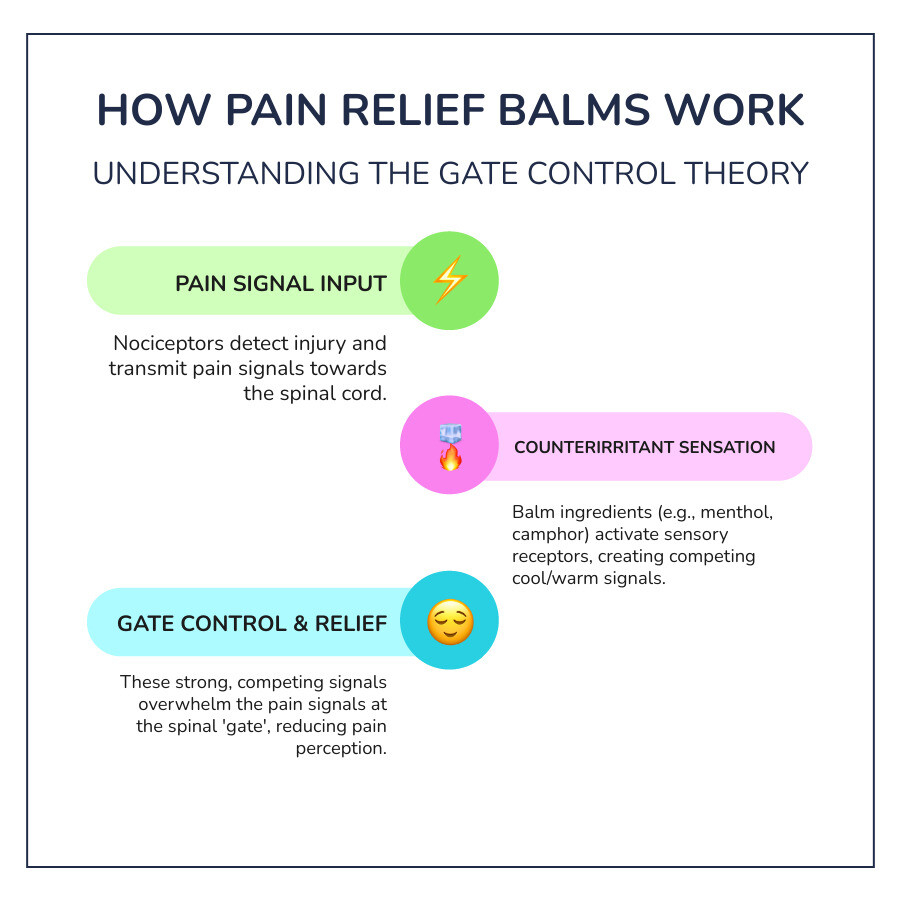
When your neck is stiff or your legs ache after a workout, you might reach for a pain relief balm. These topicals don't heal the underlying issue; instead, they cleverly trick your nervous system by interrupting pain signals on their way to your brain.
This process is explained by the Gate Control Theory of Pain. Imagine a "gate" in your spinal cord. When you apply a balm, the cooling or warming sensations stimulate nerve receptors in your skin. These new signals travel to the spinal cord and "close the gate" on the pain signals, preventing them from reaching your brain. Your brain focuses on the new sensation instead of the pain.
Pain relief balms work in three main ways:
- Counterirritants (menthol, camphor) create strong cooling or warming sensations that distract the brain from pain.
- Anesthetics (lidocaine) numb the area by blocking nerve endings from sending pain signals.
- Anti-inflammatories (arnica, CBD, diclofenac) reduce the inflammation that often causes pain.
Research confirms that topical analgesics can reduce pain by up to 50 percent, making them a valuable tool for localized aches without the systemic side effects of pills.

Key Ingredients and How They Work
Understanding the ingredients in your pain relief balm helps you make an informed choice. Here are the most common and effective components:
- Menthol: Derived from peppermint, this ingredient creates an immediate cooling sensation that numbs pain and reduces inflammation by constricting blood vessels (vasoconstriction). Effective concentrations typically range from 7% to 16%.
- Camphor: This warming agent increases blood flow to muscles, creating a soothing warmth that relaxes stiff tissues. It's particularly effective for chronic muscle pain. Many products combine it with menthol for a dual-action effect.
- Methyl Salicylate: Sourced from wintergreen oil, this is another warming counterirritant that provides topical pain relief for muscles and joints.
- Lidocaine: As an anesthetic, lidocaine blocks pain signals at the source by numbing nerve cells. Over-the-counter formulas with up to 4% lidocaine offer substantial numbing for nerve-related discomfort.
- Arnica: A traditional, natural anti-inflammatory that modern research supports for reducing bruising, pain, and swelling. One study found it as effective as ibuprofen for osteoarthritis pain.
- CBD (Cannabidiol): A non-psychoactive compound from the cannabis plant that interacts with the body's endocannabinoid system to regulate pain perception and reduce inflammation.
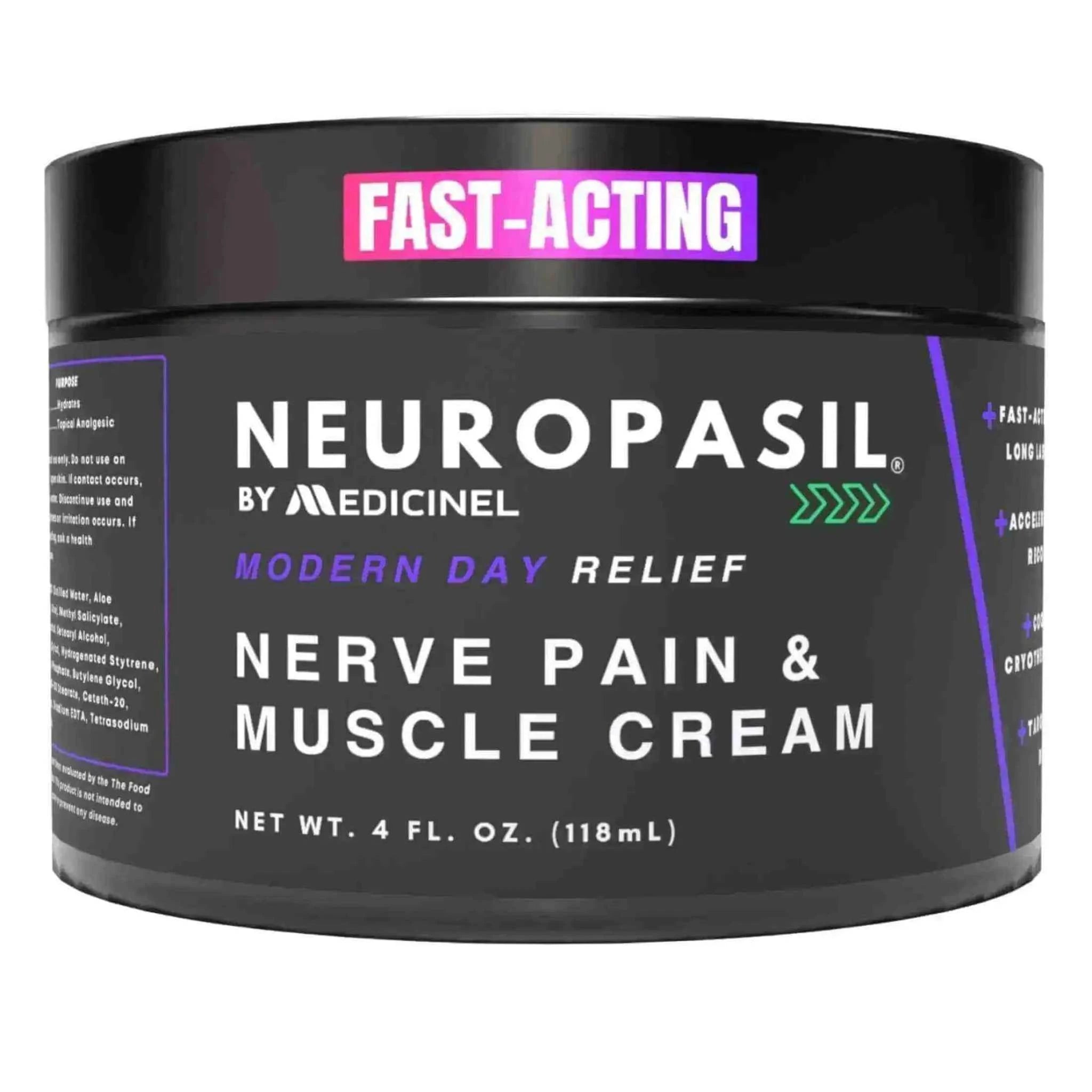
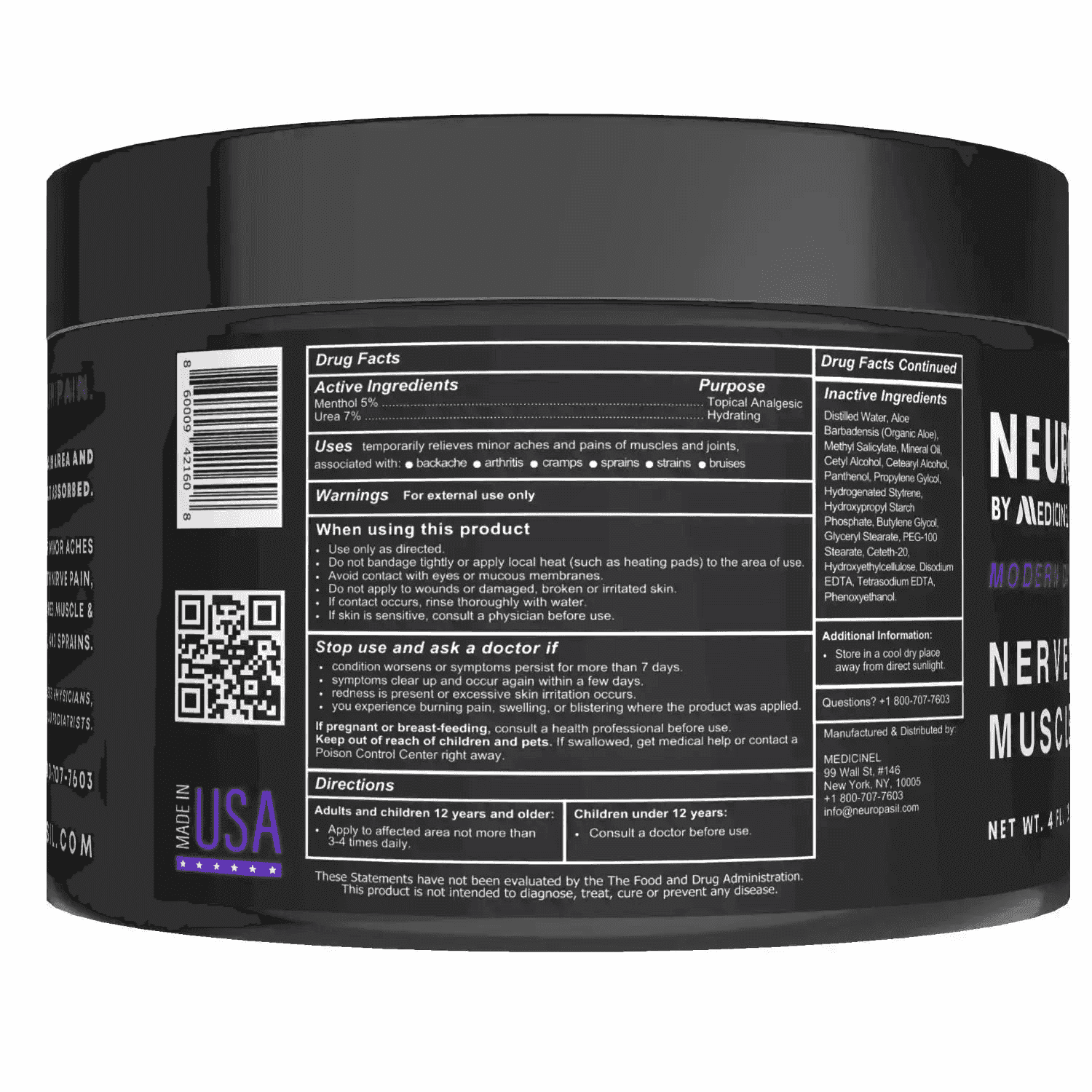
- Aloe Vera: More than a sunburn remedy, its anti-inflammatory and moisturizing properties make it a perfect base for pain relief creams. At Neuropasil, we use it to hydrate skin and improve the delivery of active ingredients.
- Urea: This skincare ingredient helps other active ingredients penetrate deeper into your tissues while keeping skin healthy, which is crucial for repeated applications.
For a deeper dive into how these ingredients work, see our A-Z Guide to Effective Pain Relief Balms.
Cooling vs. Warming Balms: Which Is for You?
Choosing between a cooling and warming balm depends on your type of pain.
Cooling balms, rich in menthol, are best for acute injuries like new sprains, strains, or post-workout soreness. The cold sensation distracts from pain and triggers vasoconstriction (narrowing of blood vessels), which reduces swelling and inflammation. If an injury is new, hot, or swollen, choose a cooling balm.
Warming balms, with ingredients like camphor or capsaicin, are ideal for chronic stiffness and aches. They cause vasodilation (widening of blood vessels), which increases circulation to relax tight muscles and reduce stiffness. Use a warming balm for old, stiff, or tight muscles, or even before a workout to loosen up.
Here's a simple rule, supported by sports medicine principles: if it's new, hot, or swollen, go cool. If it's old, stiff, or tight, go warm.
Some products, like our Neuropasil Muscle Relief Cream, offer a dual-action blend of menthol and camphor, providing an initial cooling sensation that transitions to gentle warmth.
The Best Balm for Pain Relief: Our Top Picks for 2024
Finding the best balm for pain relief means matching your pain to the right ingredients. The Neuropasil line offers targeted solutions for different types of discomfort, from post-workout soreness to chronic nerve pain. Just as you'd use the right tool for a job, using the right balm ensures the best results.

Best for Overall Muscle Soreness: Neuropasil Muscle Relief Cream
For general aches, strains, and sprains, our Neuropasil Muscle Relief Cream is the ideal all-around solution. It combines menthol and camphor to create a "contrast therapy" effect—an initial cooling sensation followed by gentle, relaxing warmth. This fast-acting, non-greasy formula is perfect for soothing tired muscles after a long day or strenuous activity.
Best for Acute Injuries & Post-Workout: Neuropasil Cooling Relief Balm
For fresh injuries and post-exercise soreness, you need fast, powerful cooling. Our Neuropasil Cooling Relief Balm uses a high concentration of menthol to deliver an intense cooling sensation that numbs the area and combats inflammation. The mess-free, quick-drying applicator is perfect for athletes needing rapid recovery without relying on oral pain medications.
Best for Joint & Arthritis Pain: Neuropasil Joint Comfort Balm
Joint pain from arthritis or repetitive strain requires specialized care. Our Neuropasil Joint Comfort Balm uses natural anti-inflammatories like Aloe Vera and Urea to provide gentle, sustained relief. Instead of an intense sensation, it soothes the area and moisturizes the skin. It works best with consistent use to manage chronic discomfort in knees, wrists, and hands.
Best Balm for Nerve-Related Pain: Neuropasil Nerve Pain Relief Cream
Nerve pain—burning, tingling, or shooting sensations—requires a targeted approach. Our Neuropasil Nerve Pain Relief Cream is specifically formulated for conditions like neuropathy, sciatica, and plantar fasciitis. It combines the soothing properties of Aloe Vera and Urea with the gentle distraction of menthol to calm the area and minimize discomfort. Its moisturizing formula is gentle on the sensitive skin often associated with nerve conditions.
To dive deeper into how each natural ingredient works, learn more about our natural ingredients.
Best Balm for Numbing Effect: Neuropasil Numbing Relief Cream
When you need to stop sharp, localized pain, you need a numbing agent. Our Neuropasil Numbing Relief Cream is a lidocaine-based anesthetic that directly blocks pain signals at the nerve endings. It's fragrance-free and provides effective numbing without any cooling or warming sensations, making it ideal for sensitive skin or when you need to desensitize a specific area.
How to Use Pain Relief Balms Safely and Effectively
Finding the best balm for pain relief is only half the battle; using it correctly is just as important for getting maximum relief while keeping your skin safe. Follow these best practices for effective pain management.
Application Best Practices
To get the most from your topical pain relief, follow these simple steps:
- Always do a patch test. Before using a new product, apply a small amount to your inner forearm and wait 24 hours to check for irritation, especially if you have sensitive skin.
- Apply to clean, dry skin. This ensures proper absorption of the active ingredients without interference from dirt or oils.
- Wash your hands thoroughly after application. Immediately wash with soap and water to avoid accidentally getting potent ingredients like menthol or capsaicin in your eyes, nose, or mouth.
- Never apply to broken or irritated skin. Avoid using balms on cuts, scrapes, rashes, or near mucous membranes to prevent stinging and potential infection.
- Follow the label instructions. Adhere to the recommended frequency and amount, as overuse can lead to skin irritation. Most balms suggest application 3-4 times per day.
For more details, see The Ultimate Guide to Best Pain Relief Balm.
Integrating Balms into Your Active Lifestyle
Pain relief balms can be a valuable part of your daily fitness routine, not just for emergencies.
- Pre-Workout: Applying a warming balm before a workout can help prepare stiff or tight muscles by increasing blood flow and flexibility.
- Post-Workout: A cooling balm is perfect for your recovery routine. The cooling sensation calms overworked muscles and reduces post-exercise aches, helping you bounce back faster.
- Chronic Pain Management: For ongoing joint, nerve, or muscle pain, consistent application (e.g., morning and night) can provide steady relief, helping you stay active and mobile.
Balms are one tool in your recovery toolkit. They work best alongside stretching, foam rolling, proper hydration, and rest. They help manage discomfort but are not a substitute for proper training and listening to your body. Learn more about the best products for muscle pain.
Frequently Asked Questions
Here are answers to some of the most common questions about using pain relief balms.
How long does it take for a pain relief balm to start working?
You'll feel the cooling or warming sensation of a counterirritant balm almost immediately, which starts distracting your brain from the pain. However, the full analgesic effect, where the active ingredients penetrate your tissues, typically takes 30 to 60 minutes to reach its peak. This can vary based on the product, your body, and the type of pain.
How often can I apply pain relief balm?
For safe use, most over-the-counter balms recommend application no more than 3 to 4 times daily. It is critical to always follow the specific instructions on your product's label, as formulations differ. Overuse does not provide more relief and can lead to skin irritation or other side effects. If you feel the need to apply it more often, your pain may require a different treatment approach.
Can I use a heating pad with a pain relief balm?
No. Combining a heating pad with a pain relief balm is strongly advised against, especially with warming balms. Applying external heat dramatically increases the absorption of the active ingredients and can lead to severe skin irritation, blistering, or even burns. All major topical analgesic brands include warnings against this practice. To use both therapies safely, use them separately. For example, apply a heating pad, let your skin cool completely, and then apply the balm, or wait several hours after applying the balm before using heat.
Conclusion: Finding Your Perfect Pain Relief Partner
Pain shouldn't dictate your life. As we've explored, the best balm for pain relief is the one that matches your specific needs—whether it's a cooling balm for acute injuries, a warming balm for chronic stiffness, or a specialized formula for joint or nerve pain.
Understanding ingredients like menthol, camphor, and lidocaine empowers you to choose wisely. There is no single "miracle" balm, which is why the Neuropasil line offers targeted solutions formulated with proven ingredients for different types of pain.
Our mission is to provide effective products that support your active lifestyle, help you recover faster, and allow you to move with comfort. When used correctly as part of a holistic approach that includes rest and stretching, the right balm can significantly improve your quality of life.
Your comfort matters. We're here to be your partner in wellness.
Explore our full range of pain relief solutions and find the Neuropasil balm that's right for you.
References
We believe in backing up what we say with solid science. Everything we've shared about the best balm for pain relief is grounded in credible research and clinical evidence. If you're the kind of person who likes to dig deeper into the data (and we love that!), here are the key sources we've referenced throughout this guide.
Cleveland Clinic. (2023). Should You Use Ice or Heat for Pain? Provides guidance on using cryotherapy (cooling) for acute injuries and thermotherapy (warming) for chronic stiffness. https://health.clevelandclinic.org/should-you-use-ice-or-heat-for-pain/
Derry S, et al. (2017). Topical analgesics for acute and chronic pain in adults ‐ an overview of Cochrane Reviews. This comprehensive review found that topical analgesics can reduce pain by up to 50 percent. https://www.cochranelibrary.com/cdsr/doi/10.1002/14651858.CD008609.pub2/full
Gallen, K. (2007). Topical Analgesics. American Family Physician. Discusses the proper use and application frequency for over-the-counter topical pain relievers. https://www.aafp.org/pubs/afp/issues/2007/0101/p39.html
Jorge LL, et al. (2011). Topical preparations for pain relief: Efficacy and patient adherence. This study explores the onset of action and real-world effectiveness of topical pain relief products. https://www.ncbi.nlm.nih.gov/pmc/articles/PMC3048583/
Moayedi, M., & Davis, K. D. (2013). Theories of pain: from specificity to gate control. Journal of Neurophysiology. A review of the neurological mechanisms of pain, including the Gate Control Theory. https://journals.physiology.org/doi/full/10.1152/jn.00457.2012
National Capital Poison Center. (2011). Pain Creams and Patches Can Be Poisonous. This article provides safety warnings for topical analgesics, including the danger of combining them with heating pads. https://www.poison.org/articles/2011-dec/pain-creams-and-patches-can-be-poisonous
Pan, M., et al. (2013). Urea: a comprehensive review of the clinical literature. Dermatology Online Journal. This review covers the various uses of urea in dermatology, including its role as a penetration enhancer in topical formulations. https://escholarship.org/uc/item/25p2z53x
U.S. Food and Drug Administration (FDA). Code of Federal Regulations Title 21, Part 348: External Analgesic Drug Products for Over-the-Counter Human Use. This document outlines the approved ingredients and concentrations for OTC topical analgesics. https://www.accessdata.fda.gov/scripts/cdrh/cfdocs/cfcfr/CFRSearch.cfm?CFRPart=348
Weiland, L., et al. (2021). Cannabidiol for the treatment of chronic pain. This research examined CBD's potential for managing chronic pain through its interaction with the endocannabinoid system. https://pmc.ncbi.nlm.nih.gov/articles/PMC8487862/
Widrig, R., et al. (2007). Choosing between NSAID and arnica for topical treatment of hand osteoarthritis in a randomised, double-blind study. Rheumatology International. This study found topical arnica gel to be as effective as topical ibuprofen for hand osteoarthritis. https://pubmed.ncbi.nlm.nih.gov/17357973/