Why Hot Cream for Pain Matters for Athletes and Active Adults
Hot cream for pain is a topical analgesic that uses warming sensations to temporarily relieve muscle and joint discomfort. These creams work by creating a sensation that distracts your brain from pain signals, increasing blood flow, and in some cases, blocking pain transmission at the nerve level.
Quick Answer: Best Hot Creams by Pain Type
| Pain Type | Best Active Ingredient | Top Product Example |
|---|---|---|
| Muscle strains & sprains | Menthol + Camphor | Icy Hot Advanced Cream (16% menthol, 11% camphor) |
| Arthritis & chronic joint pain | Capsaicin | Capzasin-HP (0.1% capsaicin) |
| Localized nerve pain | Lidocaine | Tylenol Precise Warming Cream (4% lidocaine) |
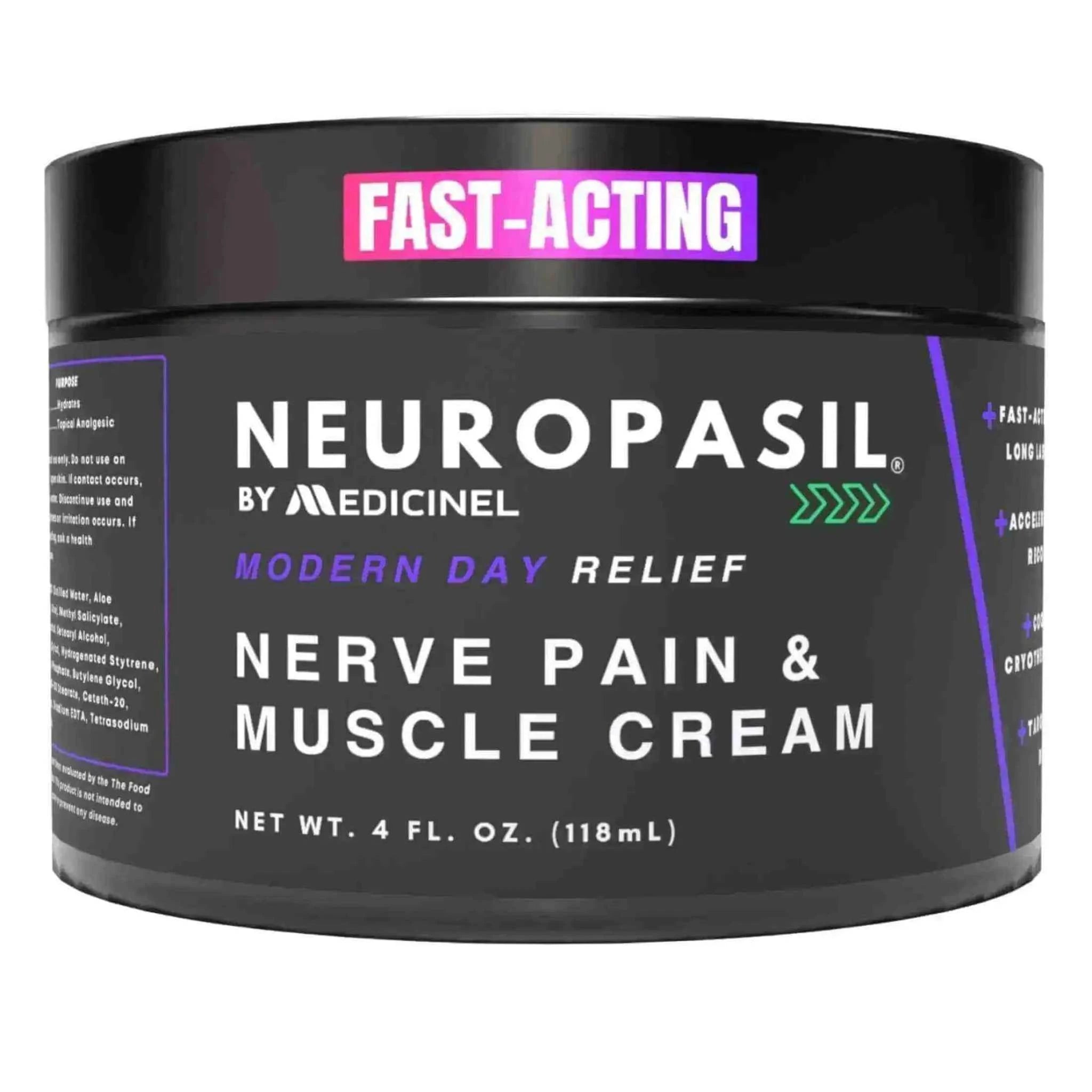
| Nerve pain + sensitive skin | Menthol + natural moisturizers | Neuropasil Pain Relief Cream |
When you're dealing with post-workout soreness, arthritis stiffness, or nerve discomfort, finding the right relief matters. Not all hot creams are the same. Some use capsaicin for true heat that blocks pain signals over time, while others use menthol and camphor for immediate cooling-to-warming relief. The concentration of active ingredients varies, making some formulas significantly stronger than others. Understanding these differences helps you choose the right product for your specific pain.
I'm Tony Enrico, founder of Neuropasil. My mission is to help one million people find real relief from nerve and muscle pain by 2028, so you can keep doing what you love without pain holding you back.
How Hot Creams Work: The Science of Sensation and Relief
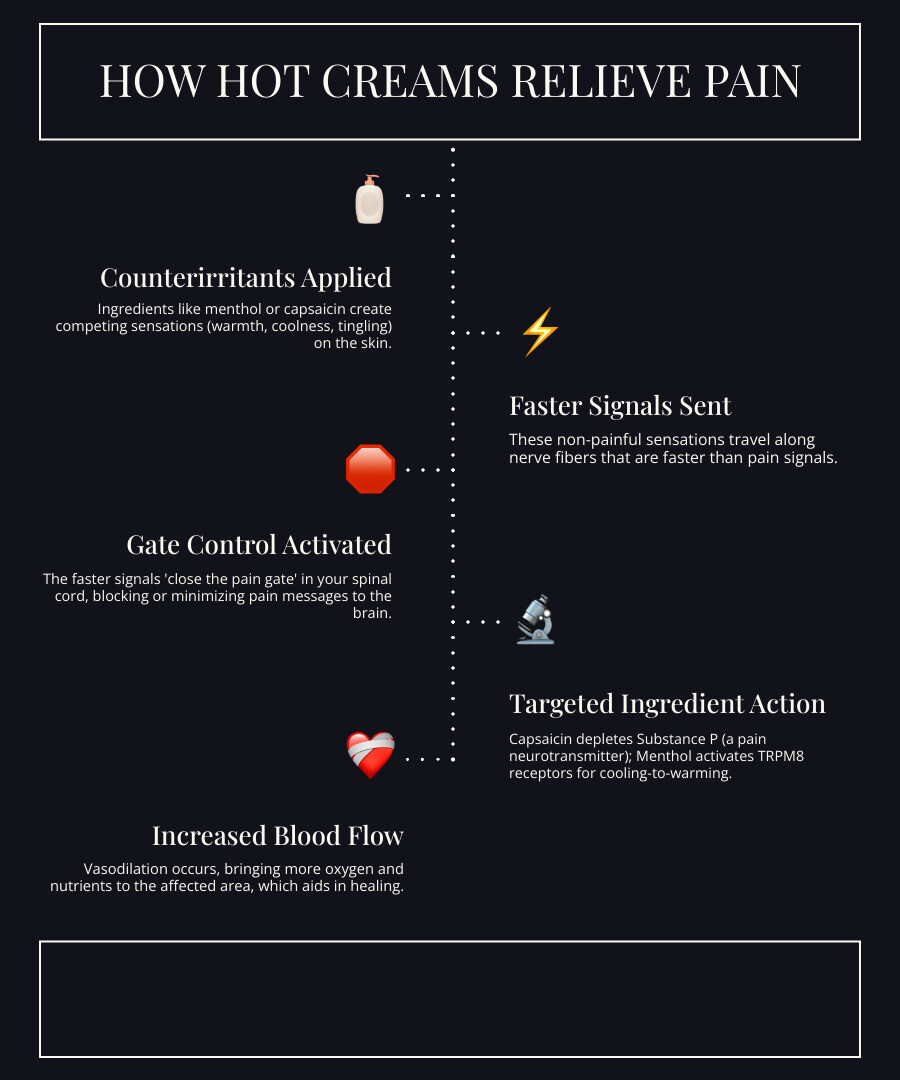
When you apply a hot cream for pain, you're experiencing the science of counterirritants. These ingredients create a sensation like warmth or coolness that distracts your brain from underlying pain. This is explained by the Gate Control Theory of Pain, which suggests that these new sensations travel on faster nerve fibers than pain signals. These faster signals can "close a gate" in the spinal cord, blocking or minimizing pain messages from reaching your brain.
Some ingredients also interfere directly with pain signals. Capsaicin, from chili peppers, depletes Substance P, a neurotransmitter that sends pain messages. Menthol activates specific cold receptors (TRPM8) in your skin, creating a cooling sensation that often transitions to a warming effect as blood flow increases. The American Chemical Society confirms that menthol is the primary ligand for these cold-sensing receptors.
The warming sensation also causes vasodilation (increased blood flow). This brings more oxygen and nutrients to the tissues, which aids in muscle relaxation and the natural healing process.
The Main Active Ingredients
When we look at the labels of our favorite hot cream for pain products, we typically find a few superstar ingredients:
- Capsaicin: Found in chili peppers, this creates a genuine warming sensation and depletes Substance P, a pain signal transmitter. It's effective for chronic pain but may cause an initial burning feeling. The Cleveland Clinic explains the science of capsaicin for pain relief.
- Menthol: Known for its minty scent, menthol provides an initial cooling sensation by activating cold receptors, which then transitions to a warming feeling as it increases blood flow. Concentrations can be as high as 16% in some products.
- Camphor: Similar to menthol, camphor is a counterirritant that produces both cooling and warming sensations. It's often paired with menthol to improve the analgesic effect, with concentrations reaching up to 11%.
- Methyl Salicylate: Related to aspirin, this ingredient causes warmth and redness by dilating blood vessels. It's often combined with menthol in high concentrations.
- Lidocaine: This is a local anesthetic that numbs nerves to block pain signals. Some warming creams combine lidocaine (e.g., 4%) with other ingredients for a dual numbing and warming effect, ideal for those sensitive to stronger counterirritants.
Hot vs. Cold Creams: What's the Difference?
Understanding the distinction between hot and cold therapy is key to choosing the right product.
- Hot Creams: Using ingredients like capsaicin or methyl salicylate, these increase blood flow and relax muscles. They are best for chronic aches, muscle tension, and stiffness.
- Cooling Creams: With ingredients like menthol, these constrict blood vessels to reduce swelling and numb the area. They are recommended for acute injuries like sprains, bruises, and inflammation.
- Contrast Therapy: Some products offer a cooling-to-warming effect, providing immediate distraction followed by deeper soothing. This dual action is highly effective for many types of pain.
Capsaicin vs. Menthol/Camphor
Capsaicin and menthol/camphor create heat in different ways, which is a crucial distinction when choosing a hot cream for pain.
- Capsaicin: Creates a "true" heat by activating heat receptors (TRPV1). Its main benefit is depleting Substance P over time, which reduces the intensity of pain signals. This makes it ideal for chronic pain like arthritis, though it requires consistent use for full effect.
- Menthol/Camphor: These counterirritants provide a cooling-to-warming sensation. Menthol activates cold receptors (TRPM8), creating an "icy" feeling that transitions to warmth as blood flow increases. As noted by physical therapist Dr. Brad Whitley, PT, DPT, in an interview with Men's Health, these topicals interfere with pain signals to minimize the perception of soreness, rather than aiding physiological muscle recovery.
Choosing the Right Hot Cream for Your Pain
Selecting the ideal hot cream for pain means matching the product to your specific discomfort. Consider whether your pain is acute (a sudden strain) or chronic (persistent arthritis).
- Muscle Soreness and Strains: For aches from physical activity, counterirritants like menthol and camphor provide immediate sensory relief and help relax tight muscles.
- Joint Stiffness and Arthritis Pain: Chronic conditions often benefit from capsaicin, which offers sustained relief by depleting pain-transmitting chemicals over time.
- Nerve Pain Considerations: For neuropathy or sciatica, lidocaine's numbing properties can be effective. Menthol-based creams with nourishing ingredients like aloe and urea also provide soothing relief without harshness.
For active individuals, a non-greasy, fast-absorbing formula is key. Our Athlete's Checklist offers more guidance for finding the right fit.
Best hot cream for pain from muscle strains and overexertion
For Delayed Onset Muscle Soreness (DOMS) or acute strains, a hot cream for pain with menthol and camphor is an excellent choice. Their cooling-to-warming effect provides a powerful distraction from deep muscle aches. The increased blood flow also helps relax overworked tissues. While these creams make you feel better, it's important to note they manage discomfort rather than speed up the physiological repair process, as pointed out by experts like Dr. Brad Whitley. They are a valuable tool for helping you rest and recover more comfortably.
Using hot cream for pain related to chronic conditions like arthritis
For chronic pain from conditions like arthritis, hot cream for pain is a valuable management tool. Capsaicin-based creams are often recommended because they gradually deplete Substance P, a chemical that transmits pain signals. This provides a deeper, more sustained form of relief. For best results, consistency is key, as it can take up to two weeks of regular use to feel the full effect. Always consult your doctor before starting long-term use for a chronic condition to ensure it fits into your overall treatment plan.
What to Look for in a Formula
Beyond the main ingredients, consider these factors when choosing a hot cream for pain:
- Active Ingredient Concentration: Higher percentages of menthol, capsaicin, or lidocaine generally mean a stronger effect. Match the intensity to your pain level.
- Formula and Absorption: Look for a non-greasy formula that absorbs quickly to avoid a sticky residue on skin or clothing.
- Scent: Menthol and camphor have strong scents. If you're sensitive, look for fragrance-free options, which often use lidocaine instead.
- Application Type: Creams are versatile, but roll-ons offer mess-free application, and sprays are good for hard-to-reach areas.
Top Creams for Pain Relief in 2024
Navigating the many hot cream for pain options can be overwhelming. To simplify your choice, we've compiled a list of leading products categorized by their active ingredients and the sensation they deliver.

| Product Name | Active Ingredient(s) | Primary Sensation | Best For | Pros | Cons |
|---|---|---|---|---|---|
| Icy Hot Advanced Cream | Menthol 16%, Camphor 11% | Cooling then Warming | Muscle strains, sprains, backache, arthritis, bruises | Maximum strength OTC, fast-acting contrast therapy, non-greasy | Strong menthol scent, not for sensitive skin |
| Capzasin-HP Arthritis Pain Relief Creme | Capsaicin 0.1% | Intense, True Heat | Arthritis, chronic joint pain, nerve pain | Effectively depletes Substance P for sustained relief | Can cause significant burning, requires consistent use (up to 2 weeks for full effect) |
| Tylenol Precise Warming Pain Relieving Cream | Lidocaine 4% | Gentle Warming, Numbing | Localized pain, small joints, nerve sensitivity | Fragrance-free, numbs nerves, good for menthol/camphor sensitivity | Doesn't provide intense heat, primarily numbing |
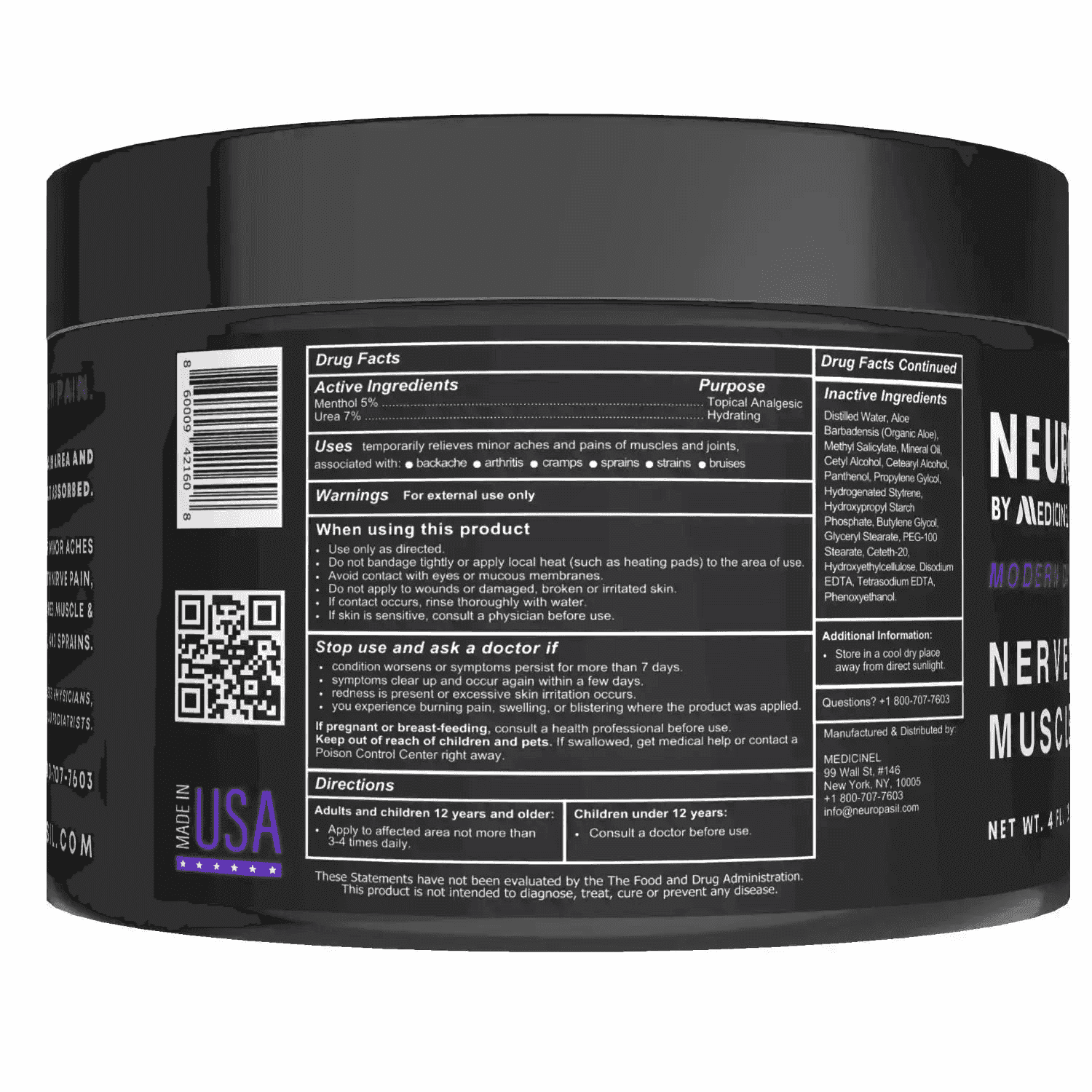
| Neuropasil Pain Relief Cream | Menthol, Aloe, Urea | Soothing Cool-to-Warm | Nerve pain, muscle soreness, sensitive skin, neuropathy | Natural ingredients, moisturizing, non-greasy, gentle | Milder sensation than high-concentration chemical formulas |
This section reviews products based on common active ingredients to help you choose.
For "Icy to Hot" Contrast Relief: Icy Hot Advanced Cream
For the classic "icy to hot" sensation to tackle muscle strains and backache, Icy Hot Advanced Cream is a top contender.
- Active Ingredients: Menthol 16%, Camphor 11%. These are maximum over-the-counter strengths.
- Best for: Muscle strains, sprains, arthritis pain, and bruises.
- Sensation: It delivers an initial cooling blast to dull pain, followed by a deep warmth that relaxes muscles.
- Pros: It's fast-acting, offers potent contrast therapy, and has a non-greasy formula.
- Cons: The strong menthol scent is very noticeable, and its intensity may be too much for sensitive skin.
For Intense, Sustained Heat: Capzasin-HP Arthritis Pain Relief Creme
For persistent, chronic pain from arthritis, a hot cream for pain with capsaicin can offer a different kind of relief.
- Active Ingredients: Capsaicin 0.1%.
- Best for: Arthritis, chronic joint pain, and some nerve pain.
- Sensation: This cream provides a pure, intense heat by triggering actual heat receptors in the skin.
- Pros: It works by blocking pain signals over time, offering a more fundamental approach for chronic conditions.
- Cons: It can cause a significant burning sensation initially. Full pain-blocking effects require consistent use for up to two weeks.
For Numbing Warmth: Tylenol Precise Warming Pain Relieving Cream
For localized pain or for those who prefer a gentler approach without a strong scent, a hot cream for pain with lidocaine is an excellent choice.
- Active Ingredients: Lidocaine 4%. This topical anesthetic numbs nerves to block pain signals.
- Best for: Localized pain in small joints (knees, elbows) and for those sensitive to menthol or capsaicin.
- Sensation: A gentle warming sensation combined with effective numbing.
- Pros: It is fragrance-free, non-greasy, and fast-absorbing. The numbing action is direct and effective for surface-level pain.
- Cons: It does not provide the intense heat some users seek, and the numbing effect is temporary.
For Natural, Soothing Relief: Neuropasil Pain Relief Cream
For those seeking a natural, gentle solution for nerve pain or sensitive skin, Neuropasil Pain Relief Cream stands out. We formulated this hot cream for pain to provide targeted, soothing relief.
- Active Ingredients: Menthol, Aloe, Urea. Our blend uses menthol for its cool-to-warm sensation, plus aloe and urea for their skin-nourishing properties.
- Best for: Nerve pain (neuropathy, sciatica), muscle soreness, and individuals with sensitive skin.
- Sensation: Neuropasil delivers a soothing cool-to-warm sensation that is effective without being overwhelming.
- Pros: Our formula is non-greasy, absorbs quickly, and is built on natural ingredients that moisturize the skin. It provides fast, soothing relief for a wide range of nerve and muscle discomforts.
- Cons: The sensation is milder compared to high-concentration chemical formulas.
To dig deeper into our approach, you can learn more about Neuropasil's formula.
Safety First: How to Use Hot Creams Effectively and Without Risk
While hot cream for pain offers great relief, using it safely is crucial. Always read and follow the label directions precisely—this is a critical step for your safety.
Over-application does not mean more relief; it increases the risk of side effects like skin irritation, redness, or a burning sensation. Most creams recommend application 3-4 times daily. If you experience a severe rash, itching, or hives, discontinue use and consult a doctor. The Mayo Clinic offers comprehensive precautions for using topical pain relievers.
Proper Application for Maximum Safety
Applying your hot cream for pain correctly is key to its effectiveness and your safety.
- Wash Hands Before and After: Use soap and water before and immediately after application to avoid spreading the cream to sensitive areas like your eyes.
- Apply a Thin Layer: A little goes a long way. Gently massage a thin layer into the affected area until absorbed.
- Do Not Use on Broken or Irritated Skin: Never apply to open wounds, cuts, or damaged skin.
- Avoid Eyes and Mucous Membranes: If accidental contact occurs, rinse the area thoroughly with cool water.
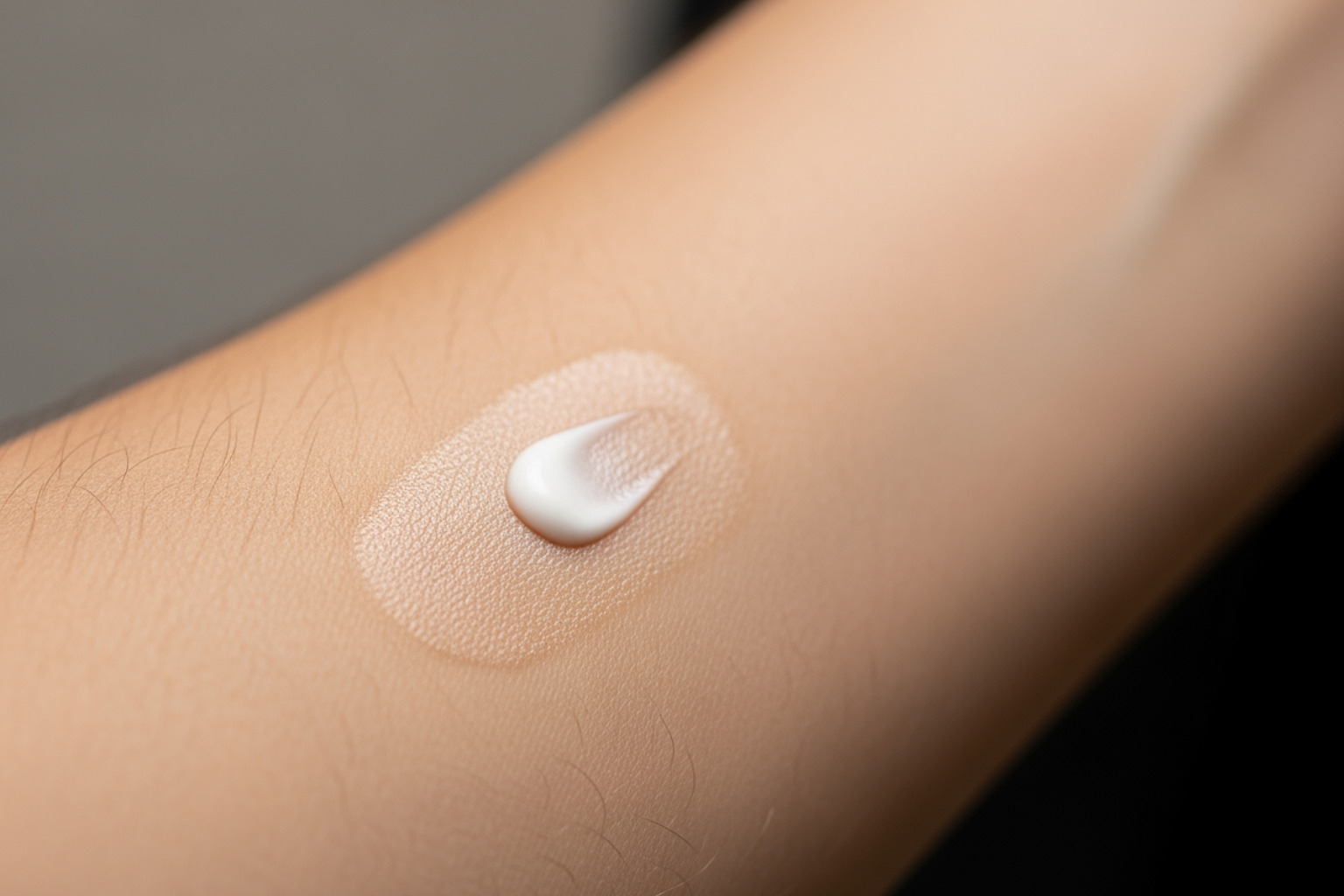
- The Importance of a Patch Test: Before using a new cream, apply a small amount to your forearm and wait at least an hour (or up to 24) to check for adverse reactions.
Critical Precautions and Who Should Be Cautious
Certain situations require extra caution when using hot cream for pain.
- Never Use with a Heating Pad: Combining a hot cream with an external heat source can cause severe burns or skin damage, a risk highlighted in a warning from the U.S. Food and Drug Administration (FDA).
- Avoid Tight Bandages: Do not tightly wrap the area after application, as this can trap heat and cause irritation.
- Pregnant or Breastfeeding Women: Consult your healthcare provider before using any hot cream.
- Use in Children: Ask a doctor before using these products on children under 12.
- Individuals with Sensitive Skin: If you have sensitive skin, opt for gentler formulas and always perform a patch test.
Hot creams are for external use only. If swallowed, seek medical help or contact a Poison Control Center immediately.
Frequently Asked Questions about Hot Cream for Pain
We hear a lot of questions about how to best use hot cream for pain. Here are some of the most common ones we address:
Can I use a heating pad with hot cream?
No, never use an external heat source like a heating pad with a hot cream. This can cause excessive skin irritation and, in rare cases, serious burns, as the cream's ingredients already generate a heating sensation. The combined effect can be dangerously intense and lead to skin damage.
How long does it take for hot cream to work?
Most creams with menthol or camphor, like Icy Hot, begin working within minutes, providing that immediate sensory distraction. Creams with capsaicin may provide an immediate warming sensation, but their full pain-blocking effect, which involves depleting Substance P, can take up to two weeks of regular, consistent use to be fully realized.
Can I use hot cream every day for chronic pain?
Many hot creams can be used daily for chronic conditions like arthritis, typically 3-4 times per day as directed on the label. However, it's crucial to follow the product's specific directions and consult your doctor for long-term pain management to ensure it's a safe and appropriate part of your overall treatment plan. They can advise on potential interactions or prolonged use considerations.
Conclusion
Finding the right hot cream for pain can be a game-changer for managing discomfort from workouts, arthritis, or nerve pain. The best choice depends on your specific pain type and preference—whether you need the sustained heat of capsaicin, the contrast therapy of menthol and camphor, or the gentle, numbing warmth of lidocaine.
While a powerful tool, hot creams must be used responsibly. Always follow application instructions, heed safety precautions, and consult a healthcare professional for guidance on chronic conditions.
For a natural, effective option for both muscle and nerve pain, explore our solutions at Neuropasil. We are committed to helping you find real relief so you can live your life to the fullest. Find the best pain relief cream for your needs and learn how our formula can provide soothing, non-greasy relief.
References
American Chemical Society. (n.d.). Menthol. Molecule of the Week. Retrieved from https://www.acs.org/molecule-of-the-week/archive/m/menthol.html Cleveland Clinic. (n.d.). Capsaicin Cream, Lotion, or Solution. Retrieved from https://my.clevelandclinic.org/health/drugs/18080-capsaicin-cream-lotion-or-solution Johns Hopkins Medicine. (n.d.). Pain Management. Retrieved from https://www.hopkinsmedicine.org/health/conditions-and-diseases/pain-management Mayo Clinic. (2024). Capsaicin (Topical Route) Precautions. Retrieved from https://www.mayoclinic.org/drugs-supplements/capsaicin-topical-route/precautions/drg-20062562 Men's Health. (2023, April 10). The 7 Best Muscle Pain Relief Products, According to Experts. Retrieved from https://www.menshealth.com/health/g43504931/best-muscle-pain-relief-products/ U.S. Food and Drug Administration (FDA). (2012, September 13). FDA warns about rare cases of serious burns with the use of over-the-counter topical muscle and joint pain relievers. Retrieved from https://www.fda.gov/drugs/drug-safety-and-availability/fda-warns-about-rare-cases-serious-burns-site-application-over-counter-topical-muscle-and-joint