Why Your Traps Are Crying Out for Help
If you've ever caught yourself hunching over your phone, felt your shoulders creeping up toward your ears during a stressful day, or woken up with a stiff neck that just won't quit, you already know what a trapezius stretch can do for you. These simple, targeted movements can release the tension that builds up in those large, overworked muscles running from your neck down to your mid-back.
Quick relief: Essential trapezius stretches you can do right now:
- Ear-to-Shoulder Stretch - Gently tilt your head to one side, hold 20-30 seconds, repeat on both sides
- Thread the Needle - From all fours, reach one arm under your body, rest shoulder on floor, hold 20-30 seconds
- Wall Angels - Stand against a wall, slowly raise and lower arms while squeezing shoulder blades, 10-15 reps
- Cat-Cow Pose - On hands and knees, alternate between arching and rounding your spine, 10-15 reps
Your trapezius muscles work overtime every single day. They stabilize your shoulder blades when you lift your arms, support your neck when you tilt your head, and keep your upper body aligned when you're sitting or standing. When they get tight—whether from hours at a computer, carrying heavy bags, or the physical response to stress—they can cause neck pain, shoulder tension, headaches, and limited mobility.
The good news? A consistent trapezius stretch routine can reverse that tightness, restore your range of motion, and help you move through your day without that nagging upper back discomfort.
I'm Tony Enrico, founder of Neuropasil, and I've spent years helping people find relief from muscle pain and nerve discomfort through both targeted movement and effective topical solutions. Through my work with athletes, office workers, and anyone dealing with persistent muscle tension, I've seen how the right trapezius stretch routine can transform daily comfort and performance.
Know your trapezius stretch terms:
Understanding Your Trapezius Muscles and Why They Hurt
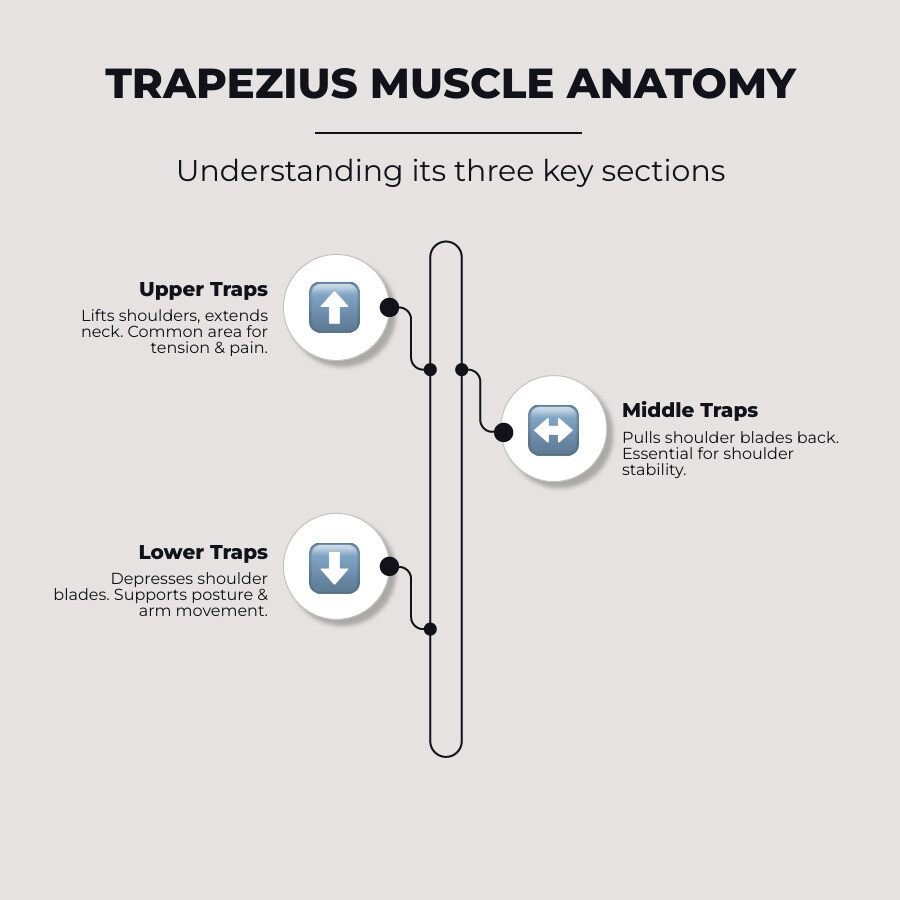
Let's dive a little deeper into these powerful muscles. The trapezius, often simply called the "traps," is a truly massive muscle that covers a significant portion of your upper back. It starts broadly at the base of your skull, stretches across your shoulders, and extends down to the middle of your back, forming a distinctive trapezoid shape. This isn't just one big sheet of muscle; it's intricately divided into three main sections:
- Upper Trapezius: Located at the top, these fibers help you shrug your shoulders (elevating them), rotate your shoulder blades, lift your arms, and extend and rotate your neck. These are the muscles that often feel tightest, especially when we're stressed or spending too much time at a keyboard.
- Middle Trapezius: These fibers run horizontally across your upper back, between your shoulder blades. Their primary role is to pull your shoulder blades together (retraction) and help stabilize them during arm movements.
- Lower Trapezius: Found in the lower portion of your upper back, these fibers pull your shoulder blades downward (depression) and help with their rotation, contributing to overall good posture.
Together, these sections work in remarkable coordination to move and stabilize your shoulder blades, support your arms, and allow for a wide range of neck movements, including tilting, turning, and rotating. They also play a crucial role in maintaining proper alignment of your spine, especially in the upper back and neck regions.
Why Your Traps Might Be Complaining
Given how much work our trapezius muscles do, it's no surprise they can become tight, tense, or even painful. Here are some of the most common culprits we encounter:
- Poor Posture, the Modern Menace: In our digital age, "tech neck" is a real thing. Hunching over laptops, smartphones, or even steering wheels for extended periods puts immense strain on your upper trapezius. This prolonged forward head posture and rounded shoulders force your neck and upper back muscles to work harder just to hold your head up, leading to chronic tightness. The middle and lower traps can also weaken from lack of engagement, further exacerbating imbalances.
- The Link Between Stress and Muscle Tension: Ever heard the phrase, "carrying the weight of the world on your shoulders"? It's more than just an expression. Research shows that trapezius muscle activity increases during stressful situations. When we're stressed, our shoulders tend to hike up as a protective, guarding posture. This constant engagement can cause tightness not only in the neck but also the chest, impairing shoulder motion and even making it difficult to take a deep, diaphragmatic breath. This study digs into how psychophysiological stress can lead to muscle tension and pain.
- Overuse and Repetitive Strain: Whether it's lifting heavy objects incorrectly, painting a ceiling, carrying a heavy bag on one shoulder, or engaging in certain sports, repetitive movements can overwork and strain your trapezius muscles. If your lower or middle traps are weak, other muscles, particularly the upper traps, compensate, leading to imbalances and pain.
- Injury or Trauma: Accidents like whiplash, falls, or direct impact can cause acute injuries to the trapezius, leading to muscle strains, tears, or trigger points. Even minor, unaddressed injuries can lead to chronic tightness and pain over time. For more information on how to manage such issues, you can find detailed guidance on trapezius strain treatment.
The Wonderful World of Trapezius Stretching
Now for the good news! Regularly incorporating trapezius stretch exercises into your routine offers a wealth of benefits that can significantly improve your daily comfort and overall well-being:
- Increased Flexibility and Range of Motion: Stretching helps lengthen tight muscle fibers, allowing your neck and shoulders to move more freely. This means easier head turns, less stiffness when reaching overhead, and a general feeling of looseness.
- Improved Posture: By releasing tension in overworked muscles and encouraging better alignment, stretching can help correct rounded shoulders and forward head posture, making it easier to sit and stand tall.
- Reduced Pain and Discomfort: Alleviating tightness in the traps directly translates to less neck pain, fewer tension headaches, and decreased shoulder stiffness. When muscles are relaxed, they're less likely to compress nerves or create painful trigger points.
- Improved Blood Flow: Stretching promotes circulation to the muscles, which can aid in recovery, reduce soreness, and help flush out metabolic waste products.
- Stress Relief: The act of stretching, especially when combined with deep breathing, can be incredibly calming, helping to release both physical and mental tension stored in the shoulders.
The Ultimate Trapezius Stretch Routine for Relief
This section provides step-by-step instructions for a complete routine targeting all parts of the trapezius muscle, designed to bring you significant relief. Remember to move gently, listen to your body, and never push into pain.
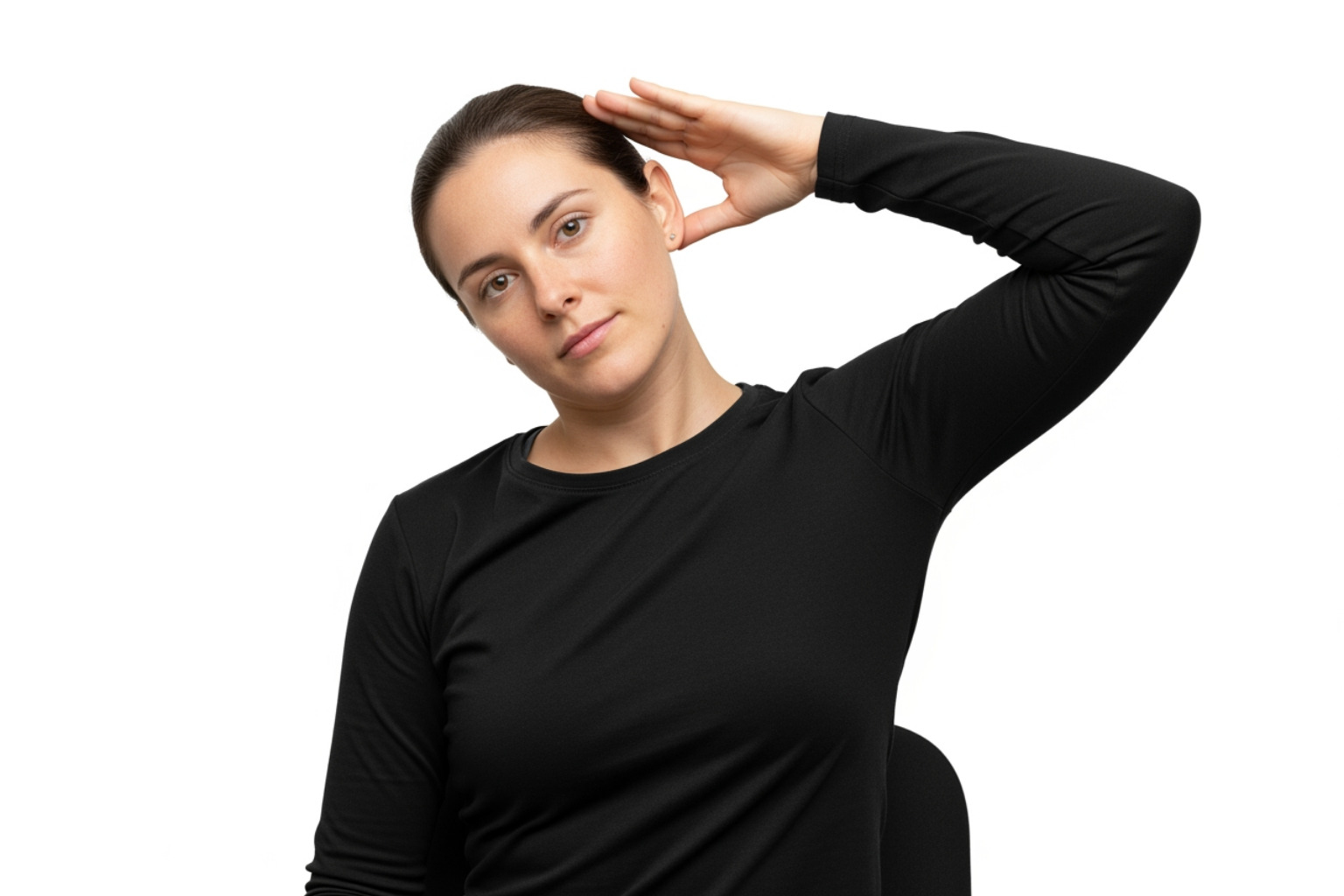
Upper Trapezius Stretch: Ear-to-Shoulder
This classic trapezius stretch is fantastic for targeting the often-overworked upper fibers, which are responsible for that nagging neck and shoulder tension.
How to Perform:
- Start with good posture: Sit up straight in a chair with your head and neck in a neutral position, ears in line with your shoulders. You can hold the edge of your chair seat with your right hand to anchor that shoulder down, preventing it from lifting.
- Gentle tilt: Tuck your chin in slightly. Slowly and gently tilt your head to your left side, aiming to bring your left ear towards your left shoulder. Keep looking straight ahead.
- Deepen the stretch (optional): For a deeper stretch, place your left hand on the right side of your head and gently pull your head further to the left. "Gentle" is the key word here – you should feel a stretch, not pain.
- Hold and breathe: Hold this position for 20-30 seconds, taking slow, deep breaths.
- Release and repeat: Slowly return your head to the neutral position. Repeat this exercise 2-3 times on the left side, then switch sides and repeat 2-3 times, bringing your right ear towards your right shoulder.
Benefits: This stretch directly addresses tightness in the upper trapezius and sternocleidomastoid muscles, providing excellent neck pain relief and improving your head's range of motion.
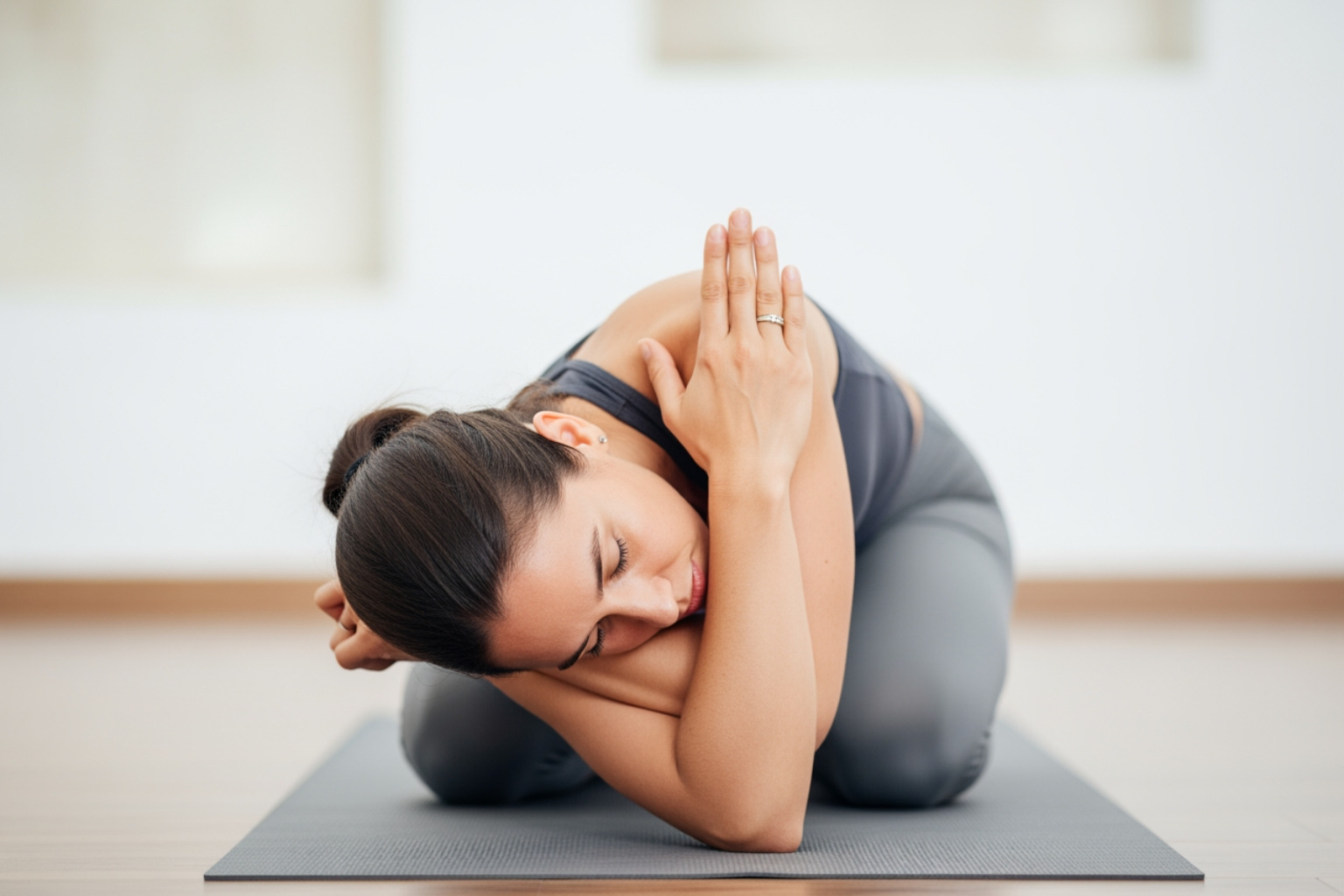
Middle Trapezius Stretch: Thread the Needle
This yoga pose is a wonderful way to open up the middle back and stretch the middle trapezius, promoting upper back mobility.
How to Perform:
- Tabletop position: Start on your hands and knees, with your wrists directly under your shoulders and your knees under your hips. Keep your spine neutral.
- Reach and thread: Inhale, then as you exhale, lift your right hand from the floor slightly. "Thread" your right arm under your left armpit, reaching it out to the left side with your palm facing up.
- Rest and relax: Gently lower your right shoulder and the right side of your head onto the mat or floor. Your left hand can stay where it is for support, or you can extend it forward for an additional stretch in the left shoulder.
- Breathe into the stretch: Focus on lengthening your spine and feeling the stretch across your upper back and shoulder blade area. Hold for 20-30 seconds, breathing deeply.
- Return and switch: To come out, press gently into your left hand, unthread your right arm, and return to tabletop. Repeat the stretch on the other side, threading your left arm under your right.
Benefits: Thread the Needle effectively stretches the middle trapezius, rhomboids, and rear deltoids, helping to release tension between the shoulder blades and improve thoracic spine mobility.
Lower Trapezius Activation: Wall Angels
While not a traditional static stretch, Wall Angels are an excellent exercise to activate and strengthen the lower trapezius muscles, which are often weak and contribute to poor posture. This helps to balance the strength of your traps and improve overall posture.
How to Perform:
- Find your wall: Stand with your back flat against a wall, feet about 6-12 inches away from the wall, and knees slightly bent. Your head, shoulders, and lower back should ideally be touching the wall. If your head doesn't comfortably touch, don't force it.
- Arm position: Raise your arms out to the sides, bending your elbows to 90 degrees, so your upper arms are parallel to the floor and your forearms are pointing upwards, like goalposts. Try to keep your wrists and elbows touching the wall.
- Slide and squeeze: Slowly slide your arms up the wall, extending them overhead as much as possible while keeping your wrists and elbows in contact with the wall. As you do this, focus on squeezing your shoulder blades down and together.
- Controlled return: Slowly lower your arms back down to the starting goalpost position, maintaining contact with the wall.
- Repetitions: Perform 10-15 repetitions, focusing on control and the squeeze of your shoulder blades rather than speed.
Benefits: This exercise strengthens the lower trapezius and serratus anterior, which helps depress and upwardly rotate the shoulder blades, counteracting rounded shoulders and promoting better posture.
Dynamic Relief: Cat-Cow Pose
The Cat-Cow pose is a fantastic dynamic trapezius stretch that mobilizes the entire spine, from your neck down to your tailbone, and helps release tension in your trapezius muscles.
How to Perform:
- Tabletop position: Begin on your hands and knees, ensuring your wrists are directly under your shoulders and your knees are under your hips. Spread your fingers wide and distribute your weight evenly.
- Cow Pose (Inhale): As you inhale, drop your belly towards the floor, lift your chest and tailbone towards the ceiling, and gently look up. Feel your shoulder blades drawing together on your back. This stretches the chest and engages the middle and lower traps.
- Cat Pose (Exhale): As you exhale, round your spine towards the ceiling, tuck your chin to your chest, and draw your navel towards your spine. Imagine an angry cat arching its back. Feel the stretch across your upper back and between your shoulder blades.
- Flow: Continuously flow between Cat and Cow poses with your breath for 10-15 repetitions. Focus on articulating each vertebra and releasing any tension in your neck and shoulders.
Benefits: This dynamic movement improves spinal mobility, stretches the entire back, and is particularly effective for relieving tension in the cervical spine and the area between the upper shoulder blades, directly addressing trapezius tightness. To really master this, you can learn how to perform the upper trapezius stretch the right way.
Integrating Stretches and Healthy Habits into Your Life
Performing these stretches regularly is a fantastic start, but true, lasting relief from tight trapezius muscles comes from integrating these movements with other healthy habits. It’s about creating a lifestyle that supports your body.
Correcting Your Posture
Poor posture is often the root cause of trapezius pain, especially in our modern lives filled with screens. We often find ourselves in a "forward head posture," where our head juts forward, putting immense strain on our neck and upper back.
- Desk Ergonomics: If you spend a lot of time at a desk, follow proper ergonomic guidelines: ensure your monitor is at eye level, your chair supports the natural curve of your spine, and your feet are flat on the floor. Your keyboard and mouse should be close enough that your elbows are at a 90-degree angle.
- Sitting Alignment: When sitting, try to rock your pelvis forward slightly so you're sitting on your "booty bones" (ischial tuberosities). Keep your core gently engaged, pull your shoulders back and down, and imagine a string pulling the crown of your head towards the ceiling, aligning your ears directly over your shoulders.
- Standing Alignment: When standing, keep your knees soft (not locked), engage your core, and gently squeeze your glutes. Again, align your head over your shoulders.
- Movement Snacks: Set a timer to get up and move every 30-60 minutes. Even a quick walk to the water cooler or a few of the stretches we've discussed can make a huge difference.
The importance of stretching extends beyond just muscle relief; it's crucial for overall health and well-being. Harvard Health Publishing highlights the importance of stretching for overall health, emphasizing its role in maintaining flexibility and range of motion.
Building a Daily Routine
Consistency is key when it comes to keeping your traps happy. Think of these stretches as "movement snacks" for your body.
- Morning Stretches: Start your day with a few minutes of gentle trapezius stretch to wake up your muscles and set a positive tone.
- Desk Breaks: Incorporate short stretching breaks throughout your workday. A quick ear-to-shoulder stretch or a few Cat-Cows can prevent tension from building up.
- Post-Workout Cooldown: If you exercise, ensure your cooldown includes specific trapezius stretches to aid muscle recovery and prevent post-exercise soreness.
- Evening Wind-Down: A gentle stretching routine before bed can help release the day's accumulated tension and prepare your body for restful sleep.
Making these stretches a habit, like brushing your teeth, will yield the best long-term results.
When to See a Doctor
While trapezius stretch routines and good posture can offer significant relief, there are times when professional medical attention is necessary. According to medical experts like the Mayo Clinic, you shouldn't hesitate to consult a doctor or physical therapist if you experience any of the following:
- Persistent Pain: If your trapezius pain lasts for more than a week, despite consistent stretching and self-care.
- Severe Pain: If you experience intense, sharp pain that limits your daily activities.
- Numbness or Tingling: If you notice numbness, tingling, or weakness radiating into your arms or hands, as this could indicate nerve involvement.
- Limited Range of Motion: If you're unable to move your neck or shoulder through its normal range of motion.
- Signs of Infection: Redness, swelling, warmth, or fever accompanying your pain.
- Pain After Trauma: If your pain began after a significant injury or accident.
For more severe conditions, such as a torn trapezius muscle, seeking professional help is crucial. You can find detailed guidance on treating a torn trapezius muscle on our blog. Early diagnosis and appropriate treatment can prevent long-term complications.
Frequently Asked Questions about Trapezius Stretches
We often hear similar questions from our clients about how to best manage their trapezius tightness. Here are some of the most common ones:
What is the single best stretch for tight traps?
While "best" can be subjective, we find the Ear-to-Shoulder stretch to be incredibly effective for targeting the upper trapezius, which is where most people tend to hold the majority of their tension. This area is constantly engaged, especially with modern stressors and tech use. The Ear-to-Shoulder stretch directly addresses the muscles that lift the shoulders towards the ears, providing immediate and noticeable relief from neck and shoulder stiffness. It's simple, can be done almost anywhere (even at your desk in New York City!), and provides a deep, targeted stretch.
How often should I stretch my trapezius muscles?
For optimal results and to prevent tension from building up, we recommend performing trapezius stretch exercises daily. If your lifestyle involves prolonged periods of sitting (like many office workers in NYC) or if you experience high levels of stress, consider breaking up your stretching into "movement snacks" 2-3 times throughout the day. Short, frequent stretches are often more beneficial than one long session, as they help to continuously release accumulated tension. For instance, a quick 30-second stretch every hour can make a significant difference over a full workday.
Can yoga help with trapezius pain?
Absolutely! Yoga is an excellent modality for addressing trapezius pain and overall upper body health. Poses like Cat-Cow, Thread the Needle, Eagle Pose, and Child's Pose are specifically beneficial. These poses not only provide effective trapezius stretch benefits by lengthening muscle fibers, but they also improve spinal mobility, strengthen supporting muscles, and promote deep breathing and relaxation. This holistic approach helps to address both the physical tightness and the stress-related factors that often contribute to trapezius pain. We've seen many people find profound relief by incorporating a regular yoga practice into their routine.
Conclusion: Your Path to Pain-Free Shoulders
We understand that living with tight, painful trapezius muscles can be debilitating, affecting everything from your posture to your mood. But as we've explored, relief is well within your reach. By understanding the anatomy of your traps, recognizing the causes of their discomfort, and consistently incorporating targeted trapezius stretch exercises into your daily routine, you can significantly improve your comfort and quality of life.
Remember the key takeaways:
- Consistency is crucial: Make stretching a regular habit, even if it's just a few minutes a few times a day.
- Listen to your body: Stretch gently, never into pain.
- Posture awareness: Be mindful of your posture throughout the day, especially when using screens.
- Address stress: Find healthy ways to manage stress, as it directly impacts muscle tension.
For those moments when muscle soreness lingers despite your best stretching efforts, a natural, fast-acting topical cream can provide much-needed support. At Neuropasil, we've developed solutions powered by ingredients like Aloe, Urea, and Menthol, designed to deliver targeted, soothing relief for various types of pain, including the aches and pains associated with tight muscles. Many athletes and individuals in New York City and beyond rely on Neuropasil to treat and recover from sore muscles, neuropathy, sciatica, fibromyalgia, and general joint discomfort.
Don't let tight traps hold you back any longer. Take control of your comfort, one stretch at a time. Ready to experience fast-acting relief for those stubborn muscle aches? Find fast-acting relief for muscle pain with Neuropasil. Want to learn more about managing muscle and nerve pain? Explore more pain relief strategies on our blog.
References
Brazier, Y. (2020). What is the trapezius (traps) muscle? Medical News Today. Available at: https://www.medicalnewstoday.com/articles/324251 Cagnie, B., et al. (2017). Association of Repetitive Work with the Trapezius Muscle and Thoracic-Spine/Shoulder-Girdle Pain: A Systematic Review. Journal of Electromyography and Kinesiology, 35, 10-18. Available at: https://www.ncbi.nlm.nih.gov/pmc/articles/PMC5265893/ Harvard Health Publishing. (2022). The importance of stretching. Harvard Medical School. Available at: https://www.health.harvard.edu/staying-healthy/the-importance-of-stretching Mayo Clinic. (n.d.). Neck pain. Retrieved from https://www.mayoclinic.org/diseases-conditions/neck-pain/symptoms-causes/syc-20375581 Mayo Clinic. (n.d.). Office ergonomics: Your how-to guide. Retrieved from https://www.mayoclinic.org/healthy-lifestyle/adult-health/in-depth/office-ergonomics/art-20046169