That Nagging Pain in Your Upper Trapezius? You're Not Alone
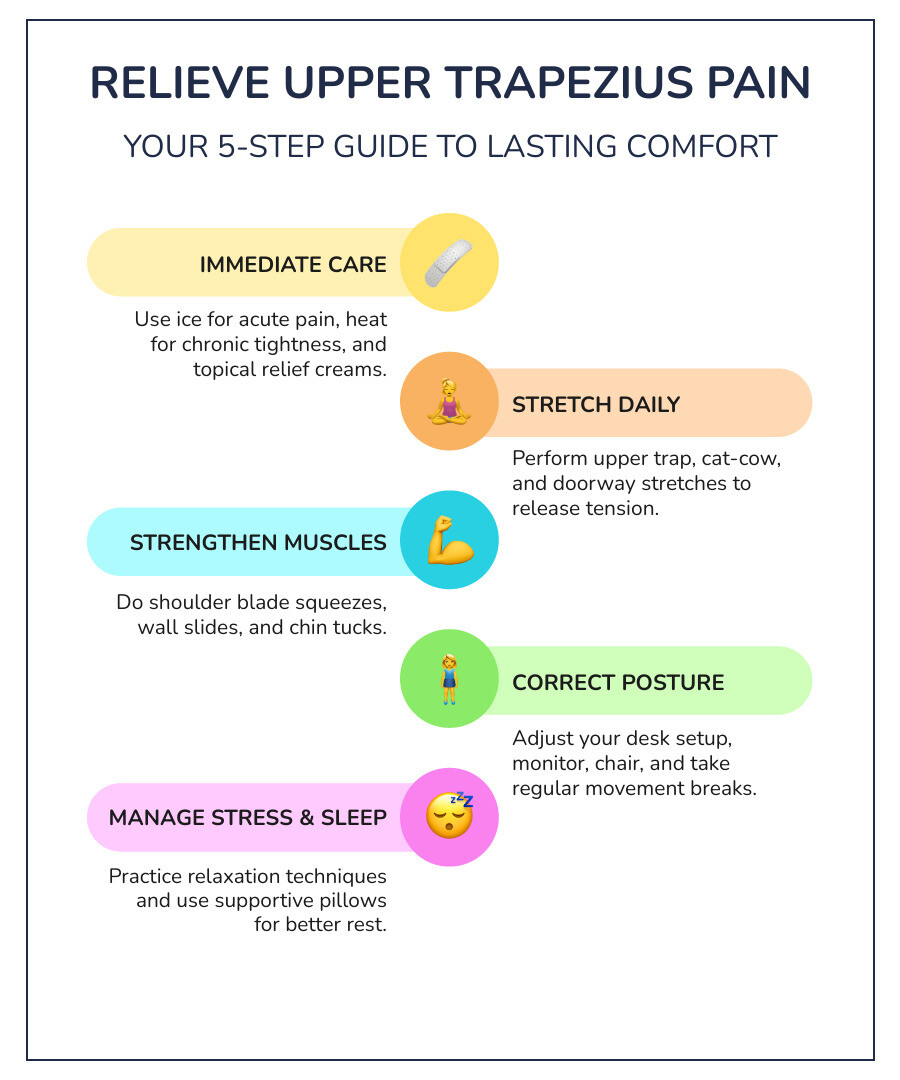
Upper trapezius muscle pain affects millions, causing stiffness, aching, and burning in the neck and shoulders. Here's how to find relief:
Quick Relief Guide:
- Apply immediate care - Use ice for acute pain, heat for chronic tightness, and topical relief creams.
- Stretch daily - Perform upper trap, cat-cow, and doorway stretches.
- Strengthen supporting muscles - Do shoulder blade squeezes, wall slides, and chin tucks.
- Fix your posture - Adjust your desk setup and take regular movement breaks.
- Manage stress and sleep - Practice relaxation and use supportive pillows.
That tight, burning sensation between your neck and shoulder can disrupt your focus, sleep, and daily activities. Whether you're an athlete, a desk worker, or just carrying heavy loads, upper trapezius muscle pain is incredibly common.
Research shows trapezius myalgia affects 10-20% of adults with chronic neck and shoulder pain, especially women. The main culprits are poor posture ("tech neck"), repetitive motions, stress, and muscle overuse.
The good news is that most cases respond well to simple, at-home care. Consistent effort with the right techniques is key.
I'm Tony Enrico, the developer of Neuropasil. I've dedicated my work to understanding muscle and nerve pain, like the upper trapezius muscle pain so many experience. My mission is to provide effective solutions for real, lasting relief.
First, Understand Your Pain: Causes and Symptoms of Trapezius Strain
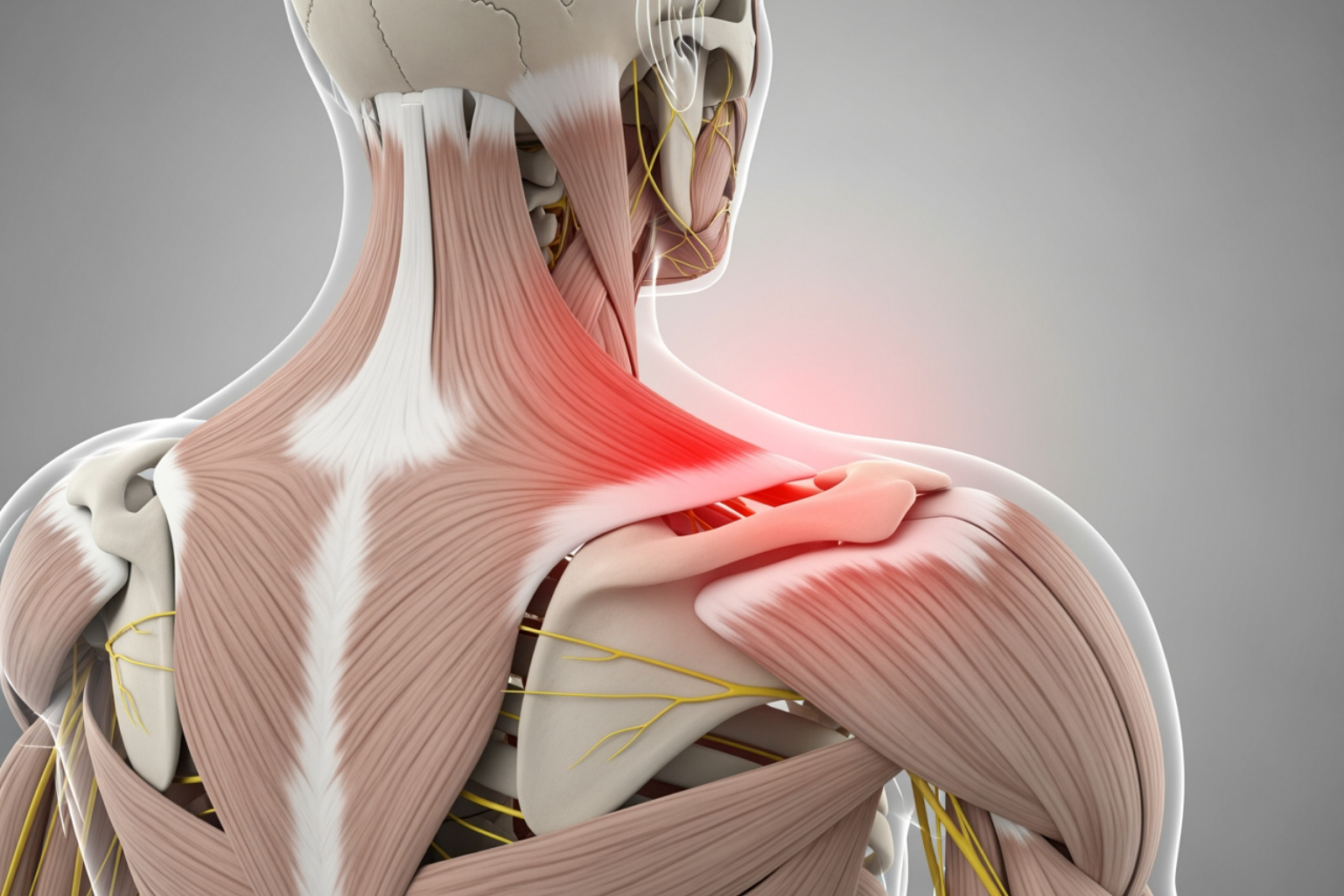
The trapezius is a large, triangle-shaped muscle spanning from the base of your skull, across your shoulders, to the middle of your back. It has three distinct parts:
- Upper Fibers: Lift your shoulders (like shrugging), extend your neck, and rotate your head. Tension here is what causes those knots near your neck.
- Middle Fibers: Located between your shoulder blades, these pull them together (retraction).
- Lower Fibers: These pull your shoulder blades down and are vital for overhead movements and good posture.
These fibers work together to move and stabilize your shoulder blades and support your neck. When this system is strained, it often leads to discomfort in the upper region.
Common Causes of Upper Trapezius Muscle Pain
The causes are often rooted in our daily habits:
- Poor Posture and "Tech Neck": Hunching over a phone or laptop forces your head forward, putting immense strain on your upper trapezius muscles to hold your head up.
- Overuse from Repetitive Motions: Activities like typing, driving, or cradling a phone between your ear and shoulder can lead to muscle fatigue and strain.
- Acute Injury and Whiplash: Sudden trauma from falls, collisions, or the rapid back-and-forth head movement in whiplash can severely strain the trapezius.
- Carrying Heavy Bags: Consistently carrying a heavy bag, especially on one shoulder, creates uneven stress and leads to muscle fatigue.
- Heavy Lifting Without Proper Form: Lifting heavy objects without engaging your core and using correct mechanics can easily overexert your trapezius.
- Stress: Psychological stress leads to muscle tightness, especially in the shoulders. As research shows, trapezius muscle activity increases during stressful situations.
- Poor Sleeping Positions: Sleeping with an unsupportive pillow or in an awkward position can strain your trapezius for hours.
- Large Breast Size (for women): The added weight can increase the load on the upper back and shoulders, contributing to chronic pain.
Symptoms and Trigger Points
Symptoms of upper trapezius muscle pain can range from a dull ache to sharp pain:
- Aching and Stiffness: A constant, dull ache in your neck and shoulders that limits your ability to turn your head or raise your arms.
- Soreness and Burning Sensation: The area may feel tender to the touch or have a burning feeling, particularly after prolonged activity.
- Limited Range of Motion: Difficulty or pain when moving your neck or shoulders.
- Muscle Spasms: Sudden, sharp, involuntary muscle contractions.
- Referred Pain: Pain can radiate from the shoulders to the upper back, neck, or down the arms.
- Tension Headaches: Trigger points in the upper trapezius are a common cause of headaches felt in the temples, forehead, or back of the head.
What are Trigger Points? Trigger points are hyperirritable knots within a muscle. Pressing on them causes local tenderness and can also refer pain to other areas (for example, a trapezius trigger point causing a headache). They develop from muscle overuse, trauma, poor posture, and stress.
Step 1: Immediate Relief with At-Home Care
When upper trapezius muscle pain strikes, these at-home strategies can provide quick relief.
Rest and Activity Modification
First, give your muscles a break. Modify or temporarily avoid activities that trigger your pain. Focus on "active rest"—avoiding strenuous movements but still engaging in gentle, pain-free motion to prevent stiffness. For example, if computer use is the cause, take frequent breaks to stand and stretch.
Cold Therapy for Acute Injuries
For new injuries or acute flare-ups with inflammation, apply cold therapy. Ice constricts blood vessels, reducing swelling and numbing pain.
- How to apply: Wrap an ice pack in a thin towel.
- Duration: Apply to the affected area for 15-20 minutes.
- Frequency: Repeat every 2-3 hours for the first 24-48 hours.
Heat Therapy for Chronic Tightness
After 48 hours, or for chronic stiffness, use heat. Heat increases blood flow, relaxing tight muscles and promoting healing.
- How to apply: Use a warm compress, heating pad, or take a warm shower.
- Duration: Apply for 15-20 minutes.
- Frequency: Use several times a day as needed.
Targeted Topical Relief with Neuropasil
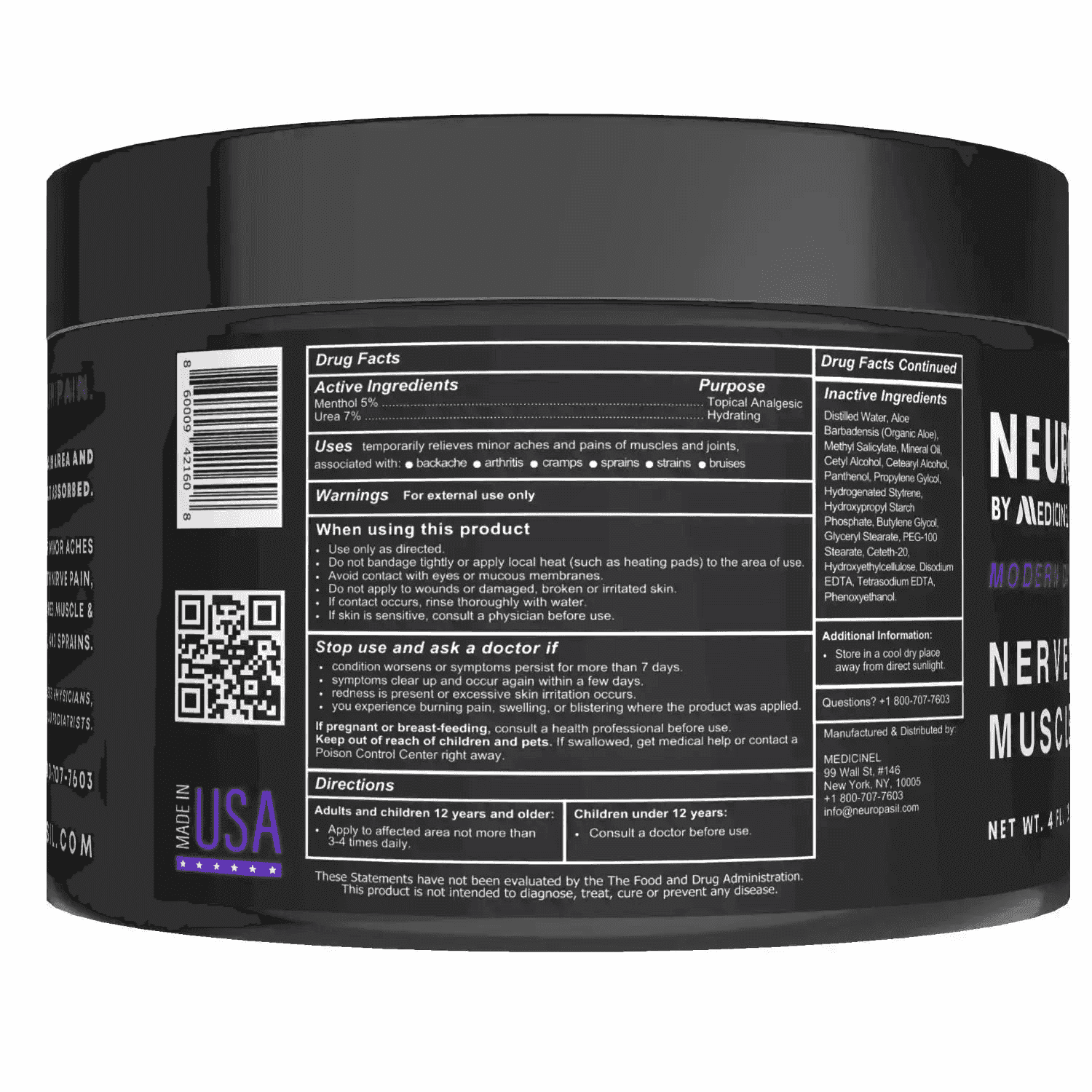
For fast-acting, targeted relief, a topical cream like Neuropasil Nerve Pain Relief Cream can be very effective for upper trapezius muscle pain. Our formula uses natural ingredients like Aloe, Urea, and Menthol to soothe sore muscles. The Menthol provides an immediate cooling sensation to distract from pain, while Aloe and Urea penetrate the skin for targeted relief. It's a convenient way to manage localized aches, helping you recover faster. Many in New York City, from athletes to everyday individuals, rely on Neuropasil for its fast-acting nature on sore muscles and strains.
Discover Neuropasil's fast-acting relief cream
Step 2: Targeted Stretches to Release Tension
Once immediate pain is managed, stretching is crucial for releasing tension and improving flexibility in your upper trapezius muscle. Consistent stretching lengthens tight muscles, improves blood flow, and can prevent future pain. Here are three effective stretches. For more details, learn how to do upper trap stretches the right way.
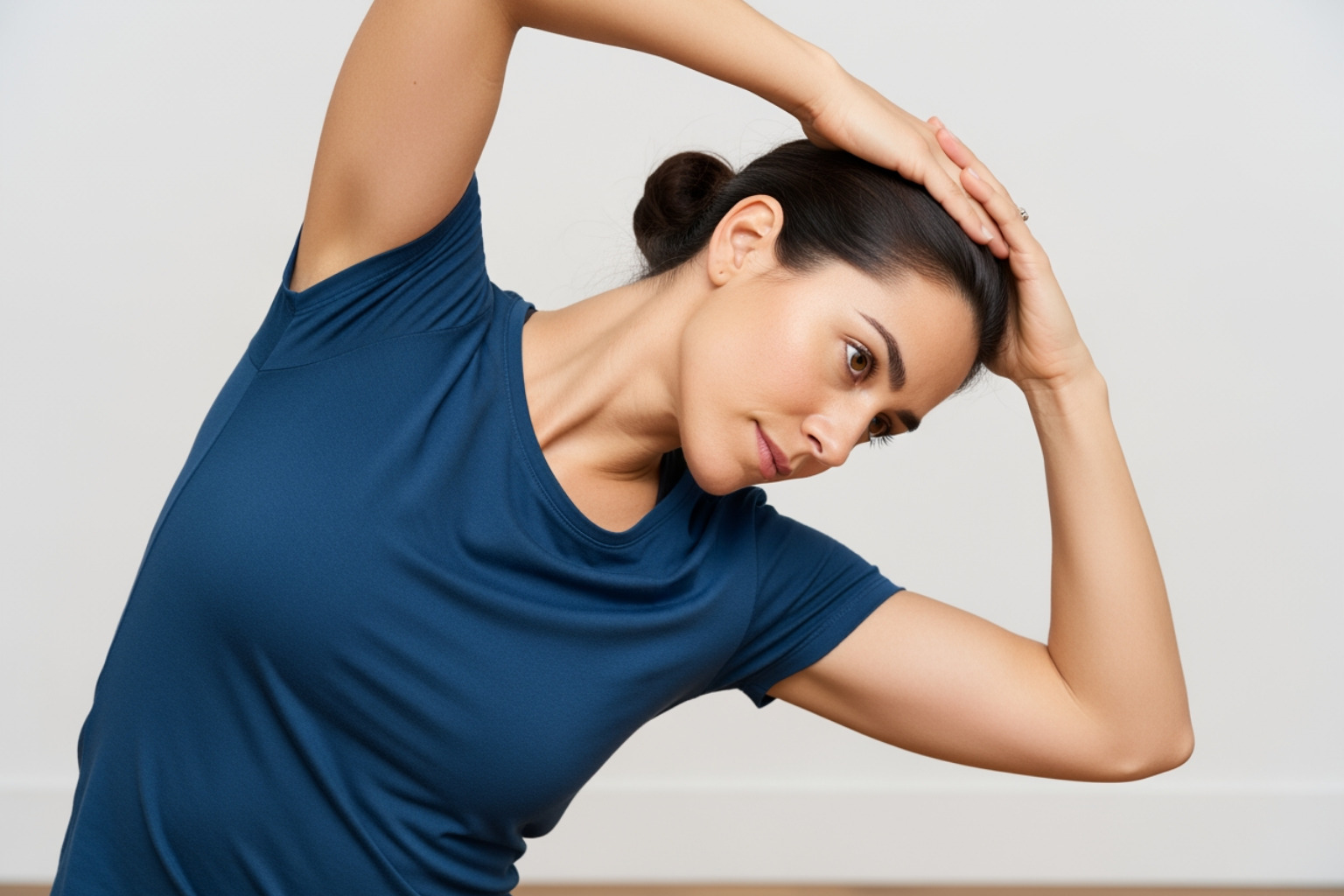
Upper Trap Stretch
This classic stretch directly targets the upper trapezius for neck and shoulder tightness.
-
How-to instructions:
- Sit or stand tall.
- Gently drop your right ear towards your right shoulder.
- For a deeper stretch, place your right hand on your head and apply gentle pressure. To increase the stretch, extend your left arm down towards the floor.
- Hold: Hold for 20-30 seconds while breathing deeply.
- Repeat: Switch sides and repeat 2-3 times per side.
Cat-Cow Stretch
This stretch mobilizes your entire back, including the trapezius, relieving overall tension.
-
How-to instructions:
- Start on your hands and knees in a tabletop position.
- Cow Pose: Inhale, drop your belly, and lift your chest and tailbone, looking up.
- Cat Pose: Exhale, round your spine, tuck your chin, and draw your navel in.
- Movement: Flow smoothly between poses for 5-10 repetitions, syncing your breath with the movement.
Doorway Stretch
This opens up your chest and shoulders, counteracting the rounded-shoulder posture linked to upper trapezius muscle pain.
-
How-to instructions:
- Stand in a doorway.
- Place your forearms on the doorframe with elbows bent at 90 degrees, slightly below shoulder height.
- Step one foot forward and lean gently until you feel a stretch across your chest.
- Hold: Hold for 15-30 seconds, keeping your shoulders relaxed.
- Repeat: Relax and repeat 2-3 times.
Step 3: Strengthening Exercises for Lasting Prevention
While stretching provides relief, strengthening is key for long-term prevention of upper trapezius muscle pain. Strong muscles provide better postural support and reduce the risk of strain. To learn more, explore our trapezius strain treatment survival guide.
Here are three key exercises:
Shoulder Blade Squeezes
This exercise activates your middle trapezius and improves shoulder blade control, which is vital for good posture.
-
How-to instructions:
- Sit or stand tall with arms at your sides.
- Gently squeeze your shoulder blades together, as if pinching a pencil between them.
- Keep your shoulders down, avoiding shrugging.
- Hold the squeeze for 5-10 seconds.
- Repetitions: Release slowly and repeat 10-15 times for 2-3 sets.
Wall Slides
Wall slides strengthen the lower trapezius and other postural muscles, helping to correct imbalances that contribute to upper trapezius muscle pain.
-
How-to instructions:
- Stand with your back flat against a wall.
- Press your lower back, head, and shoulders against the wall.
- Raise your arms with elbows bent at 90 degrees, keeping your forearms and hands against the wall.
- Slowly slide your arms up the wall until fully extended, then slide them back down.
- Repetitions: Perform 10-15 repetitions for 2-3 sets, keeping your shoulders down.
Chin Tucks
This powerful exercise addresses forward head posture, a major cause of upper trapezius muscle pain, by strengthening deep neck flexors.
-
How-to instructions:
- Sit or stand tall, looking straight ahead.
- Gently pull your chin straight back, as if making a double chin, keeping your head level.
- You should feel a stretch at the back of your neck.
- Hold for 3-5 seconds.
- Repetitions: Release and repeat 10-15 times for 2-3 sets. Do this throughout the day.
Step 4: Correct Your Posture and Ergonomics
Your posture and environment significantly impact upper trapezius muscle pain. Optimizing your body mechanics and workspace can reduce daily strain.
The Link Between Posture and Pain
Poor posture, like hunching or a forward head position, forces your trapezius muscles to overwork, leading to chronic tension. Correcting posture is about biomechanical efficiency and pain prevention.
"Movement Snacks"
Sitting for long periods causes stiffness. Take short "movement snacks" every 30-60 minutes. Stand, walk, or do a quick stretch to reset your posture and prevent tension from building up.
Ergonomic Desk Setup
An ergonomic desk setup is non-negotiable. It tailors your workspace to your body, not the other way around.
- Monitor Height: Position the top of the screen at or slightly below eye level.
- Chair Support: Use a chair with good lumbar support. Your feet should be flat on the floor, and knees at a 90-degree angle. Armrests should allow your shoulders to be relaxed.
- Keyboard and Mouse: Keep them close to avoid reaching.
- Phone Use: Use a headset or speakerphone instead of cradling the phone.
Proper Lifting Techniques
When lifting, always use your legs, not your back.
- Approach: Stand close to the object.
- Bend: Bend at your knees and hips, keeping your back straight.
- Grip: Get a firm grip.
- Lift: Straighten your legs to lift, keeping the object close to your body and avoiding twisting.
Step 5: Manage Stress and Optimize Your Sleep
Stress and poor sleep are often hidden contributors to upper trapezius muscle pain.
How Stress Causes Muscle Tension
The body reacts to stress by tensing up, and the trapezius muscles are notorious for "carrying stress." This sustained tension restricts blood flow, can create trigger points, and lowers your pain tolerance.
Stress Management Techniques
Incorporate these practices into your routine to loosen tight muscles:
- Deep Breathing: Practice belly breathing for a few minutes daily to activate your body's relaxation response.
- Mindfulness and Meditation: Short sessions can help you become aware of and consciously release muscle tension.
- Gentle Movement: Activities like yoga, Tai Chi, or a leisurely walk can reduce stress and improve flexibility.
- Hobbies and Social Connection: Engaging in enjoyable activities and connecting with loved ones are crucial for stress reduction.
Sleep Hygiene
Quality sleep is when your body repairs itself. Poor sleep can worsen muscle stiffness and pain.
- Supportive Pillows: Your pillow should support your neck's natural curve. Side sleepers generally need a thicker pillow, while back sleepers need a medium one. Stomach sleeping is not recommended for neck health.
- Sleeping Position: Aim to sleep on your back or side to keep your neck in a neutral position.
- Consistent Schedule: Go to bed and wake up around the same time daily to regulate your sleep cycle.
- Comfortable Environment: Ensure your bedroom is dark, quiet, and cool.
For more strategies, check out these tips for waking up without neck pain.
When to See a Doctor for Upper Trapezius Muscle Pain
While most upper trapezius muscle pain improves with at-home care, some symptoms warrant professional medical help to rule out a more serious condition.
Red Flags to Watch For:
- Pain Lasting Over 6 Weeks: If your pain persists despite consistent self-care.
- Weakness or Numbness in Arms or Hands: This could suggest nerve involvement, such as a pinched nerve in the neck.
- Severe, Sudden Pain: Especially if it comes on without an obvious cause or severely limits movement.
- Pain Accompanied by Other Concerning Symptoms: Such as fever, chills, unexplained weight loss, difficulty walking, balance issues, or pain when breathing.
Professional Diagnosis and Treatment
A doctor will perform a physical exam and may recommend imaging (X-rays, MRI) or electrodiagnostic tests (EMG) to rule out other conditions like cervical radiculopathy or shoulder pathology.
Depending on the diagnosis, professional treatments may include:
- Physical Therapy: A customized program of exercises, manual therapy, and ergonomic advice.
- Massage Therapy: To release muscle tension, break up trigger points, and improve circulation.
- Trigger Point Injections: A local anesthetic, sometimes with a corticosteroid, injected directly into stubborn trigger points to alleviate pain.
- Medications: Prescription muscle relaxants or stronger anti-inflammatory drugs for short-term relief.
- Referral to a Specialist: For more complex spinal or neurological issues.
Don't hesitate to seek professional help if your pain is persistent, severe, or accompanied by red flag symptoms.
Frequently Asked Questions about Trapezius Pain
Here are answers to some common questions about upper trapezius muscle pain.
Can upper trapezius muscle pain cause headaches?
Yes, absolutely. Tightness and trigger points in the upper trapezius often cause "referred pain" that manifests as tension headaches or cervicogenic headaches (headaches originating from the neck). The pain can feel like a pressure band around the head or an ache at the base of the skull, temples, or forehead. Addressing the muscle pain often relieves the headaches.
How long does it take for a pulled trapezius muscle to heal?
The healing time for a pulled trapezius depends on the severity of the strain:
- Minor Strains (Grade I): A few days to two weeks with proper care.
- Moderate Strains (Grade II): Several weeks to a few months.
- Severe Strains (Grade III): A complete tear can take several months and may require medical intervention.
For most common cases of overuse or mild strain, you should feel better within 1-2 weeks by following the steps in this guide. If pain persists, see a healthcare provider.
What are trigger points in the trapezius?
Trigger points are hyperirritable knots in muscle fibers that feel like small bumps under the skin. They are tender when pressed and can refer pain to other areas (like causing a headache). They develop from chronic stress, poor posture, or acute injury. You can perform self-release by applying gentle, sustained pressure with your fingers or a tennis ball for 20-30 seconds until the tension releases. For persistent knots, professional massage or dry needling can be highly effective.
Conclusion: Take Control of Your Trapezius Pain
Upper trapezius muscle pain is common, but you can manage it. By understanding its causes and following a consistent 5-step strategy, you can find lasting relief and reclaim your comfort.
We've covered:
- Immediate Relief: Using rest, ice/heat, and topical solutions like Neuropasil.
- Targeted Stretches: To release tension and improve flexibility.
- Strengthening Exercises: To build resilience and support good posture.
- Posture and Ergonomics: To reduce daily strain.
- Stress and Sleep Management: To address underlying mental and restorative factors.
Consistency is key. Even a few minutes a day can make a profound difference. Neuropasil is here to support your recovery, offering fast-acting, soothing relief with natural ingredients like Aloe, Urea, and Menthol. Take control of your trapezius pain and get back to feeling your best.
Discover Neuropasil's fast-acting relief cream