Why Understanding the Cause of Hamstring Strain Matters
The cause of hamstring strain is something every athlete and active adult should understand. Whether you felt that sudden pop during a sprint or noticed a gradual ache building in the back of your thigh, hamstring injuries are among the most common and frustrating setbacks in sports and daily life.
Quick Answer: What Causes Hamstring Strains?
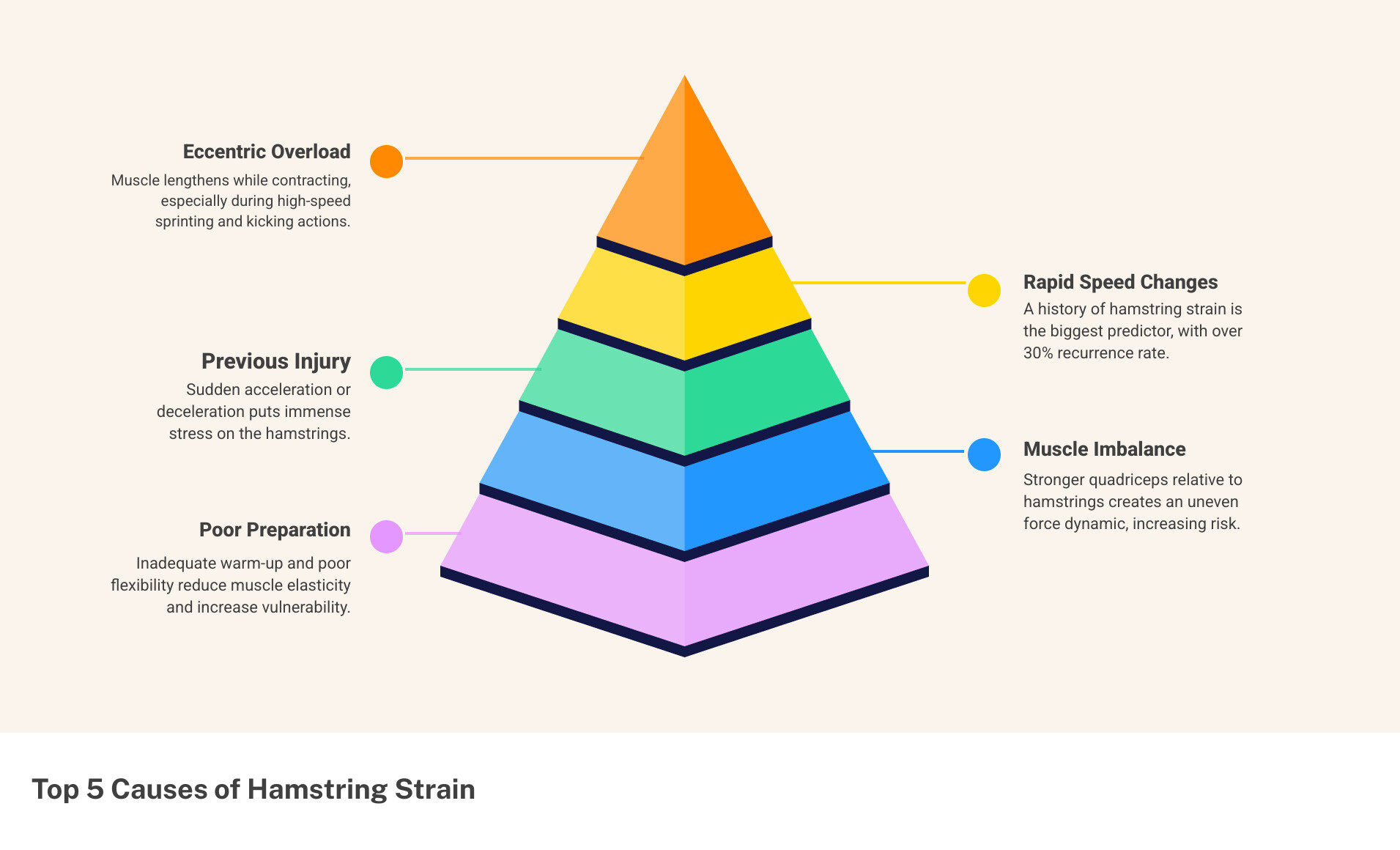
The primary causes include:
- Muscle overload during eccentric contraction - when the muscle lengthens while contracting, especially during sprinting
- Sudden acceleration or deceleration - rapid changes in speed during running or sports
- Inadequate warm-up - jumping into activity without proper preparation
- Muscle imbalances - stronger quadriceps compared to hamstrings
- Previous hamstring injury - the biggest predictor of future strains
- Poor flexibility or tight muscles - reduced range of motion increases strain risk
- Muscle fatigue - tired muscles can't absorb force properly
Hamstring strains account for 10-15% of all sports injuries and affect everyone from professional football players to weekend warriors. Research shows that more than 30% of athletes will experience a recurrent hamstring injury, making prevention and understanding the root causes critical.
The statistics are sobering. In professional soccer, hamstring injuries result in an average of 17 days of lost training time for mild strains, while severe tears can sideline athletes for months. In the NFL, hamstring strains represent 12% of all injuries during training camps, with an injury rate of 0.77 per 1,000 athlete exposures.
What makes hamstring strains particularly challenging is their tendency to happen at the worst possible moment—during the terminal swing phase of sprinting when you're at full speed, or when making that sudden cut to change direction. The injury occurs because your hamstring muscles are working overtime to decelerate your leg while simultaneously preparing to push off the ground. It's a perfect storm of force and vulnerability.
This guide breaks down everything you need to know about what causes hamstring strains, from the biomechanics of injury to the risk factors you can control. We'll explore why certain sports put you at higher risk, how muscle imbalances set you up for injury, and most importantly, what you can do to protect yourself.
I'm Tony Enrico, founder of Neuropasil, and I've spent years helping athletes and active adults understand and recover from muscle injuries, including the various causes of hamstring strain. Through Neuropasil's mission to help one million people achieve pain-free movement, I've seen how understanding injury mechanisms transforms recovery and prevention.
Understanding the Hamstring Muscles and Injury Severity
Before we dive into the specific cause of hamstring strain, let's get acquainted with these powerful muscles. The hamstrings are a group of three major muscles located along the back of your thigh, extending from your hip to just below your knee. These are:
- Semitendinosus: A long, thin muscle located medially.
- Semimembranosus: A broader, flatter muscle lying beneath the semitendinosus.
- Biceps femoris: This muscle has two heads (long and short) and is located laterally. It's often the most commonly injured hamstring muscle, partly due to its dual nerve supply which can lead to asynchronous stimulation.
Together, these muscles play a crucial role in our movement. Their primary functions include:
- Bending the knee (knee flexion): Essential for walking, running, and jumping.
- Extending the hip (hip extension): Powering movements like pushing off the ground or standing up.
A hamstring strain, often referred to as a "pulled hamstring," occurs when one or more of these muscles are stretched beyond their capacity, leading to tears in the muscle fibers. This can range from microscopic damage to a complete rupture. A "pull" is simply a less severe form of a "tear" – both signify damage to the muscle tissue.
How Hamstring Strains are Graded
Medical professionals classify hamstring strains into three grades based on the severity of the muscle damage. This grading helps determine the appropriate treatment and recovery timeline.
- Grade 1 Strain (Mild Tear): This is a mild muscle pull where only a few muscle fibers are stretched or torn. You might experience some tenderness and stiffness, but usually, full range of motion is maintained. Pain is often mild and might feel like a cramp. Recovery typically takes a few days to a couple of weeks.
- Grade 2 Strain (Partial Tear): A moderate injury involving more extensive damage to muscle fibers, but the muscle is not completely ruptured. You'll likely experience a sudden, sharp pain, swelling, and bruising. There will be noticeable weakness and a loss of strength in the affected hamstring, making walking difficult. Recovery can take several weeks to a few months.
- Grade 3 Strain (Complete Tear): This is a severe injury where the muscle is completely torn or ruptured. It's often accompanied by a "popping" sensation at the time of injury, intense pain, significant swelling, bruising, and inability to bear weight on the leg. In some severe cases, an avulsion injury can occur, where the hamstring tendon tears completely away from the bone, sometimes even pulling a piece of bone with it. These injuries may require surgery and a recovery period of several months.
Here's a quick comparison of the grades:
| Grade | Severity | Symptoms | Pain Level | Typical Recovery Time |
|---|---|---|---|---|
| Grade 1 | Mild Strain | Mild tenderness, stiffness, slight discomfort during movement. Full range of motion usually maintained. | Mild | A few days to 2 weeks |
| Grade 2 | Moderate Strain | Sudden sharp pain, noticeable swelling, bruising, loss of strength, limping, pain with movement. | Moderate-Severe | Several weeks to 3 months |
| Grade 3 | Severe Strain | Intense, immediate pain, "popping" sound/sensation, significant swelling & bruising, inability to bear weight. | Severe | Several months, often requiring surgery and extensive rehab |
For more detailed information, the American Academy of Orthopaedic Surgeons (AAOS) provides comprehensive resources on Hamstring Muscle Injuries - OrthoInfo - AAOS.
Typical Symptoms of a Hamstring Strain
Recognizing the symptoms of a hamstring strain is crucial for early intervention and proper recovery. If you've experienced a cause of hamstring strain, you might notice:
- Sudden sharp pain: This is often the most immediate and defining symptom, typically felt in the back of the thigh during activity.
- Popping sensation: Many individuals report hearing or feeling a "pop" or "snap" at the moment of injury, especially with more severe tears.
- Swelling within hours: Inflammation and swelling usually begin shortly after the injury, making the area tender to touch.
- Bruising or discoloration: Depending on the severity, blood vessels may rupture, leading to bruising or discoloration along the back of the leg, which can appear a day or two later.
- Muscle weakness: You might feel a noticeable weakness in your leg, making it difficult to perform activities like walking, climbing stairs, or standing on one leg.
- Pain when sitting or walking: Simple actions that put pressure on the hamstring or require its engagement can become painful.
For a deeper dive into managing these symptoms, our guide, Detailed Guide to Healing Hamstring Strains, offers valuable insights.
The Primary Cause of Hamstring Strain: Mechanisms and Movements
The most common cause of hamstring strain is often rooted in the mechanics of how we move, especially during physical activity. It typically boils down to muscle overload. This happens when the muscle is asked to do more than it can handle, whether it's stretched too far or forced to contract too strongly.
One of the key mechanisms is eccentric contraction. This occurs when a muscle lengthens while it's contracting. Think about running: as your leg swings forward, your hamstrings contract to slow down and control the forward motion of your lower leg. At the same time, they are lengthening. This dual action, especially at high speeds, places immense stress on the muscle fibers, making them particularly vulnerable to tears.
Consider the following common scenarios:
- Sprinting mechanics: Hamstring strains are notoriously common during sprinting. The injury often happens during the late swing phase, when the leg is fully extended forward and the hamstrings are working eccentrically to decelerate the lower leg. It can also occur during the late stance phase, as the hamstrings contract powerfully to extend the hip and push off the ground. It's a critical moment of high force and rapid muscle action.
- Kicking motion: Activities involving powerful kicking, like in American football or soccer, can also lead to hamstring strains. The explosive extension of the leg and the rapid deceleration required can overload the muscles.
- Overstretching: Simply stretching the muscle too far beyond its normal range of motion, as can happen in dancing or gymnastics, is another direct cause of hamstring strain.
- Sudden stops and starts: Many sports require rapid changes in direction, sudden accelerations, and abrupt decelerations. These explosive movements place significant stress on the hamstrings, making them susceptible to injury.

High-Risk Activities and Sports
Due to the biomechanical demands, certain sports and activities inherently carry a higher risk for hamstring strains. These are typically activities that involve high-speed running, sudden changes in direction, or extreme stretching.
Here are some of the activities and sports that commonly lead to hamstring injuries:
- Soccer: Frequent sprinting, cutting, and kicking motions make hamstring strains a prevalent issue.
- Basketball: The constant jumping, quick sprints, and abrupt stops are significant contributors.
- American Football: Explosive movements, sprinting, and powerful tackles put players at high risk. In the NFL, hamstring injuries are a leading cause of missed time.
- Track and Field: Especially sprinters, hurdlers, and long jumpers, whose events heavily rely on powerful, high-speed leg movements.
- Dancers: The extreme flexibility and dynamic movements, often involving high kicks and splits, can lead to overstretching injuries.
- Waterskiing: The intense, sustained contraction and rapid movements involved can strain the hamstrings.
As the Mayo Clinic notes, "Hamstring injuries often occur in sports requiring sprinting with sudden stops and starts, or extreme stretching." This highlights why athletes in New York City and across the US, participating in these popular sports, are particularly vulnerable.
How Biomechanics Contribute to the Cause of Hamstring Strain
The intricate dance of our muscles and joints, known as biomechanics, plays a critical role in determining the cause of hamstring strain. As mentioned, the terminal swing phase of running is a prime example. During this phase, your leg is swinging forward, and your hamstrings are rapidly lengthening while simultaneously trying to contract to decelerate the limb before your foot hits the ground. This eccentric load, combined with the high speed, creates a perfect storm for injury.
Similarly, when you're pushing off the ground, your hamstrings are powerfully contracting to extend your hip. If there's any inefficiency in this movement, or if other muscles aren't engaging properly, the hamstrings can take on excessive load.
Other biomechanical factors can also contribute:
- Poor running form: Inefficient running mechanics can place undue stress on the hamstrings. For instance, overstriding can increase the eccentric load on the hamstrings.
- Pelvic tilt: An anterior pelvic tilt (where the pelvis tilts forward) can lengthen the hamstrings, making them chronically stretched and more susceptible to injury during activity.
Understanding the precise mechanics of how your body moves is essential for both preventing and recovering from hamstring injuries. We explore this further in our Hamstring Anatomy 101 Everything You Need to Know About Your Thigh Muscles guide.
Key Risk Factors That Increase Your Chances of Injury
While specific movements can be the immediate cause of hamstring strain, several underlying risk factors significantly increase your susceptibility.
One of the most significant risk factors is a previous hamstring injury. Unfortunately, once you've strained your hamstring, you're at a much higher risk of reinjuring it. Studies indicate that recurrent hamstring injuries develop in more than 30% of athletes, with many occurring in the ensuing sporting season. This high recurrence rate often stems from returning to activity too soon or not fully rehabilitating the initial injury.
Another common contributor is an inadequate warm-up. Jumping into intense physical activity without properly preparing your muscles is like asking them to perform a sprint from a cold start. A proper warm-up increases muscle temperature and blood flow, making the muscle fibers more pliable and less prone to tearing.

The Role of Muscle Condition and Imbalances
The overall condition of your muscles and how well they work together are crucial in preventing hamstring strains.
- Muscle tightness and poor flexibility: Tight muscles have a reduced range of motion, making them more vulnerable to tears when stretched forcefully. If your hamstrings are chronically tight, they are already operating closer to their maximum length, leaving little room for sudden elongation during activity.
- Muscle imbalance: This is a major underlying cause of hamstring strain. Often, individuals have stronger quadriceps (front of the thigh) compared to their hamstrings. This imbalance means the hamstrings may not be strong enough to counteract the powerful contraction of the quadriceps, especially during deceleration, leading to injury. Similarly, weak glutes (buttock muscles) can force the hamstrings to overcompensate, increasing their workload and risk.
- Muscle fatigue: As muscles tire, their ability to absorb force, coordinate movements, and protect themselves from injury diminishes. This is why many hamstring strains occur towards the end of a game or a strenuous workout.
- Poor conditioning: A general lack of physical fitness means your muscles aren't adequately prepared to handle the stresses of intense activity. Suddenly increasing your physical activity level, as noted by the Cleveland Clinic, is one of the most common causes of hamstring injuries.
- Dehydration: While not a direct cause of hamstring strain, dehydration can contribute to muscle cramps and overall muscle fatigue, making muscles more susceptible to injury.
Understanding and addressing these factors is key to preventing a pulled hamstring. Our guide, All About Pulled Hamstring Injury Treatment, digs into these aspects further.
How Age and Development is a Cause of Hamstring Strain
Age plays a surprisingly significant role in hamstring injury risk, affecting both young and older individuals differently.
- Advancing age: As we get older, our muscles tend to lose some of their elasticity and become less resilient. This reduced muscle elasticity means older athletes or active adults might be more prone to muscle tears, even with activities they've performed for years.
- Adolescent growth spurts: Interestingly, hamstring strains occur more often in adolescents. During a growth spurt, a child's bones may grow faster than their muscles. This rapid skeletal growth can pull the muscles tight, creating a temporary period of reduced flexibility and increased tension. A sudden jump, stretch, or impact during this time can easily tear the tightened muscle away from its connection to the bone. The Cleveland Clinic highlights this unique risk factor, reminding us that different age groups face different challenges.
Complications and Effective Prevention Strategies
Ignoring a hamstring strain or returning to activity too soon can lead to a cascade of problems, turning a manageable injury into a chronic issue. The importance of proper healing cannot be overstated. Rushing back into sports or demanding physical tasks before your hamstring has fully recovered significantly increases your risk of reinjury. And as we've seen, recurrent injuries are often more severe and take longer to heal.
Potential Complications of an Untreated Strain
If a hamstring injury is not properly healed or managed, several potential complications can arise:
- Chronic pain: Persistent pain in the back of the thigh, making daily activities uncomfortable.
- High risk of re-injury: This is perhaps the most common and frustrating complication. Scar tissue, weakness, and incomplete healing leave the muscle vulnerable.
- Loss of strength: Even after the pain subsides, the injured muscle may not regain its full strength, impacting athletic performance and daily function.
- Scar tissue formation: As the muscle heals, it forms scar tissue, which is less elastic and more prone to reinjury than healthy muscle tissue. This can also lead to a condition known as "hamstring syndrome" if it impinges on nerves.
- Gait problems: Compensatory walking patterns can develop to avoid pain, potentially leading to issues in other joints like the knee or hip.
- Sciatic nerve irritation: In some cases, severe hamstring injuries or extensive scar tissue can irritate or compress the sciatic nerve, leading to symptoms like numbness, tingling, or pain radiating down the leg (gluteal sciatica).
To avoid these long-term issues, understanding the cause of hamstring strain and committing to a full recovery plan is vital. Our Detailed Guide to Torn Hamstring Muscle Treatment offers further insights into proper healing.
Proven Prevention Strategies
The good news is that many hamstring strains are preventable. By understanding the common causes and risk factors, we can implement strategies to protect our hamstrings.
- Proper warm-up: Always begin your workout or activity with a dynamic warm-up. This includes light cardio like jogging or jumping jacks to increase blood flow and muscle temperature, followed by dynamic stretches like leg swings and walking lunges.
- Post-activity static stretching: After your activity, when your muscles are warm, perform static stretches, holding each stretch for 20-30 seconds. This helps improve flexibility and maintain muscle length.
- Year-round conditioning and strength training: Don't wait until preseason to get in shape. Consistent strength training, focusing on both the hamstrings and opposing muscle groups like the quadriceps, is key.
- Eccentric exercises: Incorporate exercises that specifically strengthen the hamstrings during their lengthening phase, such as Nordic hamstring curls or Romanian deadlifts. These can build resilience against the forces that typically cause of hamstring strain.
- Core stability: A strong core provides a stable base for your leg movements, reducing undue stress on the hamstrings.
- Gradual progression of activity: Avoid sudden increases in intensity, duration, or frequency of your workouts. Gradually increase your load by no more than 10% per week to allow your muscles to adapt.
- Listen to your body: If you feel pain, stop the activity immediately. Pushing through pain often leads to more severe injuries.
- Adequate rest and recovery: Ensure your muscles have enough time to repair and rebuild after strenuous activity.
For more tips on muscle strain treatment and prevention, check out More info about muscle strain treatment.
Frequently Asked Questions about Hamstring Strain Causes
Why are hamstring injuries so common in athletes?
Hamstring injuries are common in athletes because sports often involve the exact movements that cause of hamstring strain. These include high-speed sprinting, sudden accelerations and decelerations, and dynamic actions like kicking or extreme stretching. During sprinting, for example, the hamstrings are put under immense eccentric load as they work to slow the leg down and then explosively extend the hip. This combination of high force and rapid lengthening makes them highly vulnerable. Additionally, factors like muscle imbalances, fatigue, and previous injuries are more prevalent in athletic populations due to the demands of their training and competition schedules.
Can a hamstring strain heal on its own?
Yes, mild (Grade 1) hamstring strains can often heal on their own with proper rest and self-care measures like ice, compression, and elevation (RICE protocol). However, moderate (Grade 2) and severe (Grade 3) strains typically require professional medical attention, including physical therapy, and sometimes even surgery. Even for mild strains, it's crucial to allow adequate healing time and gradually return to activity to prevent re-injury. Without proper healing and rehabilitation, the risk of chronic pain and repeated injuries is very high.
What's the difference between a pulled hamstring and a torn hamstring?
In common usage, "pulled hamstring" and "torn hamstring" often refer to the same type of injury: a muscle strain in the hamstring group. A "pull" generally implies a less severe injury (Grade 1), where only a few muscle fibers are stretched or minimally torn. A "tear" can refer to a more significant injury, encompassing both partial tears (Grade 2) and complete ruptures (Grade 3). Essentially, a pulled hamstring is a type of muscle tear, with the distinction often relating to the degree of damage. Both involve damage to the muscle fibers and require appropriate care for full recovery.
Conclusion
Understanding the cause of hamstring strain is your first and most powerful step toward preventing and effectively managing these common and often frustrating injuries. We've explored the intricate anatomy of the hamstring muscles, how they function, and the various ways they can be strained, from the intense biomechanics of sprinting to underlying risk factors like muscle imbalances and age.
The key takeaways are clear: muscle overload during eccentric contractions, particularly in high-speed movements, is a primary culprit. Factors like inadequate warm-ups, poor flexibility, muscle fatigue, and a history of previous strains significantly increase your risk. Ignoring these warning signs or rushing your recovery can lead to chronic pain and a high likelihood of re-injury.
Prevention is paramount. By prioritizing proper warm-ups, consistent strength training (especially eccentric exercises), maintaining flexibility, and gradually progressing your activity levels, you can build resilient hamstrings. And when an injury does occur, listening to your body and seeking appropriate care for complete healing is crucial.
At Neuropasil, we understand the discomfort and frustration that muscle strains bring. While we emphasize prevention and proper medical care, our mission is to provide soothing relief for sore muscles, aches, and pains that can accompany these injuries and the recovery process. Our natural, fast-acting topical creams, powered by ingredients like Aloe, Urea, and Menthol, are designed to help you manage discomfort and support your body's healing journey.
For more information and tips on managing muscle pain and recovery, we invite you to Learn more about our muscle strain treatments. Stay active, stay informed, and keep those hamstrings happy!
References
- American Academy of Orthopaedic Surgeons. (n.d.). Hamstring Muscle Injuries. OrthoInfo. Retrieved from https://orthoinfo.aaos.org/en/diseases--conditions/hamstring-muscle-injuries/
- Neuropasil. (n.d.). A Guide to Relieving Muscle Pain and Discomfort. Retrieved from https://neuropasil.com/blogs/news/a-guide-to-relieving-muscle-pain-and-discomfort
- Neuropasil. (n.d.). Pulled Muscle Symptoms and Treatment. Retrieved from https://neuropasil.com/blogs/news/pulled-muscle-symptoms-and-treatment
- Cleveland Clinic. (2022, January 28). Hamstring Injury. Retrieved from https://my.clevelandclinic.org/health/diseases/21660-hamstring-injury
- Liu, H., Garrett, W. E., Moorman, C. T., & Yu, B. (2012). Injury rate, mechanism, and risk factors of hamstring strain injuries in sports: A review of the literature. Journal of Sport and Health Science, 1(2), 92-101. Retrieved from https://www.sciencedirect.com/science/article/pii/S2095254612000452
- Mayo Clinic. (n.d.). Hamstring injury - Symptoms & causes. Retrieved from https://www.mayoclinic.org/diseases-conditions/hamstring-injury/symptoms-causes/syc-20372985
- Nemours KidsHealth. (n.d.). Hamstring Strain. Retrieved from https://kidshealth.org/en/teens/hamstring-strain.html
- StatPearls. (n.d.). Hamstring Injuries: Etiology, Diagnosis, Management, and Rehabilitation. Retrieved from https://www.ncbi.nlm.nih.gov/books/NBK558936/
- UpToDate. (n.d.). Hamstring muscle and tendon injuries. Retrieved from https://www.uptodate.com/contents/hamstring-muscle-and-tendon-injuries/print
- Ekstrand, J., Hägglund, M., & Waldén, M. (2011). Hamstring injuries in professional football: a year-long prospective study of 2541 players. British Journal of Sports Medicine, 45(9), 732-738. Retrieved from https://bjsm.bmj.com/content/45/9/732.long
- Feeley, B. T., Kennelly, S., Barnes, R. P., Muller, M. S., Kelly, B. T., Rodeo, S. A., & Warren, R. F. (2008). Epidemiology of National Football League training camp injuries from 1998 to 2007. The American Journal of Sports Medicine, 36(8), 1597-1603. Retrieved from https://journals.sagepub.com/doi/10.1177/0363546508316020